

Jayaprakash Narayan: The Many Lives and Contradictions of a People’s Leader

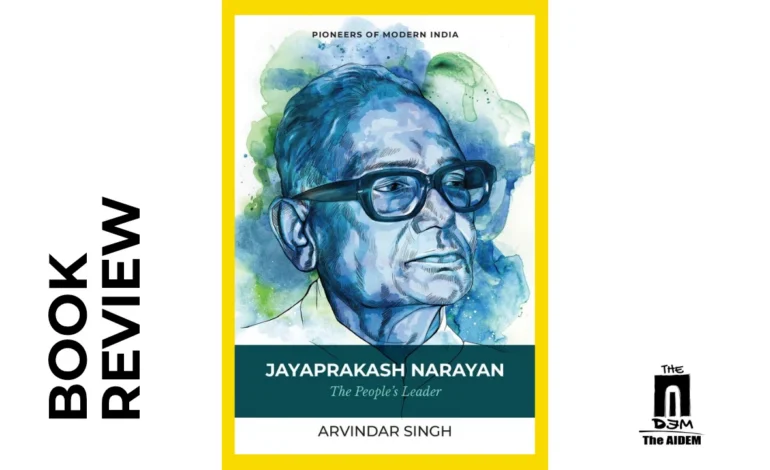
Arvindar Singh’s new biography returns to the extraordinary political journey of Jayaprakash Narayan — Marxist, socialist, Gandhian, dissenter and eventually the moral centre of the movement that challenged Indira Gandhi’s authoritarianism and its oppressive manifestations during the Emergency. But JP’s legacy also carries an unresolved question: did the coalition he assembled to defend democracy inadvertently help legitimise political forces whose worldview he had once opposed?
Few figures in modern Indian political history travelled through as many ideological landscapes as Jayaprakash Narayan while retaining such a powerful reputation for personal integrity. Revolutionary socialist, Congress Socialist, Gandhian, Sarvodaya activist, advocate of decentralised democracy and, finally, the elderly leader who emerged from political semi-retirement to challenge Indira Gandhi — JP contained several political lives within one lifetime.
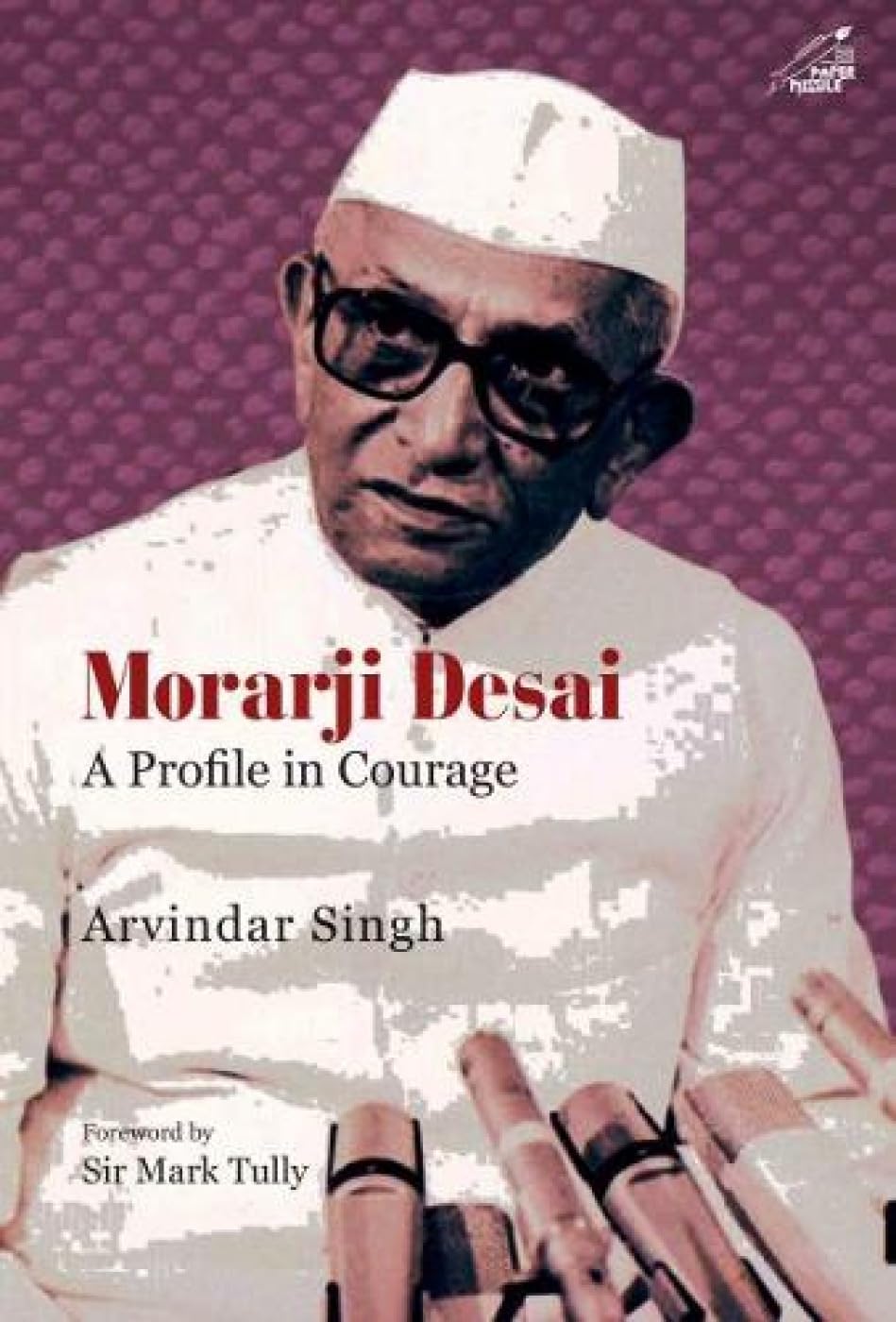
It is this complex figure whom author and journalist Arvindar Singh revisits in Jayaprakash Narayan: The People’s Leader. The 208-page volume is relatively slim for a life that intersected with virtually every major political and ideological debate in India from the freedom movement to the Emergency. Singh, who earlier wrote Morarji Desai: A Profile in Courage, approaches his subject sympathetically, though not entirely uncritically.
That balance matters because JP has long been caught between competing political memories. To his admirers, “Lok Nayak” was the moral voice who mobilised resistance to authoritarianism and helped end the Emergency. His critics point to the socialist and secular democrat whose opposition to Indira Gandhi brought him into an alliance with the Jana Sangh and RSS, giving the Hindu Right access to a much broader opposition platform. Neither reading by itself adequately explains him.
The JP Before the JP Movement
One merit of Singh’s book is that it takes the reader beyond the familiar JP of 1974–77. Jayaprakash Narayan encountered Marxism during his years in the United States and returned to India intellectually radicalised. He became one of the principal architects of the Congress Socialist Party, formed in 1934. His dramatic escape from Hazaribagh Central Jail during the Quit India Movement of 1942 and subsequent underground activity added the aura of a revolutionary to that of the intellectual.
Over time, however, JP moved towards Gandhi, Vinoba Bhave and Sarvodaya. Behind that transition lay a question that would remain central to his politics: could capturing state power by itself produce social transformation?
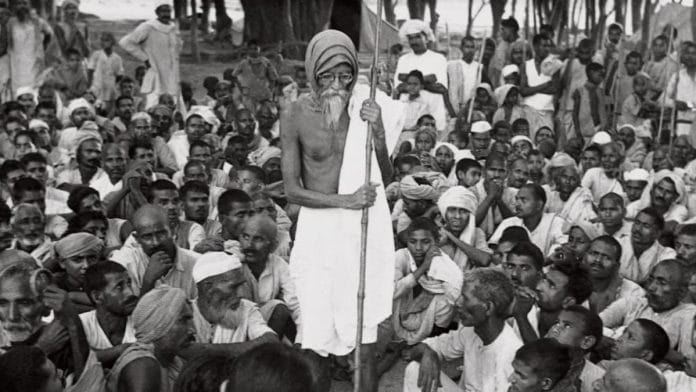
Increasingly, his answer was no. Despite considerable political stature, JP moved away from the pursuit of office. By the 1950s, he had largely withdrawn from party politics to immerse himself in Bhoodan, Sarvodaya and experiments in decentralised democracy. His 1959, A Plea for Reconstruction of Indian Polity, envisaged a participatory political structure rising from village institutions upwards, demonstrating that his dissatisfaction with conventional parliamentary politics long predated the turbulence of the 1970s.
Nehru, Power and The Road Not Taken
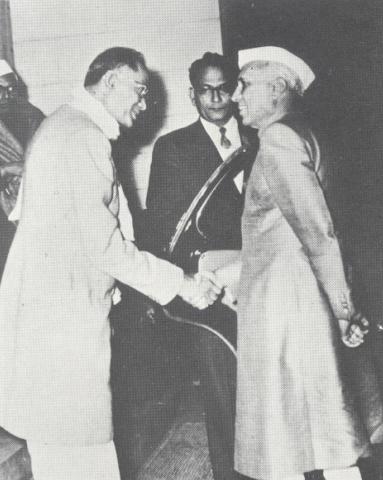
Singh also revisits JP’s complicated relationship with Jawaharlal Nehru. The two disagreed repeatedly without initially losing their mutual respect. JP’s socialist credentials and stature meant that he was periodically spoken of as a possible successor to Nehru. Singh notes that Nehru had publicly referred to him as a future Prime Minister as early as 1948.
JP’s refusal of office eventually became central to his political authority. Unlike many politicians who attacked those in power while aspiring to replace them, he could plausibly claim that he did not personally covet the positions he was asking others to relinquish.
Nor did withdrawal from electoral politics mean withdrawal from public life. JP became involved in the Nagaland peace process, advocated negotiated approaches to Kashmir, worked among communities affected by agrarian conflict in Musahari and participated in efforts culminating in the surrender of hundreds of dacoits in the Chambal ravines in 1972. These interventions are easily obscured when his career is viewed primarily through the prism of the Emergency.
Total Revolution
Then came Bihar. By 1974, JP was 71. Student protests against corruption, unemployment, inflation and governmental dysfunction had spread across the state. When the Bihar student movement sought his leadership, the ageing Gandhian agreed, insisting that the agitation remain non-violent.
On June 5, 1974, at Gandhi Maidan in Patna, he gave the movement the expression that became inseparable from his name: Sampoorna Kranti — Total Revolution.
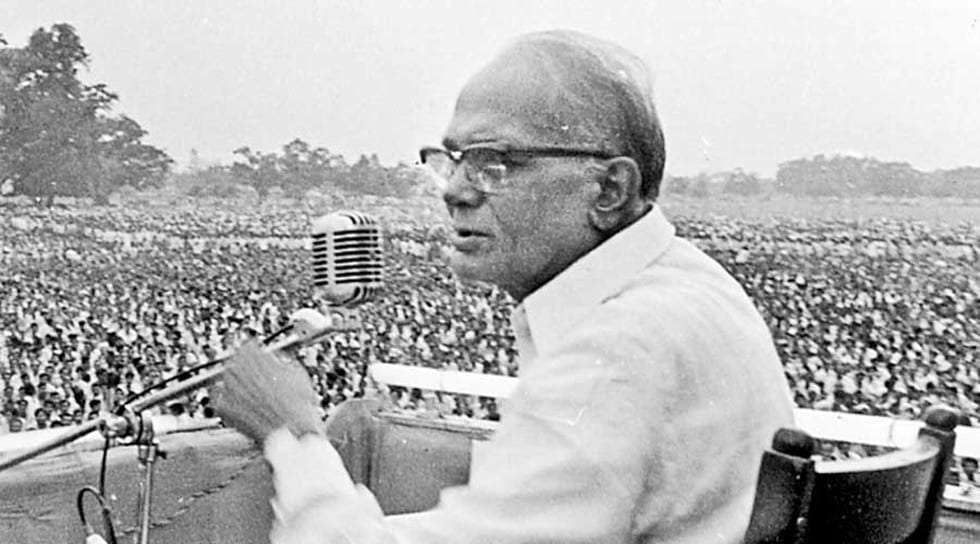
JP argued that corruption was not merely the misconduct of individual politicians but a consequence of political and social structures requiring transformation. Yet Total Revolution possessed immense moral ambition without an equally clear institutional architecture. How would popular mobilisation coexist with representative democracy? Where did legitimate democratic protest end and the delegitimisation of an elected government begin? Critics also questioned whether land, caste and agricultural labour received sufficient prominence in a movement whose most visible mobilisation was driven substantially by students and the middle classes.
The Democratic Fault Line
The confrontation escalated after the Allahabad High Court judgment of June 12, 1975, which set aside Indira Gandhi’s 1971 election from Rae Bareli. At Delhi’s Ramlila Maidan on June 25, JP appealed to the police and armed forces not to obey orders they considered illegal or immoral. Indira Gandhi’s government portrayed this as an invitation to mutiny; JP and his supporters maintained that he was asking state personnel to reject only unlawful orders.
Hours later came the Emergency.
JP was arrested along with opposition leaders. Press censorship followed, civil liberties were severely curtailed and political opponents jailed. His health deteriorated seriously in detention, and after his release on health grounds in November 1975, kidney failure left him dependent on dialysis.
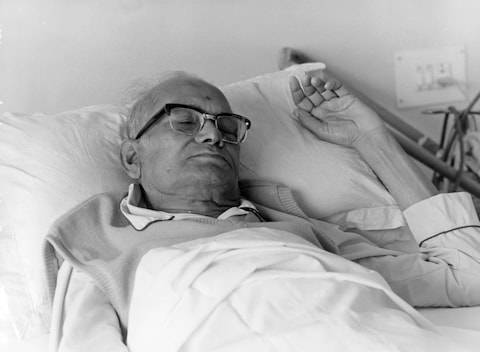
The Emergency transformed JP into one of the foremost symbols of resistance to concentrated state power. It also sharpened scrutiny of the political coalition he had assembled.
The RSS Question
JP’s willingness to work with the Jana Sangh and RSS remains among the most contested decisions of his life. Though he had earlier been critical of both, the attempt to build the broadest possible coalition against Indira Gandhi brought socialists, Gandhians, Congress dissidents and the Hindu Right into the same movement.
When critics characterised the Jana Sangh as fascist, JP famously responded in 1975 that if the Jana Sangh was fascist, he too was a fascist — a deliberately provocative defence of an organisation participating in his movement.
For JP, anyone accepting the movement’s non-violent discipline and democratic objectives could participate. Critics, however, saw a longer-term consequence: the movement enabled the Jana Sangh and RSS to operate within a broad opposition coalition under the moral authority of one of India’s most respected socialist-Gandhian figures. The subsequent Janata experiment took the Jana Sangh into national government in 1977.
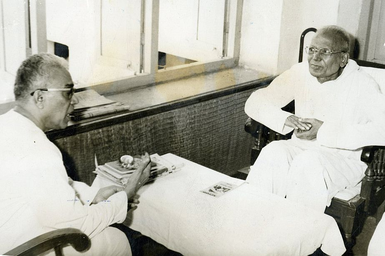
Whether JP underestimated the implications of that accommodation remains one of the central arguments surrounding his legacy.
Victory, Disillusionment and Legacy
At JP’s urging, disparate opposition formations came together in the Janata Party, which defeated Congress in 1977 and produced independent India’s first non-Congress government at the Centre, headed by Morarji Desai.
The triumph was short-lived. Factional warfare consumed the Janata Party, and the coalition that JP’s authority had helped assemble could not sustain unity once its common adversary was removed. By the time JP died in October 1979, the political experiment into which he had invested enormous hope was collapsing.
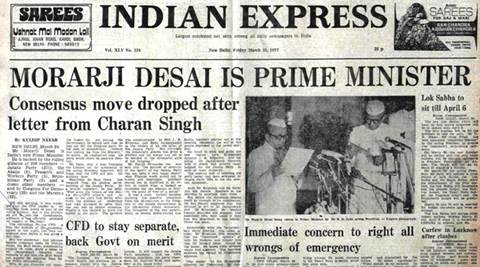
There was a striking irony in this. JP had spent decades arguing that changing rulers without transforming political structures would accomplish little. The Janata experience seemed to bear out his apprehension: the government changed, but political culture proved much harder to transform.
This is the larger canvas against which Singh’s biography acquires significance. JP resists both sanctification and indictment. His journey from Marxism to democratic socialism and Sarvodaya, from withdrawal from party politics to leadership of a mass political movement, cannot be reduced to a simple ideological trajectory.
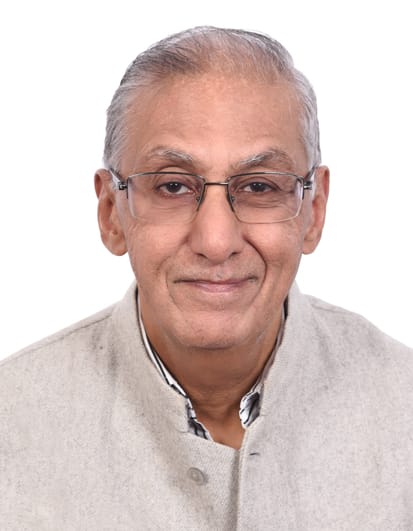
Arvindar Singh’s Jayaprakash Narayan: The People’s Leader enters this contested territory from a position of evident admiration. But admiration need not invalidate biography. The more important test is whether it leaves sufficient room for contradiction.
JP cannot be understood merely as the man who challenged Indira Gandhi, nor can his political life be reduced to his association with the RSS. The deeper concern running through his political journey was the nature and limits of power itself: could governments alone transform society, and could representative democracy remain genuinely democratic without sustained citizen participation? JP never supplied entirely satisfactory answers. Perhaps that is precisely why he remains worth revisiting.
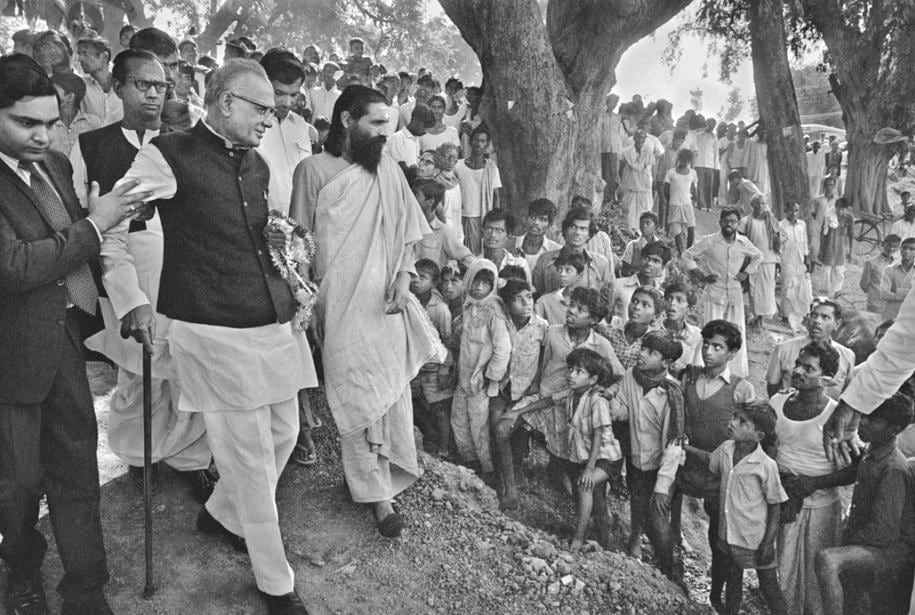
Nearly half a century after his death, Jayaprakash Narayan offers a vantage point from which to examine tensions that continue to animate Indian democracy — between power and principle, movements and institutions, electoral legitimacy and popular dissent. Arvindar Singh’s biography does not settle those arguments. Its value lies in bringing us back to them.
Book Review: Jayaprakash Narayan: The People’s Leader
Author: Arvindar Singh
Publisher: Niyogi Books
Pages: 208





Jayaprakash Narayan’s life reminds us that politics is never a straight line between ideology and power. From Marxism and socialism to Gandhian Sarvodaya and the call for Total Revolution, JP repeatedly questioned the very nature of political power. His resistance to the Emergency remains a powerful chapter in India’s democratic history, but his later alliance with forces he had once opposed also raises difficult questions about political compromise and its long-term consequences. This is what makes JP’s legacy so relevant even today — not as a flawless icon, but as a deeply complex leader whose journey forces us to think about the delicate balance between power, principle, popular movements