
Nellie Bly

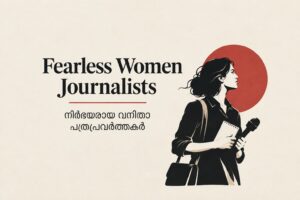
What happens when a journalist chooses to report the stories that others would rather leave unseen?
In the second article of the series Fearless Women Journalists, K. A. Beena tells the extraordinary story of Nellie Bly, the pioneering journalist whose fearless reporting exposed injustice, challenged conventions and transformed the possibilities of investigative journalism.
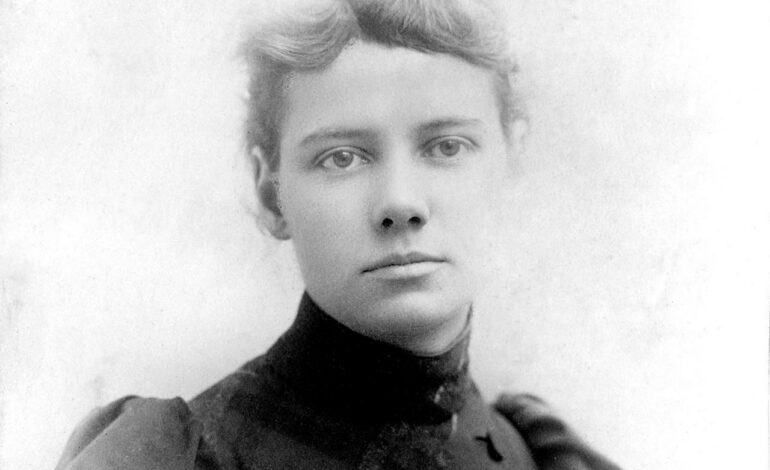
Elizabeth Cochran entered journalism at a time when women were excluded from public life in the late nineteenth century. The courageous young woman who could be called America’s first female reporter—indeed, the world’s first female reporter—was Nellie Bly.
The life of Elizabeth Cochran, born in Pennsylvania in 1864, was an uncompromising struggle against corruption and injustice.
After the death of her father, who had been a judge, Elizabeth had to discontinue her schooling because of financial difficulties. Determined not to become a burden on her family, she took up various jobs to support herself. It was during this period that she read an article titled “What Girls Are Good For?” in the Pittsburgh Dispatch. The article declared that women belonged in the home and the kitchen. Disturbed by its arguments, she wrote a letter challenging them and sent it to the newspaper under the pseudonym “Lonely Orphan Girl.”
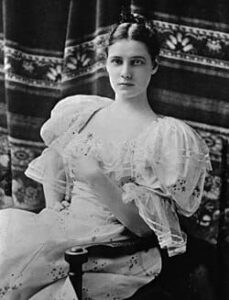
George Madden, the editor of the newspaper, replied, asking the letter writer to develop her arguments into an article. Elizabeth Cochran, who had long cherished the dream of becoming a writer, arrived at the newspaper office with the article within two days. The editor had expected the writer to be a man. He was astonished when he saw eighteen-year-old Elizabeth.
Elizabeth told him that she wanted to become a newspaper reporter. George Madden tried in several ways to discourage her.
Elizabeth told the editor that, in connection with the cases handled by her father, who had been a judge, she had gathered many secrets that could not ordinarily be obtained from courtrooms. She also knew how to investigate such information and turn it into reports.
“Ordinary readers are not satisfied merely by knowing what happens at gatherings of the wealthy, the titillating details of the lives of people in the arts and literature, what political leaders say about various issues, or what takes place in Washington and Wall Street. Allow me to write about the subjects that interest them—the lives of ordinary people, their domestic concerns and the problems they face at work. There is so much to be written about such matters. Give me an opportunity to write about people like the nine-year-old orphan girl I met by the roadside two days ago, who has no one to help her and is struggling to support and raise her younger brother.”
Elizabeth Cochran pleaded with the editor again and again.
“Wealthy readers will not like such subjects. Try writing about something else,” the editor advised her, while granting her an opportunity to write.
Within two days, Elizabeth submitted a powerfully written article on the social and human dimensions of divorce, focusing on the legal right of couples to free themselves from marriages that had become unbearable.
The editor liked the article. He gave Elizabeth the pseudonym “Nellie Bly” and published it.
“Nellie Bly”—the name, taken from a popular Stephen Foster song of the period, would eventually become the name by which Elizabeth Cochran was known throughout the world as a journalist.
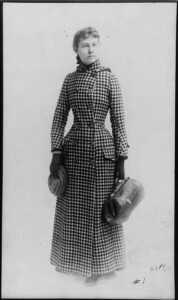
Although her family opposed her decision to take up a profession that no other woman was pursuing at the time, in 1885, Nellie Bly ignored their objections and continued working as a reporter. She wrote continuously about the poor and brought to light numerous stories about helpless women burdened by lives of suffering.
The circulation of the Dispatch rose sharply. The capitalist class became enraged and threatened to boycott the newspaper by withdrawing advertisements. Editor George Madden remained unshaken. Nellie Bly roamed tirelessly in search of more stories. Disguising herself, she entered prisons, hospitals and factories and wrote about people who endured injustice and misery.
Slum dwellers, children fighting over bread and other “poor people” filled the pages of the Dispatch. At a time when male journalists crowded newspapers with stories about politicians and the wealthy, Nellie Bly surpassed them by writing about the suffering of ordinary people. She became a beloved name among the poor, who bought copies of the Dispatch in large numbers.
Revolutionary leaders, women’s organisations, trade union leaders and a group of clergymen extended their support to the Dispatch. Industrialists, however, stopped placing advertisements in the newspaper, denounced the Dispatch and began attacking Nellie Bly. A rival newspaper even published an editorial accusing her of lowering the standards of journalism.
Eventually, editor George Madden instructed Nellie Bly to stop reporting on such subjects and instead cover speeches and cultural programmes and write art criticism. He also increased her salary.
Nellie Bly turned her move into art criticism into another opportunity to demonstrate her journalistic skill. Her reports and articles on the arts and cultural life attracted considerable attention. Her colleagues and other journalists in Pittsburgh began to respect her. Nellie Bly was invited to become a member of the newly established press club in Pittsburgh. It was an honour that no woman anywhere in the world had received until then.
Yet none of this satisfied Nellie Bly. She was troubled by the knowledge that she could no longer remain faithful to the trust placed in her by poor working-class people. Nellie Bly left the Dispatch and moved to New York, the centre of American newspaper publishing. She went from one newspaper office to another in search of work, but no one offered her a job.
One day, after considerable effort, Nellie Bly managed to reach the editor’s room at the New York World. She tried to explain her journalistic experience, but he too was unwilling to employ her. A man who had been sitting in an adjoining room, listening to the conversation between Nellie Bly and the editor, then entered the room. It was none other than Joseph Pulitzer.
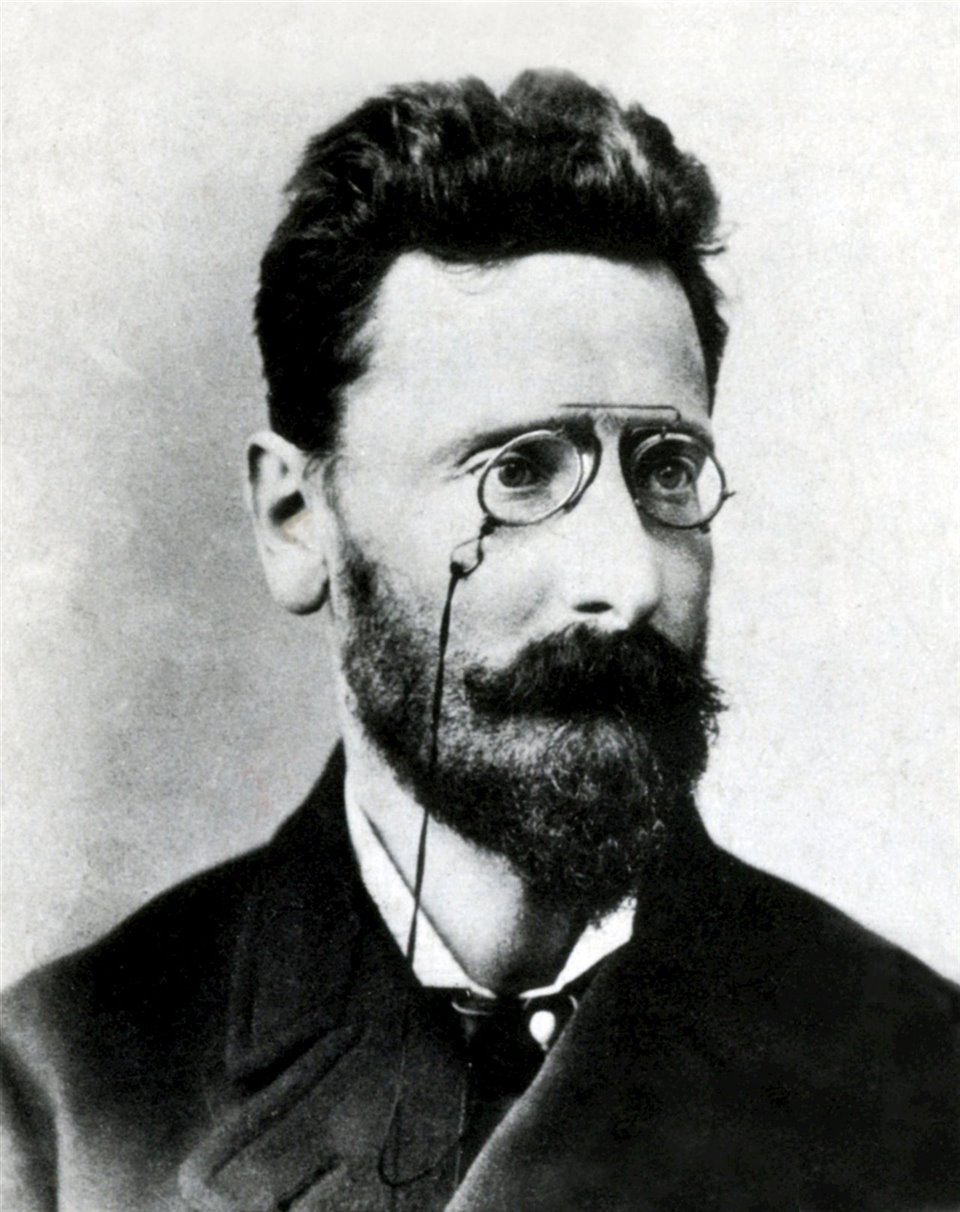
Pulitzer, the owner and publisher of the New York World, decided to give Nellie Bly an opportunity.
“If you can investigate and write about the real conditions inside the women’s mental asylum on Blackwell’s Island—now Roosevelt Island—you will be given a job as a reporter for the World.”
Nellie Bly immediately agreed.
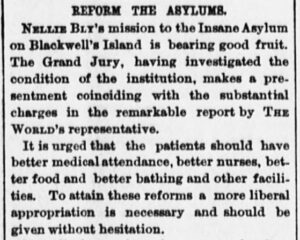
With the money she received as an advance, Nellie Bly went to Blackwell’s Island. She rented a room in a temporary lodging house for women. Pretending to be mentally ill, she secured admission to the women’s asylum and remained there for ten days. She later said that the miserable life inside the institution had almost driven her genuinely insane.
Pulitzer secured her release from the asylum through legal means.
When the New York World published her account of the horrifying life inside the asylum as a series titled Ten Days in a Mad-House, America was shaken. The authorities immediately ordered an investigation. Mental health institutions were reorganised, and new laws were passed to protect the rights of patients.
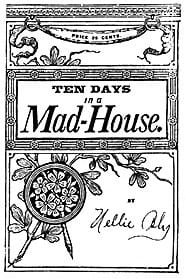
Nellie Bly was appointed as a reporter for the New York World. Her reports transformed the very nature of journalism. Nellie Bly came to be recognised as an outstanding practitioner of investigative journalism and immersion journalism. Readers eagerly waited for her reports.
Nellie Bly shared with the newspaper’s management her ambition to beat Phileas Fogg, the protagonist of Jules Verne’s novel Around the World in Eighty Days, who travelled around the world in eighty days.
Although many people ridiculed the idea as “impossible for a woman,” the World and Joseph Pulitzer supported Nellie Bly in turning her dream into reality.
On 14 November 1889, she began her journey aboard the ship Augusta Victoria. She carried only a small bag containing a few clothes, the money she needed and a notebook. Readers of the World followed Nellie Bly’s journey around the globe by ship, train and various other modes of transport.
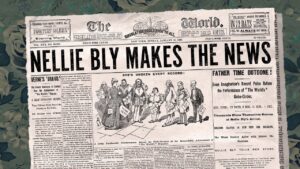
Travelling through England, France, Italy, Egypt, Ceylon—present-day Sri Lanka—Singapore, Hong Kong and Japan before returning to America, Nellie Bly completed her journey around the world in seventy-two days, six hours and eleven minutes. Through the media, she became famous throughout the world.
After her journey around the world, Nellie Bly moved away from journalism and began writing serial novels for the New York Family Story Paper. Between 1889 and 1895, she wrote around eleven novels.*
In 1895, Nellie Bly married the industrialist Robert Seaman and withdrew from journalism.
Nine years later, Seaman died. After her husband’s death, she took charge of his business enterprises—the Iron Clad Manufacturing Company and the American Steel Barrel Company. Her creativity made history in the world of industry as well. She introduced several inventions connected with her business ventures.
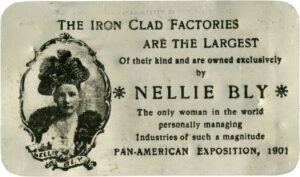
She obtained patents for several products she designed herself, including a milk can and a waste container.
However, the betrayal of some of her associates led to the collapse of the business.
Nellie Bly returned to journalism.
During the First World War, Nellie Bly was among the most prominent journalists who reported from the war front. She wrote about the devastation of war, human suffering and the conditions in military hospitals.
Elizabeth Cochran, known to the world as Nellie Bly, died of pneumonia in New York on 27 January 1922, at the age of fifty-seven.
Has Elizabeth Cochran the Nellie Bly whose contributions should never be allowed to disappear from history received the recognition she truly deserves? After all, history has often made a habit of denying justice to women.

These novels were believed to have been lost, but they were recovered in 2021. The writer David Blixt published them under the title The Lost Novels of Nellie Bly.
Read the First Article of the series here
Read the Malayalam Version