

On the Burning Deck of Our Times : Casabianca and the Age of Silenced Voices

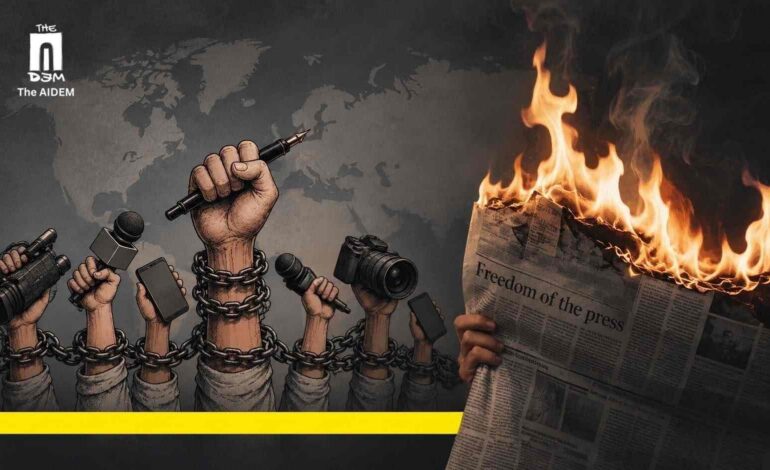
From Ramadasu’s prison songs to Casabianca’s brave despair and the embattled newsrooms of Russia and India, the enduring story of conscience that refuses to surrender.
The Power of Devotion
The seventeenth-century chronicle of Bhadrachala Ramadasu, an ardent devotee of Lord Rama, is a remarkable account of faith, sacrifice and creative perseverance. He diverted the Nawab’s tax collections towards the reconstruction of a dilapidated temple dedicated to Lord Rama in the densely forested region of Bhadrachalam. For this misappropriation, he spent more than twelve years in prison, where he was fed equal quantities of rice and salt every day. The guards regularly lashed his back. With each lash, he composed and sang more songs in praise of his Lord. His deep-rooted faith brought out the finest expressions of his creativity.
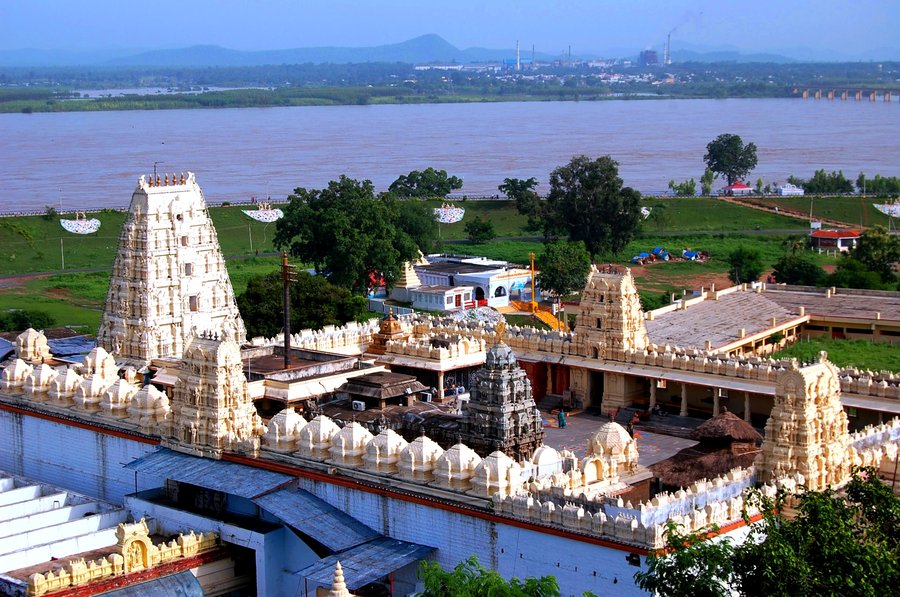 The Sri Sita Ramachandra Swamy Temple at Bhadrachalam, whose reconstruction by Kancherla Gopanna, popularly known as Bhakta Ramadasu, led to his imprisonment under the Golconda Nawab.
When Rama and Lakshmana appeared in the Nawab’s dreams and offered gold coins bearing their images in repayment of the debt, the Shahi Nawab realised his mistake and released Ramadasu. His physical captivity could not imprison his devotion.
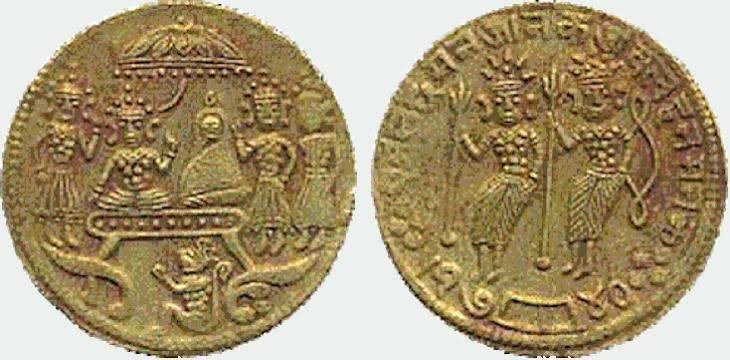 Rama Tanka, the gold coins associated with the traditional account of the repayment of Ramadasu’s debt to the Golconda ruler, Abul Hasan Tanisha. The coin features the Ram Darbar coronation with Rama and Sita enthroned under a royal parasol alongside his brothers and Hanuman (left), and standing figures of Rama and Lakshmana holding bows encircled by a Devanagari devotional inscription and the numerals “1740” (right).
Centuries later, we encounter another kind of devotion: devotion to truth, freedom of expression and the right of citizens to know.
When Even Nobel Recognition Offered No Protection
In 1990, Soviet President Mikhail Gorbachev won the Nobel Peace Prize. In 1993, a newspaper, Novaya Gazeta, was established by a group of journalists, many of whom had left the Soviet-era newspaper Komsomolskaya Pravda. Gorbachev used part of his Nobel Peace Prize money to help finance the establishment of the newspaper. One of its principal founders and its long-serving editor-in-chief was Dmitry Muratov. In 2021, he received the Nobel Peace Prize jointly with Filipino journalist Maria Ressa, in recognition of their efforts to safeguard freedom of expression.
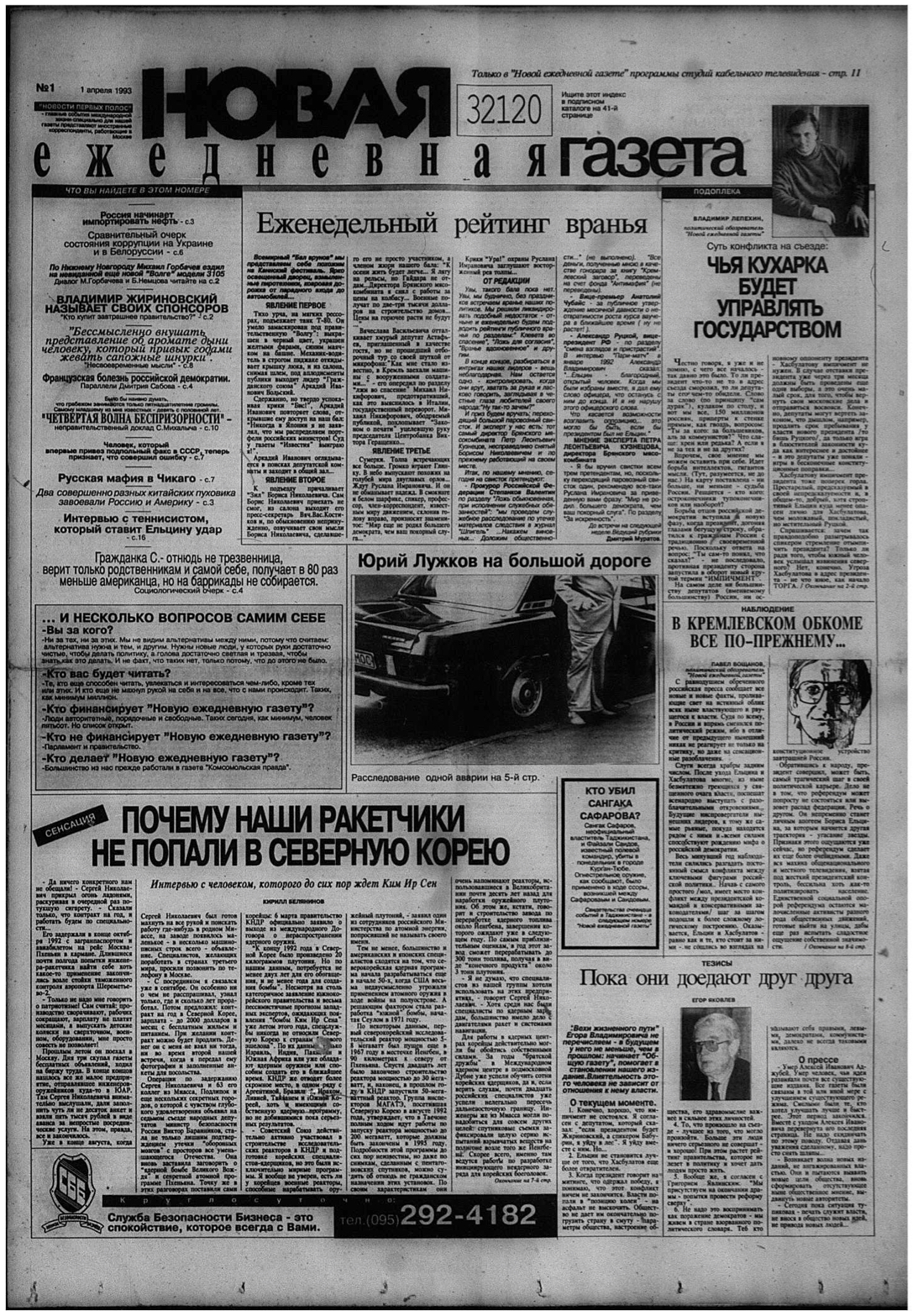 The front page of the inaugural issue of Novaya Yezhednevnaya Gazeta (New Daily Newspaper), later renamed Novaya Gazeta, published in Moscow on April 1, 1993.
The newspaper chose a difficult path. It investigated corruption, human rights abuses, political intimidation and the conduct of the Russian establishment. Its journalists reported from the very places where events were unfolding, often at considerable personal risk.
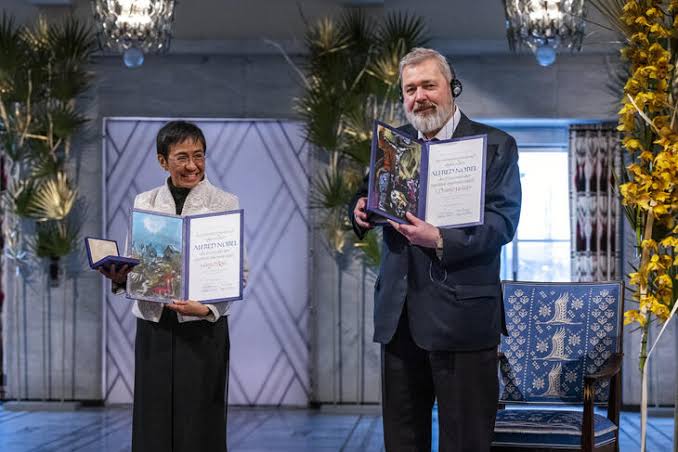 Defending Press Freedom: Maria Ressa (left) and Dmitry Muratov (right) display their Nobel Peace Prize medals in Oslo on Dec. 10, 2021. Ressa, co-founder of Rappler, and Muratov, editor of Novaya Gazeta, became the first journalists to win the award since 1935.
Anna Politkovskaya (1958–2006) joined the newspaper in 1999. She became one of its most widely recognised investigative reporters. She reported extensively on the Chechen wars, documenting the plight of civilians, alleged torture, disappearances and abuses by Russian security personnel. Her books, including A Dirty War and Putin’s Russia, challenged official narratives of the conflict and the growing concentration of political power.
She survived a suspected poisoning attempt in 2004. On 7 October 2006, she was shot dead in the lift of her apartment building in Moscow. The date was also Vladimir Putin’s birthday.
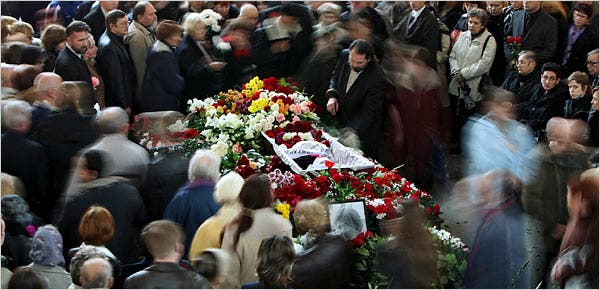 Mourners filed past the coffin of the journalist Anna Politkovskaya at Troyekurovskoye Cemetery in Moscow, on 10 October, 2006, following her assassination outside her apartment building in Moscow on October 7, 2006.
Five other journalists associated with the newspaper were killed at different times. The newspaper continued to expose atrocities and challenge the Putin government’s suppression of press freedom, even as the authorities blocked its website. Readers had to use virtual private networks (VPNs) to access the site. The pressure on the newspaper intensified following Russia’s invasion of Ukraine in 2022.
Its print publication was suspended, and its media registration was eventually revoked. Muratov himself was attacked in April 2022 while travelling by train. He survived the attack, which caused serious injuries to his eyes. Some of the newspaper’s journalists established Novaya Gazeta Europe outside Russia, continuing their reporting from exile.
The newspaper’s ordeal has now reached a deeply distressing juncture. After three decades of investigative journalism, its Moscow newsroom vacated its premises and ceased operations. The editorial team attributed the closure to sustained pressure from the Russian authorities and security services. Restrictions on its operations, the loss of its office and the disruption of financial support from banks had made it impossible to continue its work.
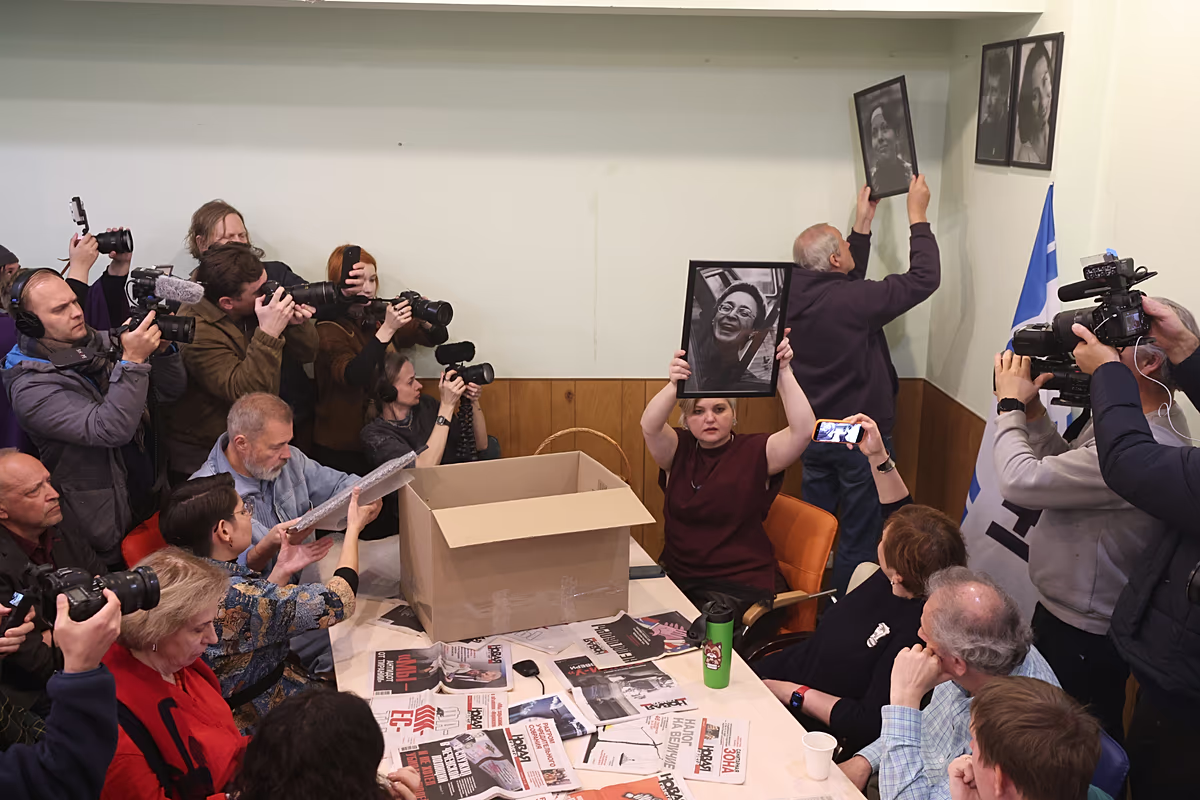 Editor-in-chief of Novaya Gazeta, Sergei Sokolov takes down from the wall the portraits of six of the newspaper’s murdered journalists. Former office in Potapovsky Lane, Moscow, 9 November 2026.
At a meeting on 9 November 2026, the editorial team decided to bring out one final issue shortly and confront this bleak reality. The newspaper’s farewell statement, poignantly titled We Have Been Killed, captures the despair of an institution that has exhausted its avenues of resistance. Yet its journalists have made it clear that the newspaper’s spirit need not die with the end of its physical existence.
Footage of Novaya Gazeta’s Moscow newsroom being vacated and its operations brought to an end on 9 November 2026, following sustained pressure from Russian authorities. (Source: Reuters)
The Indian Experience: When a Newspaper Refused to Be Silenced
India, too, has witnessed moments when the freedom of the press has been tested by the weight of political authority. One of the most memorable examples dates back to the Emergency declared by Prime Minister Indira Gandhi on the night of 25 June 1975.
Civil liberties were curtailed, and newspapers were subjected to stringent pre-publication censorship. Editors were required to obtain government clearance before publishing news reports, photographs and editorials. More than 200 journalists were arrested during the Emergency, and the Press Council of India was abolished.
It was in this atmosphere that The Indian Express, under the leadership of its proprietor, Ramnath Goenka, made a memorable statement of defiance. When the newspaper resumed publication on 28 June 1975, it carried a blank editorial. The empty space spoke louder than any editorial could have. It represented the voice that the censor had prevented the newspaper from expressing.
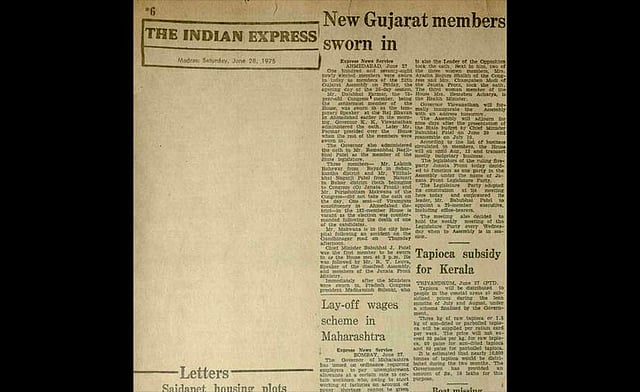 The blank editorial space in the June 28, 1975, edition of The Indian Express, published in silent protest against Emergency-era press censorship in India.
It was a simple yet powerful act of protest. The newspaper subsequently continued to challenge censorship, took the government to court and found ways of reporting critical developments despite mounting pressure. Its journalists, including Kuldip Nayar, also faced imprisonment. The blank editorial became an enduring symbol of the struggle for press freedom.
Contemporary India: New Instruments of Repression
The challenges to press freedom did not disappear with the end of the Emergency. The methods may have changed, but the fundamental question remains: how much space does a journalist have to question authority, investigate uncomfortable truths and publish findings without fear of reprisal?
In recent years, several Indian publications and journalists have continued to discharge this responsibility despite mounting pressures.
The NewsClick episode is one such example. In October 2023, its founder-editor, Prabir Purkayastha, was arrested under the Unlawful Activities (Prevention) Act (UAPA), following police raids on the publication’s office and the homes of its journalists. The authorities alleged unlawful foreign funding and other offences, allegations that NewsClick contested. In May 2024, the Supreme Court declared his arrest and remand invalid because the grounds of arrest had not been furnished to him in the manner required by law, and ordered his release.
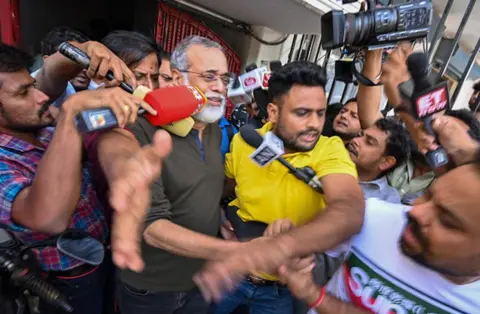 Delhi Police Special cell detains Founder and Editor-in-Chief of NewsClick Prabir Purkayastha from his office on October 3, 2023 in New Delhi.
Investigative reporting on electoral bonds helped bring to public attention crucial questions about political donations, corporate contributions and the transparency of electoral financing. The Supreme Court subsequently struck down the electoral bonds scheme in February 2024.
There are also journalists whose reporting from sensitive regions has come at considerable personal cost. Kashmiri journalist Irfan Mehraj spent three years in pre-trial detention under anti-terror legislation before being released on bail in 2026. His case has attracted criticism from international press freedom organisations.
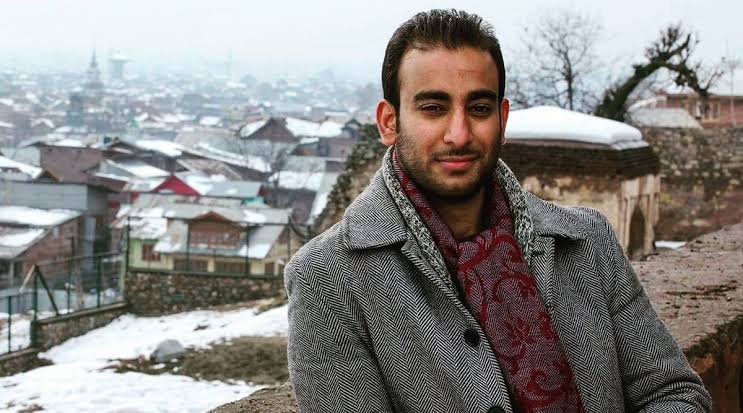 Independent Kashmiri journalist Irfan Mehraj , who was held in pre-trial custody for over three years on terror-related charges prior to his conditional release on bail in 2026.
Digital censorship has become another instrument of pressure. Internet shutdowns and restrictions on online content can prevent journalists from communicating with sources, verifying information and reporting from conflict-affected regions. Reporters Without Borders has documented the particular impact of such shutdowns on journalists working in Jammu and Kashmir and other sensitive areas.
Most recently, the issue has acquired an international dimension.
The Bharat Summit, held in Hyderabad on 13–14 November 2026, was overshadowed by reports that approximately 115 of the 315 foreign speakers cleared by the Ministry of External Affairs were subsequently denied entry into India or had their visas cancelled. Among those affected was Norwegian journalist Helle Lyng Svendsen, who had been invited to speak on the future of the media and press freedom.
The Instagram reel of Norwegian journalist Helle Lyng Svendsen addressing the last-minute cancellation of her Indian visa, which prevented her from attending the Bharat Summit in Hyderabad as a speaker on the future of media and press freedom. (Source: Helle Lyng Svendsen/Instagram)
She had earlier questioned Prime Minister Narendra Modi during his visit to Norway about his willingness to take questions from journalists. The last-minute cancellation of her visa has been raised as a matter of serious concern by the journalist herself, the summit organisers and political representatives.
These developments invite an important reflection. Freedom of the press is not merely the freedom of a newspaper to print or a television channel to broadcast. It is the citizen’s right to receive information, question authority and hold institutions accountable.
Brave Despair: The Courage to Remain at One’s Post
My thoughts return to Casabianca, the celebrated poem written in 1826 by Felicia Dorothea Hemans. It recounts the story of a young boy, the son of a French naval commander, who remains on the burning deck of his father’s ship during the Battle of the Nile in 1798. His father lies unconscious below deck. Unaware of his father’s condition, the boy refuses to abandon his post without receiving his father’s instructions.
The ship is engulfed in flames. The battle rages. Yet the boy remains steadfast. Hemans captures the poignancy of his predicament in these unforgettable lines:
“And looked from that lone post of death
In still yet brave despair.”
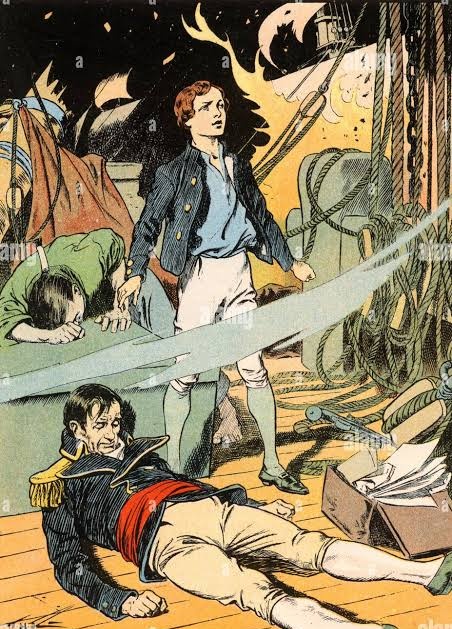 “Casabianca on the Burning Ship,” a 1913 print depicting the young boy’s steadfastness in the face of peril. An enduring metaphor for independent journalists who remain committed to truth and press freedom despite mounting pressure.
Different centuries. Different circumstances. Different forms of adversity. Yet the same refusal to abandon one’s post.
Despair describes the circumstances; bravery describes the response.


Writing
Casabianca’s burning deck is more than a poetic image; it is a powerful metaphor for our times, when truth, dissent and independent voices are increasingly pushed into silence. A democracy cannot survive by silencing those who question authority. Journalism, literature and freedom of expression must remain fearless, especially in times of political darkness. Silencing voices does not extinguish truth; it only exposes the fear of those who refuse to hear it.
Truely contextual. It would have been worth mentioning the World Press Freedom Index as well.