


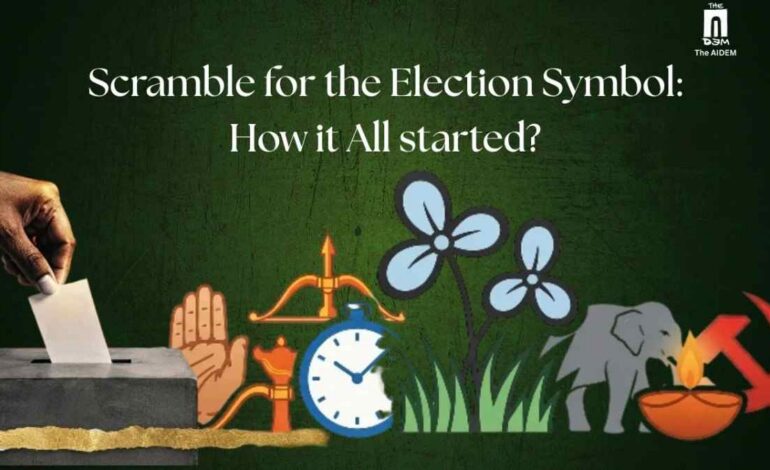
From ballot boxes marked with simple drawings to today’s fierce battles over political identity, election symbols have become inseparable from Indian democracy. In the context of the recent controversy surrounding the Trinamool Congress and its election symbol, Anu Jain traces how these seemingly simple images emerged as a practical answer to mass illiteracy and evolved into powerful markers of political identity, legacy and legitimacy.
In contemporary Indian politics, political party symbols are far more than administrative conveniences on a ballot; they are hyper-valuable democratic brands, emotional anchors, and the ultimate prizes of fierce factional warfare. Recent years have seen high-stakes legal, constitutional, and ethical battles before the Election Commission of India (ECI) and the Supreme Court, proving just how deeply these visual icons are woven into the fabric of power.
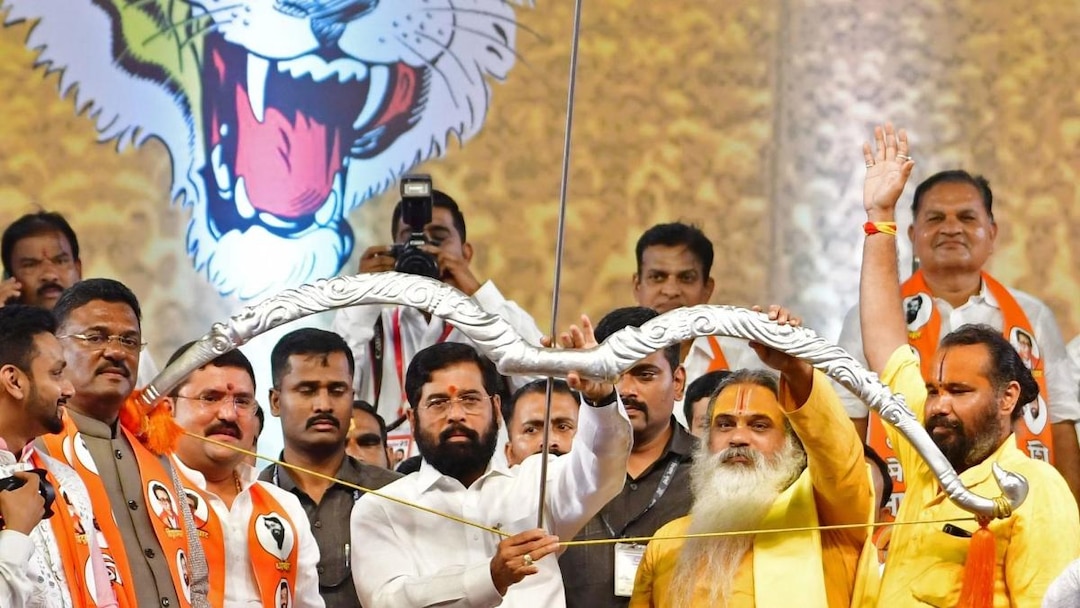
Recently, when the All India Trinamool Congress (TMC) faced political and legal scrutiny over its national party status and the retention of its iconic Jora Ghash Phool (twin flowers in grass) symbol, it signified to its supporters how vital symbol ownership is to regional identity and national clout. Even more dramatic were the political earthquakes in Maharashtra. Following vertical splits within the Shiv Sena and the Nationalist Congress Party (NCP), the ECI was tasked with determining which rival faction constituted the “real” party. When the ECI allocated the historic Shiv Sena Bow and Arrow symbol to the Eknath Shinde faction, and later awarded the NCP’s Analog Clock symbol to the Ajit Pawar faction, forcing the founding factions led by Uddhav Thackeray and Sharad Pawar to adopt new names and symbols, it ignited intense constitutional and ethical debates. Critics questioned whether recognised electoral symbols belong to the organisational machinery or the legislative majority, raising profound questions about inner-party democracy, anti-defection law, and voter trust.
Yet, to fully understand why a simple picture on a ballot box or an Electronic Voting Machine (EVM) can destabilise political dynasties and command such fierce loyalty, one must return to the dawn of the republic.
The visual language of Indian democracy was forged in a moment of existential crisis, designed out of absolute necessity to teach a newly liberated, largely unlettered nation how to self-govern.
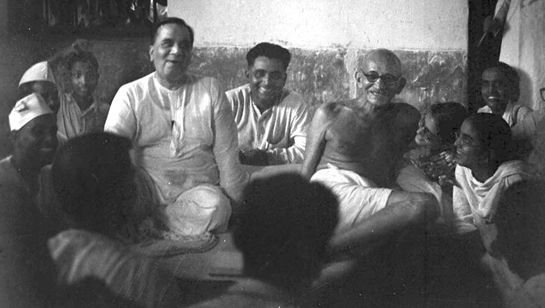
On the midnight of August 14–15, 1947, India woke up, in Jawaharlal Nehru’s famous words, “to life and freedom“. But that freedom came wrapped in grief. The subcontinent had been cut in two, leaving the provinces of Punjab and Bengal bleeding. Millions of refugees crossed the new borders on foot, in bullock carts, and on packed trains as refugee camps swelled in Delhi. Guha (2007) reports that about ten million refugees were on the move and around a million people died, though some later scholars put the death toll nearer to two million. Mahatma Gandhi, the leader of the national movement, spent the moment of independence in Calcutta, fasting and asking how anyone could celebrate amid such devastation. On January 30, 1948, barely five months into freedom, Gandhi was assassinated at a prayer meeting.
Simultaneously, the British left behind more than 500 princely territories; Guha (2007) notes that historians disagree on whether the exact number was 521 or 565. Some were as large as European countries, and all were technically free to choose between joining India, joining Pakistan, or remaining independent. It was across this fragmented, traumatised landscape that the young republic prepared to hold the largest democratic election in human history.
Imperial observers were overwhelmingly convinced that the Indian democratic experiment would fail. In 1888, Sir John Strachey, a retired administrator of the Raj, addressed a Cambridge audience, an episode Guha (2007) uses to open India After Gandhi. According to Guha, Strachey called “India” a mere label of convenience for a region of many countries, insisting that Scotland resembled Spain far more than Bengal resembled the Punjab, and concluding that there had been no Indian nation in the past and would be none in the future. A later working paper from the Institute of South Asian Studies in Singapore judged Strachey both right and wrong, noting that the land the British ruled did indeed contain profound real differences.
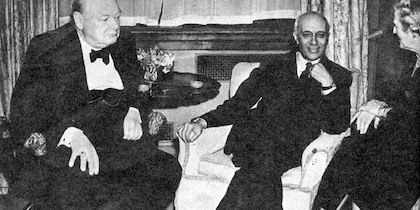
Rudyard Kipling shared this deep scepticism. In November 1891, when an Australian journalist asked him about self-government for India, Kipling flatly answered that Indians were “much too old to learn that business.” Guha calls the believers in this view “Stracheyans” and identifies Winston Churchill as the politically most important among them. In speeches delivered in 1930 and 1931, Churchill warned that a British exit would inevitably send India back into medieval barbarism.
The physical reality of the subcontinent appeared to support their doubts. India was a chaotic patchwork of British provinces and princely states, each with its own ruler, army, or privileges. Deep divisions of language, religion, caste, and region fractured the populace. Western commentators widely predicted that India would quickly break into fragments, fall under military dictatorship, or collapse into famine and civil strife.
Before India could vote, it had to ensure its own administrative existence. Josy Joseph, in Birth of a Nation, reconstructs the high-stakes weeks before Independence to show how more than 550 princely states were integrated into the Indian Union. Joseph argues that Nehru, Vallabhbhai Patel, and lesser-known officials successfully prevented India’s fragmentation despite intense political, diplomatic, and royal opposition. Sardar Vallabhbhai Patel and his civil servant V. P. Menon spearheaded the diplomatic persuasion. Several rulers actively resisted joining, including those of Hyderabad, Bhopal, Junagadh, Kashmir, and the Travancore Dewan, Sir C. P. Ramaswami Iyer.
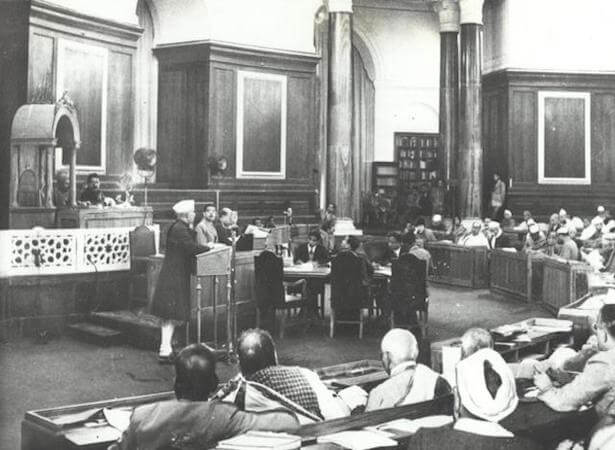
While most states acceded quickly, others severely tested the young state. Junagadh resisted, Kashmir’s accession brought war with Pakistan in 1947–1948, and Hyderabad was absorbed in September 1948 following a police action. It was by no means tidy, but by 1950 the political map of India held together. Concurrently, the Constituent Assembly was drafting the foundational rules of the republic.
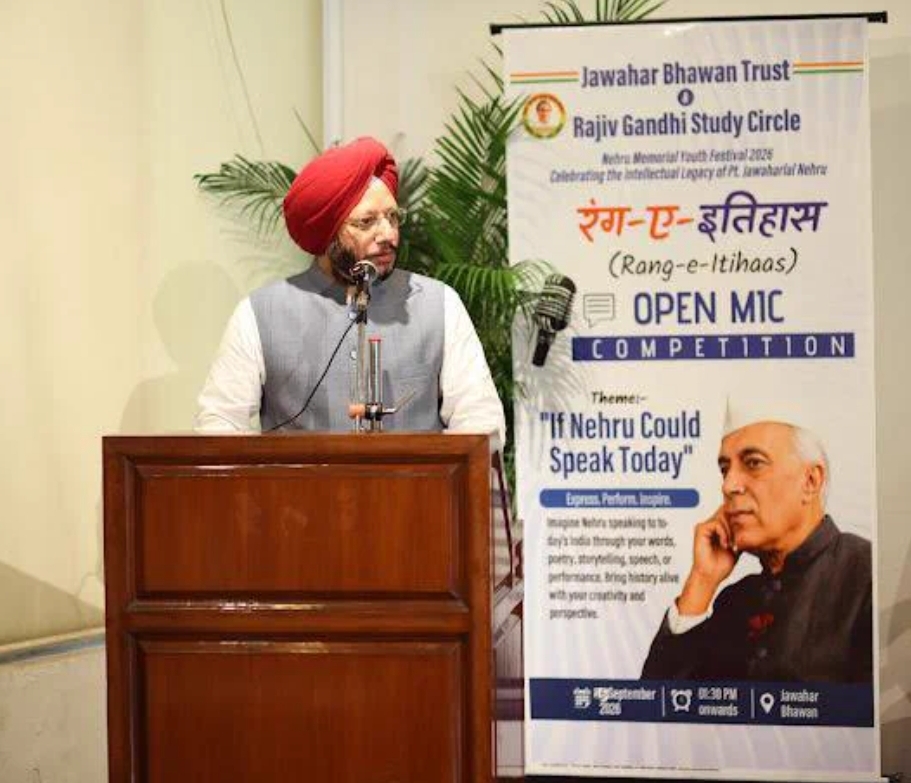
Addressing a group of youngsters at the Rajiv Gandhi Study Circle recently at Jawahar Bhawan, Congress leader Gurdeep Singh Sappal said that the boldest and most radical choice of the Constitution that came into force on January 26, 1950,was the decision to introduce universal adult franchise without any property tests, education requirements, or gender bars. In a country where the vast majority of adults were illiterate, every single adult was granted the right to vote. While established nations like Britain and the United States had extended the franchise step-by-step over generations, India’s leaders, led by Jawaharlal Nehru, granted complete universal suffrage in a single stroke.
To operationalise this promise, the Election Commission of India was established on January 25, 1950, a day before the Republic was formally declared. Sukumar Sen took charge as the first Chief Election Commissioner (CEC) on March 21, 1950. On April 19, Nehru announced to Parliament that general elections would be held in the spring of 1951. As the Observer Research Foundation notes, Sen, born in 1899, had joined the Indian Civil Service in 1921, served as a judge, and was Bengal’s chief secretary from 1947 to 1950. In the World Policy Journal, Guha laments that Sen left no personal memoir and apparently no personal papers, while noting that he had previously won a gold medal in mathematics at London University.
Get Bengal, drawing on Guha, reports that Nehru summoned Sen a month after his appointment to ask for elections by March 1951. Sen, exercising mathematical pragmatism, asked the Prime Minister to wait. Scroll details the immense logistics requiring this delay: Sen needed time to prepare electoral rolls, build millions of ballot boxes, design a visual system of election symbols to bridge mass illiteracy, and plan access for remote mountain hills and isolated islands.
The scale of the operational numbers was staggering. Over 170 million voters, 85 percent of whom were illiterate, with 2,24,000 polling booths. Two million ballot boxes were built, consuming 8,200 tonnes of steel. 16,500 clerks were hired on six-month contracts to type the rolls (Deccan Herald), and 56,000 presiding officers were deployed (Get Bengal). 389,816 phials of a special indelible ink that stayed on the finger for a week to prevent double-voting (Guha/The Caravan) were used, and educational radio broadcasts and informational documentaries were screened in 3,000 cinema halls across the country.
Amid these preparations, Sen encountered a major socio-cultural hurdle. The ORF explains that many women registered themselves not by their own names, but merely as “so-and-so’s wife” or “so-and-so’s mother” due to local social customs. Guha notes that Sen was outraged by this, calling it a “curious senseless relic of the past,” and ordered the rolls corrected. Because many refused or failed to provide their names, approximately 2.8 million women voters had to be struck off the rolls. Official records kept by Sen confirm that out of nearly 80 million women voters, nearly 2.8 million failed to disclose their proper names, forcing their deletion. To mitigate these losses, a one-month extension was granted in Bihar, alongside an extension in Rajasthan (where response remained poor) (Joy, 2024). Five years later, during the 1957 elections, Sen observed a profound cultural shift: women had come to value the franchise immensely, and those deleted in 1951 expressed deep disappointment upon watching their peers cast their votes (Joy, 2024).
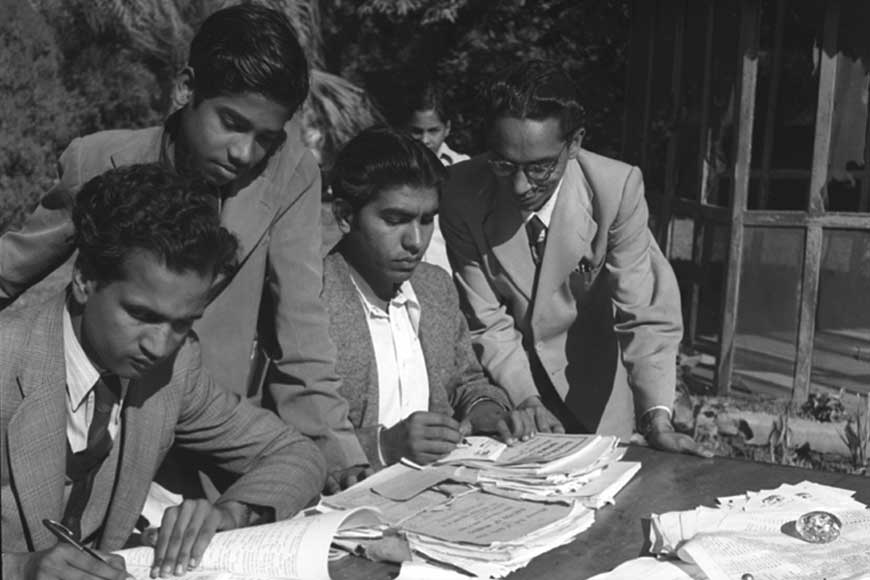
The foundational electoral challenge remained: how could an unlettered citizen vote secretly and accurately without reading a name? With 85 percent of the electorate unable to read, writes Scroll, the Commission devised a visual solution: candidates were identified through unique graphic symbols displayed directly on separate ballot boxes at each polling station (En Route Indian History). A voter did not need to read a ballot paper; they simply needed to recognise an icon and drop their paper into the corresponding box.
According to En Route Indian History, the Commission convened an all-party conference on July 30, 1951, where political parties selected their official symbols. Formal allotments occurred between August 2 and September 7, reserving specific symbols for recognised parties while leaving others in a pool for independent candidates. The Indian Express (2024) notes that the Commission mandated that symbols be easily recognisable everyday items, while strictly prohibiting religious icons or national symbols, such as a cow, a temple, the national flag, or the spinning wheel.
Some of the recognised parties selected from an initial master list of 26 symbols included the Indian National Congress, which received its original symbol of Two Bullocks with a Yoke on August 17, 1951 (Chetan Bharat). The Bharatiya Jana Sangh received the Earthen Lamp or the Diya,and the Communist Party of India got the Ears of Corn and Sickle.
These simple graphic designs formed the initial visual vocabulary of Indian democracy. As Professor Kavita Karan of Southern Illinois University explained to NPR, political symbols allow voters to instantly associate with parties, functioning effectively “like the logos of companies” (Pathak, 2019).
Over the following decades, animals and birds became prominent visual anchors for political parties. However, as elections grew more competitive, the use of living animals and birds in campaign activities exposed a major ethical flaw: the potential for systemic exploitation and cruelty.
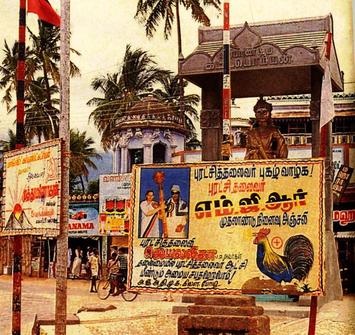
This concern reached a critical turning point in the late 1980s. Following the split of the AIADMK in Tamil Nadu, rival factions adopted animal and bird symbols and began parading live animals and birds at political rallies, public meetings, and campaign processions. What was intended as a visual graphic on a paper ballot was suddenly translated into a living campaign prop, subjecting animals to stressful confinement, decoration, handling, and transportation in political rallies.
Recognising that a symbol’s function was identification, not live physical display, the Election Commission of India took a decisive step in 1991. The ECI banned the specification of birds and animals as new election symbols. The Government of India’s Yojana publication explicitly noted the rationale behind the decision: it was enacted “in order to prevent cruelty to animals and birds at the time of public meetings by political parties.”
Crucially, the 1991 policy was an evolution rather than an absolute erasure of existing symbols. Legacy symbols assigned prior to 1991, such as the Bahujan Samaj Party’s Elephant or the Assam Gana Parishad’s Elephant, were retained as reserved symbols. However, the ECI issued strict instructions to these parties, directing them to ensure no cruelty was inflicted and explicitly banning the live demonstration of animals or birds during election campaigns. The episode demonstrated a vital principle: an electoral visual aid created for ballot clarity must not cause real-world harm beyond the ballot box.
The execution of the election was vast and unprecedented. Ramachandra Guha titled his historical chapter on the event “The Biggest Gamble in History” (2007). Had the exercise collapsed into violence or fraud, it would have validated imperial critics, convincing the global community that democracy was an exclusive luxury reserved only for literate, wealthy Western nations.
The mechanics unfolded over several months. Voting began early in October 1951 in Chini (now Kalpa), Himachal Pradesh, to ensure residents could vote before heavy winter snows cut off the region (Deccan Herald). The primary voting phase spanned from October 25, 1951, to February 21, 1952. 53 political parties (14 national) and 533 independent candidates contested for 489 Lok Sabha seats across 401 constituencies (Oneindia, 2022).
When the results were tabulated, the Indian National Congress secured a decisive victory with 364 seats, while the Communist Party won 16, and the Jana Sangh won three. Notably, B. R. Ambedkar, the chief architect of the Indian Constitution, failed to win his parliamentary seat.
The global reaction was immediate. As Guha writes, international observers praised Jawaharlal Nehru for refusing to take the authoritarian path chosen by many post-colonial Asian leaders. Ultimately, the illiterate voters of India were recognised as the true heroes who proved the doubters wrong. The first general election was not merely an administrative follow-up to independence; it was the ultimate examination of Indian nationhood.
What began in 1951 as a pragmatic solution to mass illiteracy, placing a simple drawing of bullocks, a lamp, or a sickle on a metal box, has transformed into the vital currency of Indian political identity. Over seven decades later, as electronic voting buttons replace steel boxes and political parties fight bitter legal battles over party splits and symbol allocations, the underlying core truth remains unchanged. Election symbols are not mere graphics on a screen; they are living markers of constitutional legitimacy, political legacy, and the enduring sovereignty of the Indian voter.







Election symbols may look like simple images on a ballot, but their history reveals the deeper battles over political identity, recognition and power in Indian democracy. From their origins to the fierce scramble for ownership and recognition, these symbols have often carried the weight of entire political movements. This is not just a story about symbols—it is a story about how democracy, political identity and electoral power evolved in India. A sharp and important piece by The AIDEM that makes us look at the ballot paper with a very different perspective.
This can be part of the school text book.
Are there anymore stories planned in this series. This query is for academic purposes
Very well written. I am glad there is a platform which gives space to such stories. Have recommended the portal to my friends as well.
Excellent
Very informative, it beautifully shows how something as simple as an election symbol has become such an important part of India’s democratic journey.
Recommend everyone to read this article. An idea born during an RGSC gathering has now grown into a published article and reached a wider readership. This is exactly what RGSC stands for—small conversations inspiring larger ideas.
Congratulations Anu, and may many more ideas from our RGSC gatherings find their way into meaningful research and writing. 👏