

Stand in White Robes of Simplicity: Recalling Rabindranath Tagore’s Timeless Advice for Young Protesters

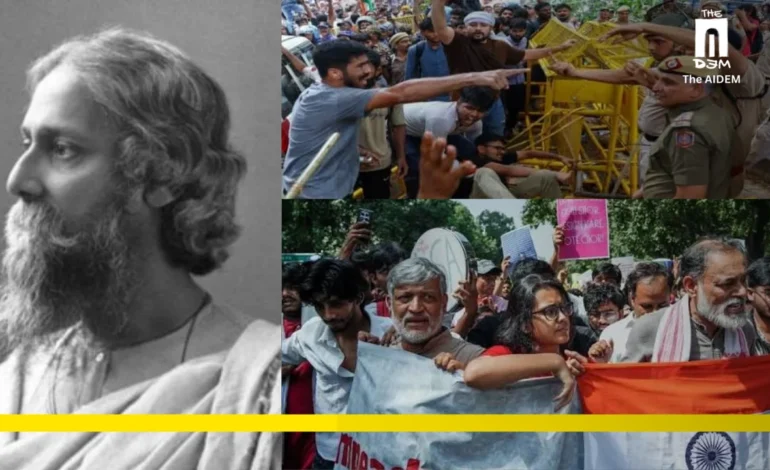
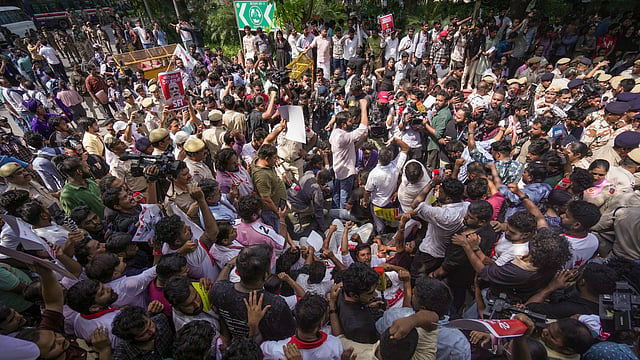
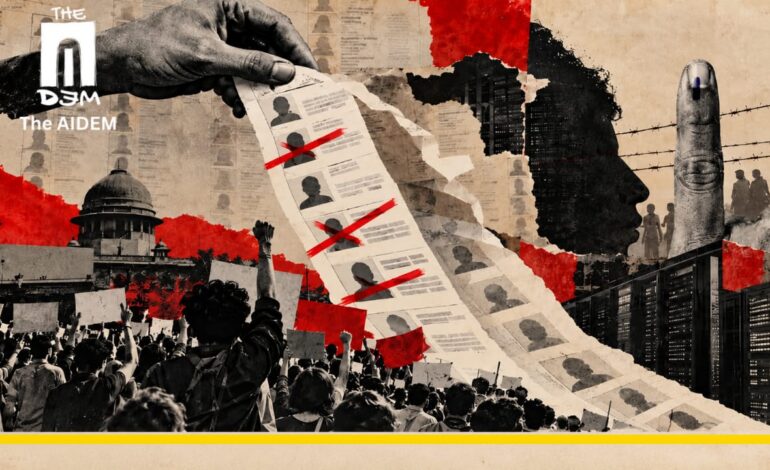
The streets of Delhi and other cities across India are today alive with the fervent energy of youth resistance. Tens of thousands of young citizens, students and workers from across the country have gathered in central Delhi to protest against what appear to be systemic irregularities in electoral processes and voting laws.
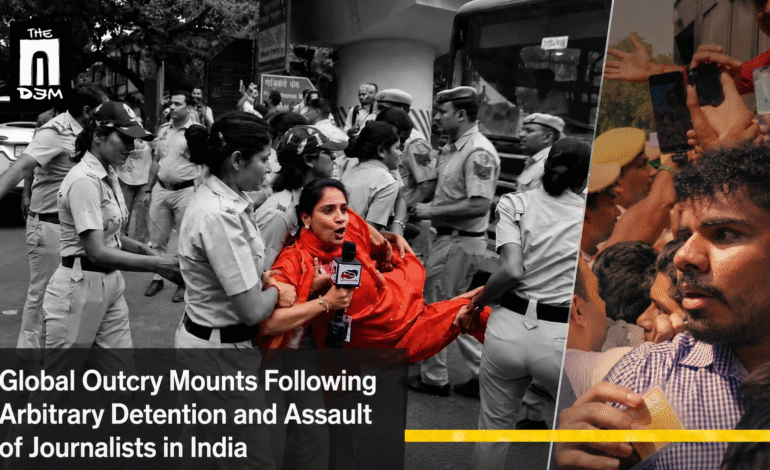
What began as a focused demand for institutional accountability has swiftly transformed into a broader struggle against state high-handedness. Across protest sites, the response from the state apparatus has been uncompromisingly harsh. Police forces have sought to silence young voices through targeted detentions, while physical assaults in custody have been reported against peaceful demonstrators. Opposition leaders have not been spared either. Even journalists documenting the unrest have faced arbitrary detention, while radical non-state elements, apparently operating with perceived tacit support, have physically attacked young men and women on the streets.
Crucially, despite growing disillusionment over the judiciary’s failure to actively protect citizens’ constitutional right to peaceful assembly, the swelling ranks of protesters remain resolute. Even children and secondary school students have joined the front lines, confronting the police and their high-handed behaviour with extraordinary calm and refusing to resort to violence.
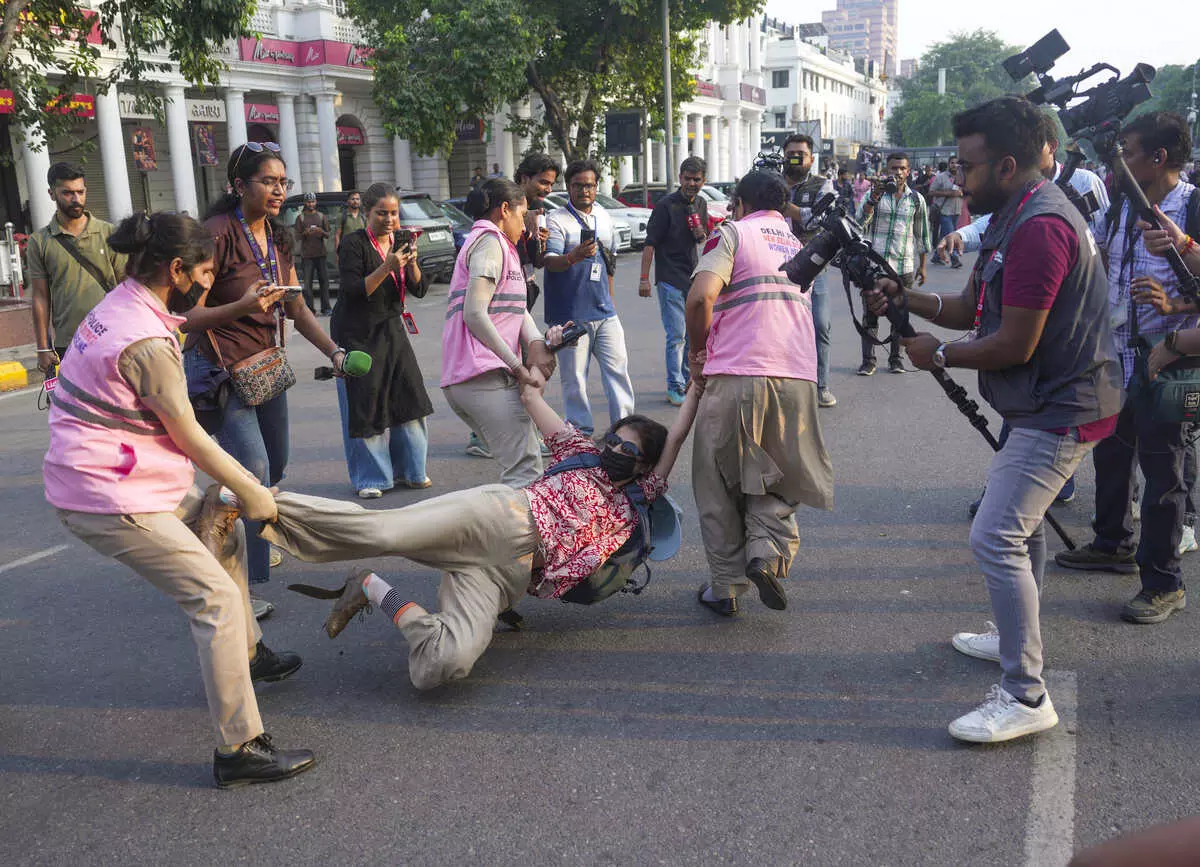
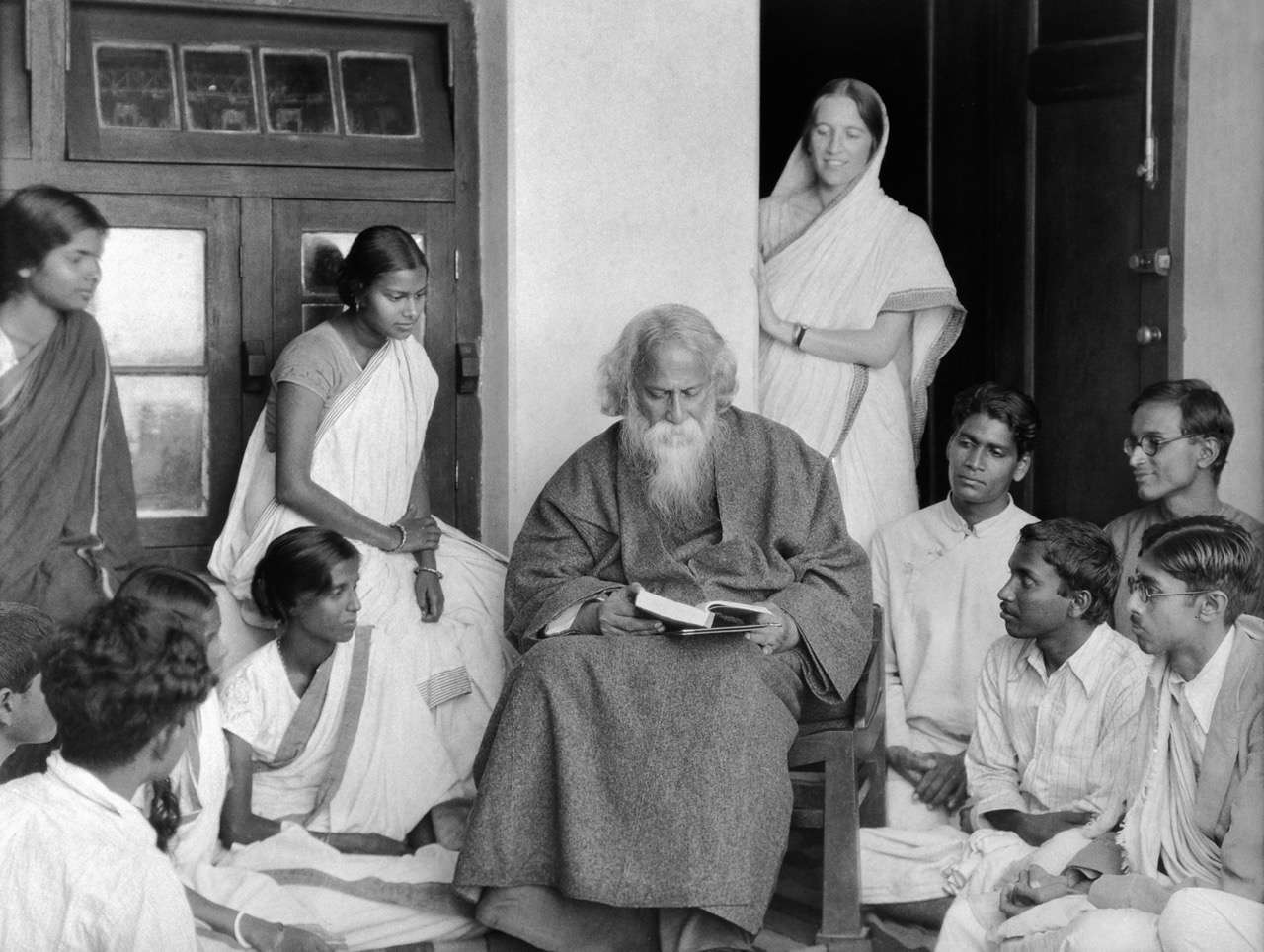
In times of such severe socio-political crisis, when raw power seeks to crush moral dissent, society often searches for an ethical compass. A poignant guide for this historical moment can be found in a message delivered decades ago by the Nobel laureate and freedom fighter, Gurudev Rabindranath Tagore.
Addressing the Indian Students’ Union in London during the height of the Indian freedom struggle, Tagore delivered a message that would resonate across generations, deeply rooted in moral philosophy.
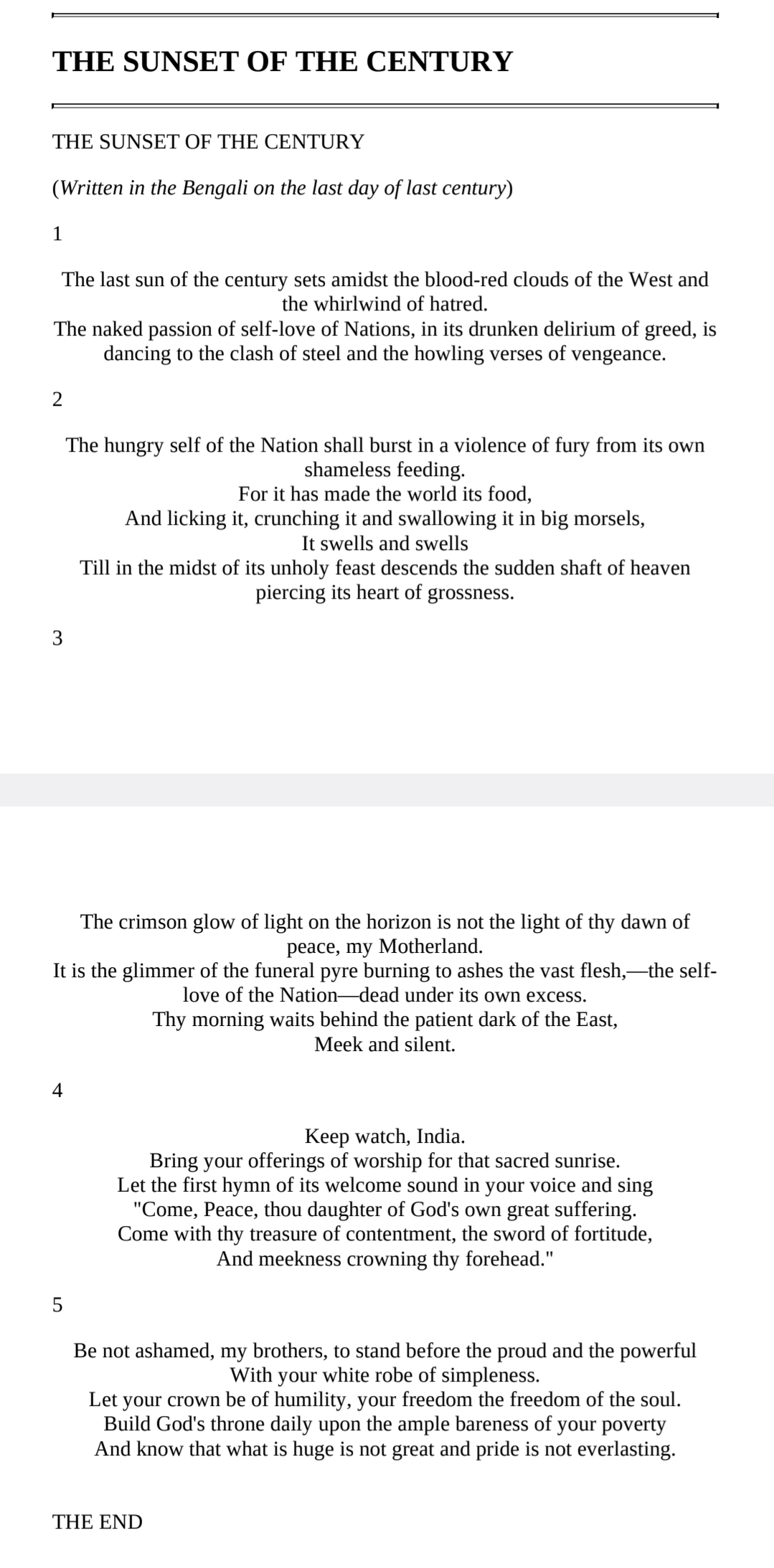
“Be not ashamed, my brothers, to stand before the proud and the powerful with your white robes of simpleness. Let your crown be of humility, your freedom the freedom of the soul. Build God’s throne daily upon the ample bareness of your poverty, and know what is huge is not great, and pride is not everlasting,”
observed Tagore in 1931 at the height of the Indian freedom struggle.
Tagore’s profound vision offers far more than poetic comfort. It serves as both a tactical and moral manifesto for contemporary democratic movements. By examining Tagore’s message in the context of present-day Delhi, we can articulate a clear blueprint for how peaceful resistance can retain its moral authority, withstand state violence and ultimately overcome authoritarian overreach.
Tagore’s opening exhortation urges young people not to be ashamed to stand before the proud and powerful clad in “white robes of simpleness”. In contemporary political discourse, “simpleness” is frequently misconstrued as weakness, naivety or a lack of political sophistication. However, in the context of non-violent democratic resistance, simpleness represents a deliberate refusal to adopt the oppressive techniques, armed posture and deceptive rhetoric of power employed by the state.
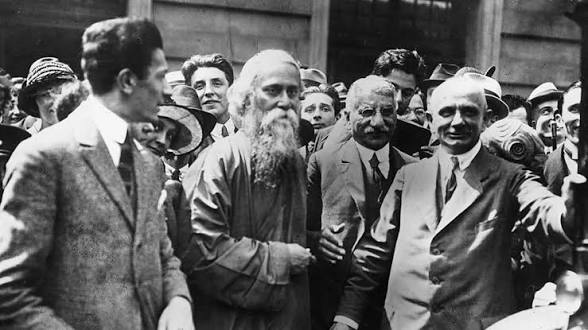
When young protesters take to the streets of Delhi equipped only with posters, national flags and peaceful chants, their simplicity stands in stark contrast to the heavily armoured police, paramilitary forces and barricades deployed against them.
The state’s coercive apparatus is structurally designed to crush violent insurrections. It thrives on chaos, armed provocation and the destruction of property, as these provide immediate legal and moral cover for heavy-handed suppression. Those who have been wondering why the police would park damaged vehicles and trucks loaded with stones in protest areas may find their answers here.
When radical groups or state authorities attempt to incite riots, they are inviting protesters into an arena where the state holds an absolute monopoly on force. By maintaining strict non-violence and transparent simplicity, young protesters effectively disarm the state’s narrative framework.
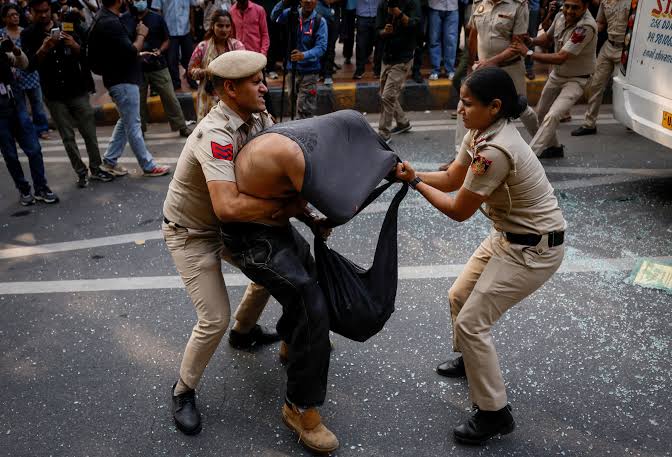
When an unarmed student or child stands quietly before a line of armed riot police, the moral high ground is instantly established. The heavy armour and weapons of the police no longer project strength. Instead, they expose the moral fragility of an administration that requires overwhelming force to subdue its own children. Simpleness, far from being a liability, becomes an unassailable shield that strips state authority of its perceived legitimacy.
Tagore further advises the youth: “Let your crown be of humility, your freedom the freedom of the soul.” In a struggle against an oppressive political structure, the greatest internal threat to any social movement is the erosion of its own moral integrity. When resistance movements succumb to hatred, retaliatory violence or ideological arrogance, they risk becoming mirror images of the power they seek to overthrow.
Humility, in Tagore’s philosophical framework, is neither submissiveness nor passive acceptance of injustice. Rather, it is the selfless recognition that the movement serves a cause greater than any individual’s ego: the preservation of truth (Satya) and justice (Dharma). A humble movement does not seek to humiliate its opponents but to awaken their conscience. This is why resorting to abusive slogans and vulgar attacks directed against those in power is a bad idea for young protesters.
Furthermore, Tagore highlights “the freedom of the soul” as the ultimate foundation of resistance. Physical detention, arbitrary arrests and abuse in custody are designed to inflict psychological degradation and instil fear. When young activists and journalists are taken into police stations and subjected to physical and mental distress, the state aims to break their spirit of resistance.
However, physical confinement cannot contain a mind that has liberated itself from fear. Once a citizen loses the fear of detention, loss of comfort or physical pain in the pursuit of justice, the coercive apparatus loses its primary mechanism of control. The freedom of the soul renders the activist fundamentally uncontainable.
One of the most striking aspects of the current protests in Delhi is the involvement of ordinary young people, students and children who possess no institutional power, political office or financial backing. In contrast, the government commands vast resources, state media apparatuses and administrative networks. This stark asymmetry often leaves observers with a sense of futility.
Yet Tagore explicitly addresses this disparity: “Build God’s throne daily upon the ample bareness of your poverty.” Throughout history, genuine democratic renewal has rarely originated within the comfortable halls of power or the boardrooms of wealthy elites. It is forged on bare streets, under open skies, by citizens who possess little more than their convictions. The multi-crore public relations machinery commissioned by government agencies, along with its PowerPoint presentations, would appear useless in comparison.
The “bareness” of the current protest movements — their lack of luxury, institutional protection or media patronage — is precisely what renders them authentic. When young students sit on cold asphalt in the face of harsh weather and police intimidation, their sacrifice transforms public spaces into sacred arenas of civic duty. Every peaceful assembly, every night spent in detention and every act of mutual care among protesters builds the moral infrastructure of a true republic. Democracy is not merely a set of procedural voting mechanisms. It is an active, daily practise of standing up for human dignity amid severe hardship.
The final sentence of Tagore’s inscription contains a vital political truth for both the oppressor and the oppressed: “Know what is huge is not great, and pride is not everlasting.”
Authoritarian regimes and overbearing state structures constantly project an image of absolute permanence and monumental scale. They showcase vast rallies, overwhelming force and total control over public institutions to create an aura of inevitability. Faced with such an immense display of power, citizens can easily fall into despair, believing that opposition is futile.
Tagore sharply distinguishes between that which is huge and that which is great. An institution or government may be huge in its reach, but if it relies on electoral irregularities, the suppression of free expression and the brutalisation of young people, it is entirely devoid of greatness. It remains a fragile construct, dependent entirely on force and vulnerable to collapse at any moment.
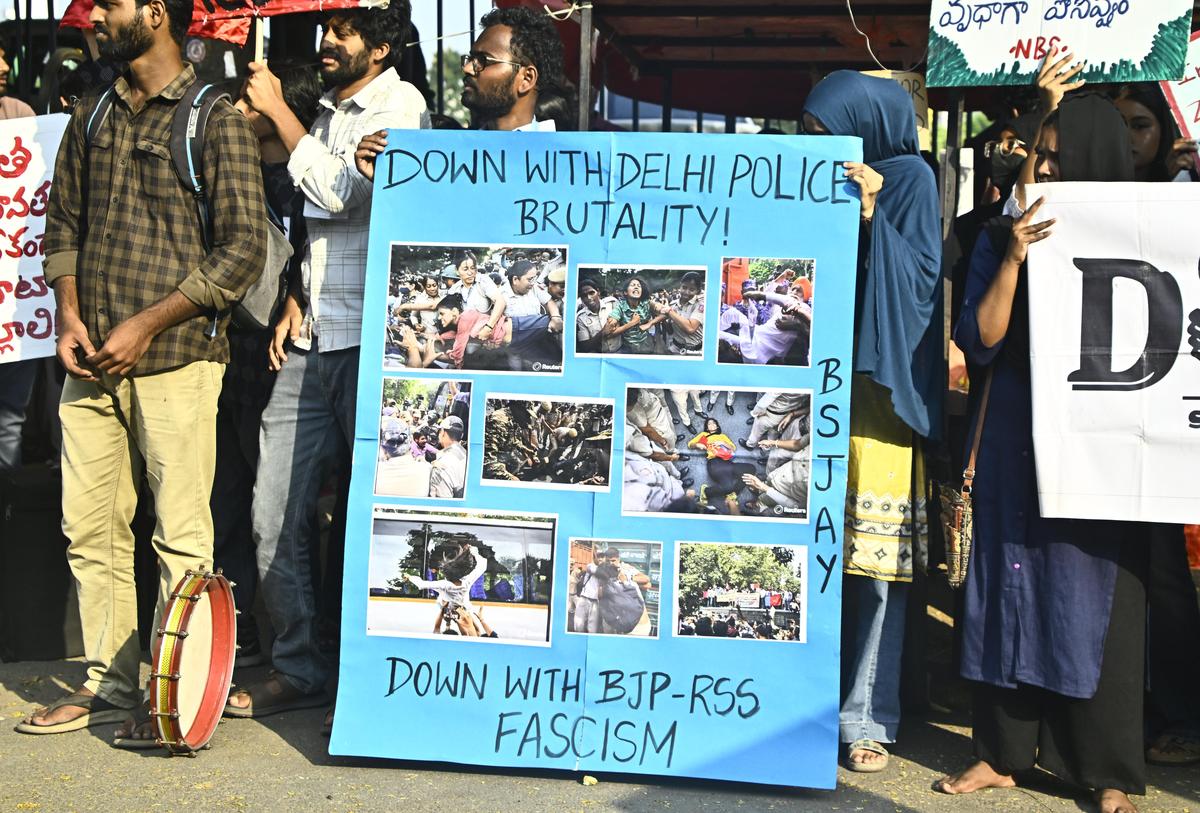
This October, the streets of Delhi are serving as a rigorous testing ground for India’s democratic spirit. As young men, women and children stand fearlessly against state power, their brave resistance demonstrates that the love of freedom remains vibrant in the hearts of the rising generation.
In this critical hour, Gurudev Rabindranath Tagore’s words, spoken decades ago, offer a clear vision. They remind us that true victory is not achieved through brute force, violent retaliation or political arrogance. It is achieved when a conscious citizenry stands before power in the “white robes of simpleness”, armed with humility, moral clarity and an unshakeable commitment to truth. So long as the youth of India hold fast to these principles, no amount of state high-handedness can extinguish their light, for history assures us that what is merely huge will fade, but truth and justice will endure.






Rabindranath Tagore’s timeless wisdom reminds us that true protest is not merely about raising our voices, but about standing firm with courage, simplicity, humanity and moral integrity. Young protesters must challenge injustice without surrendering their values. A movement that combines fearless resistance with compassion and truth can inspire generations and become a powerful force for democracy and change.
This introduces Tagore to me in a new light. Thanks