

When the Voter Becomes a Database Entry: SIR, Gen Z Resistance and the Bio-Politics of Disenfranchisement

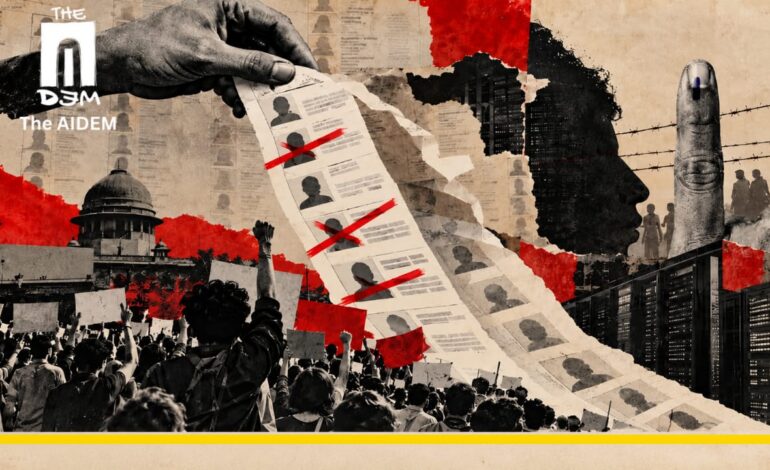
The fundamental questions: Who is a human? Who is a citizen? And what nature of bond ties the former to the latter? are far from abstract academic exercises. They form the vital axis around which sovereign power, state coercion, and authoritarian control pivot. Throughout history, fascism has rarely announced itself through the immediate, total abolition of legal institutions. Instead, it operates through a quiet, insidious redefinition of the relationship between biological humanity and politically qualified citizenship. It is precisely through this redefinition that a purely anthropological question, such as “Who is a German?”, “Who is an Indian?”, or “Who is a legitimate voter?” is weaponised into a national, racial, and biopolitical mandate.
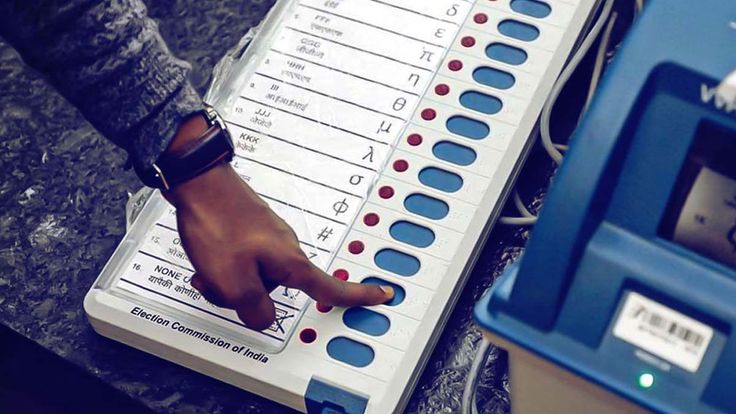
In contemporary India, this theoretical crisis has taken on urgent material reality through the Election Commission of India’s (ECI) controversial Special Intensive Revision (SIR) of electoral rolls and the unprecedented, youth-led Gen-Z mobilisation against it. What is officially presented as routine clerical maintenance- updating databases, removing duplicate entries, and purging migratory records- functions in practice as a sophisticated techno-biopolitical apparatus. By examining SIR voter deletions alongside youth resistance, we can trace how the modern bureaucratic state constructs an administrative state of exception, turning constitutional democracy into a site of disenfranchisement and bare life.
i. The Genealogies of Exclusion: From the Ancient Polis to the Biopolitical State
To understand how a voter registration drive can become an instrument of political exclusion, one must first trace the historical evolution of the civic body. In the ancient Greek polis, Aristotle famously defined man as a political animal (zoon politikon). Yet this political qualification rested on a foundational, structural exclusion. Neither women, slaves, nor foreigners were granted participation in the polis. The polis relegated reproduction and manual labour to the domestic sphere (oikos) as inferior, purely biological animal traits. The ancient city-state achieved its “political purity” by declaring that vast “categories” of human beings born within its geographical territory were not political animals at all because they were not recognised as fully human.

Modern liberal democracy claimed to break with this ancient tyranny. The 1789 French Declaration of the Rights of Man and of the Citizen proclaimed that all human beings are born free and equal in rights. However, as the Italian philosopher Giorgio Agamben has trenchantly observed, this foundational moment contained a fatal, hidden trap. The Declaration linked “inalienable human rights” directly to the “citizen.” The abstract, universal category of “man” had only a fleeting conceptual lifespan; in actual legal application, rights accrued exclusively to the “citizen.”

The human body is never merely a natural, biological entity emerging from nature’s crucible. It is a politically reconstructed anatomy, a corporeal form continuously inscribed with civic law. Through the primordial overlay of legal codes onto organic birth, the physical body becomes a biopolitical apparatus. Sovereign power enacts its dominion at this nexus: When birth becomes the primary point of sovereignty’s application, the state gains the power to determine whose life carries political value and whose existence can be administratively erased.
ii. The Anatomy of Administrative Purging: SIR as Techno-Biopolitical Control
The Special Intensive Revision (SIR) executed by the Election Commission of India marks biopolitics’ evolution into the digital era. Under the banner of administrative efficiency, the Election Commission of India subjects electoral rolls to systematic algorithmic audits, legacy mapping, and door-to-door verification drives. Yet, beneath the facade of technical neutrality lies a profound transformation in how civic belonging is recognised.
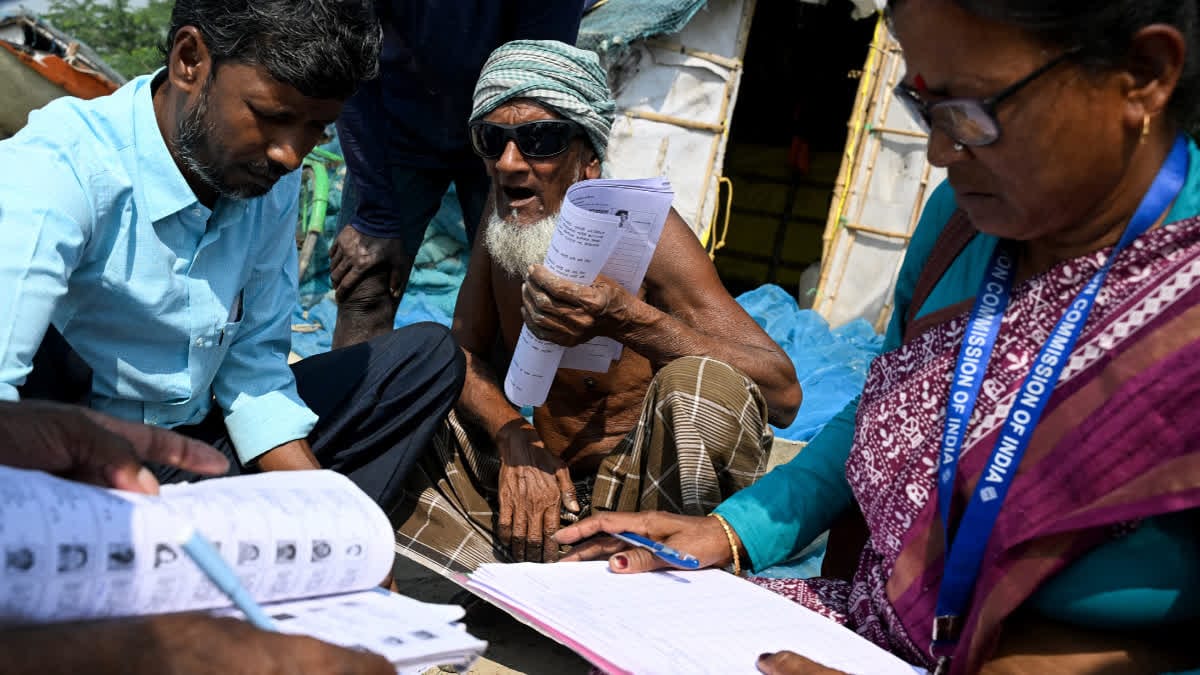
1. Decoupling Birth from the Polis
Under classical constitutional frameworks governed by jus soli (right of the soil), being born within a republic’s territory establishes a fundamental claim to civic membership. The SIR framework disrupts this principle by imposing stringent “legacy proof” and ancestral verification requirements. To keep or claim a place on the electoral roll, a resident’s physical presence is no longer enough; they must show their ancestors were previously recorded in historical sovereign archives. Organic birth on the soil becomes a legal defect, not a site of natural rights, and must be cured by bureaucratic documentation.
2. Algorithmic Disenfranchisement and Soft Violence
Unlike classical authoritarian regimes that relied on overt military force or explicit statutory bans to disenfranchise target populations, the techno-biopolitical state operates through silent, administrative expulsion. Millions of names vanish from voter lists under ambiguous headings: “unmapped,” “permanently shifted,” “mismatched legacy,” “dubiant”, or “unverified progeny.” The citizen receives neither a formal order of exile nor a judicial conviction; on election day, they arrive at the polling booth only to find their political persona deleted from the server.
3. The Production of the Interior Exterior
The individual purged through administrative deletion is not physically deported across an international frontier. Instead, they remain physically present within the nation-state while being stripped of their capacity to act politically. They become what Giorgio Agamben calls Homo Sacer, a figure in archaic Roman law who exists outside human and divine law, a body that can be killed without legal consequence. Killing a Homo Sacer isn’t a crime. The SIR process creates an “exterior within the interior,” populating the nation with millions of residents who live under the state’s jurisdiction but have no political voice to challenge its decrees.
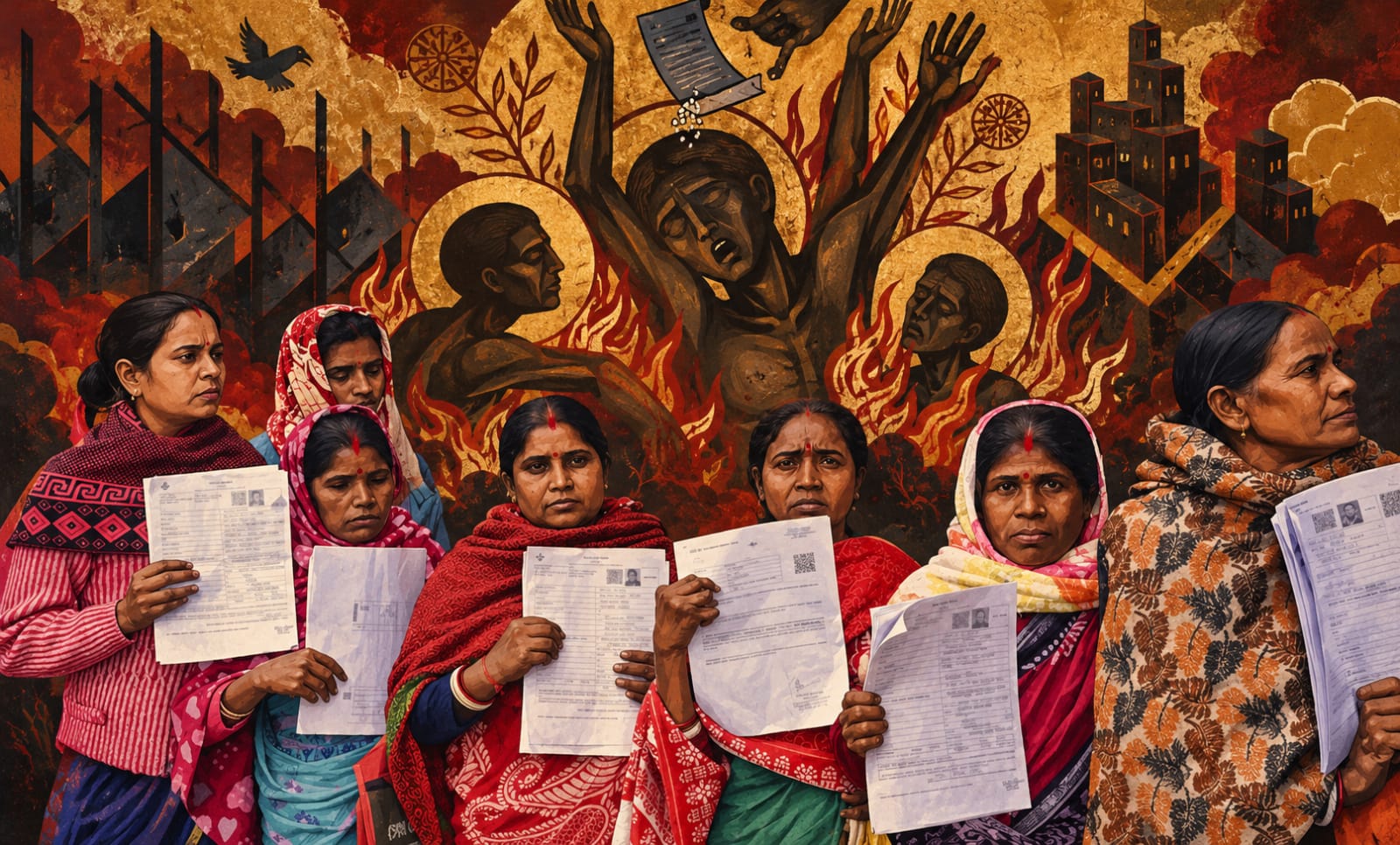
III. The Gen Z Revolt: Reclaiming the “Right to Have Rights”
The explosive youth- and student-led agitations against the Election Commission of India, specifically targeting Chief Election Commissioner Gyanesh Kumar, mark a pivotal moment of counter-hegemonic resistance. Driven by young voters, university student unions, and digital activist networks, this mobilisation extends far beyond routine electoral grievances; it constitutes an existential defence of democratic political agency.
1. Rejecting “Progeny Mapping” and Inherited Subjugation
For first-time Gen Z voters entering the political sphere, the requirement to establish genealogical lineage through ancestral document mapping serves as a structural barrier. Young, mobile, lower-income, and marginalised citizens frequently lack access to decades-old property deeds, legacy voter records, or birth certificates. The Gen Z movement fundamentally rejects the premise that political participation is an inherited privilege contingent on parental records. They demand that political agency be recognised as an intrinsic, non-negotiable right attached to every living human being upon reaching adulthood.
2. The Defence of Arendtian Rights
In her landmark analysis of totalitarianism, Hannah Arendt observed that abstract “human rights” become meaningless the moment an individual loses membership of a specific political community. Arendt asserted that human beings require, above all else, the “right to have rights”, the foundational guarantee that one belongs to a political framework in which one’s actions and opinions matter. When an Election commission exercises unchecked authority to erase voters without notice, transparency, or judicial recourse, it destroys the “right to have rights.” The Gen Z agitation recognises that once the state acquires the power to arbitrarily revoke the franchise, every citizen’s status is reduced to a temporary, revocable privilege.

3. Shattering the Illusion of Institutional Neutrality
By taking their protests directly to the administrative hubs of state power and occupying public squares from Shivaji Park to Jantar Mantar, the youth movement has shattered the myth of bureaucratic neutrality. They have exposed how algorithmic filters, database fields, and revision schedules are weaponised to engineer electoral demographics. In doing so, Gen Z activists have shifted political discourse from mere electoral strategy to a radical defence of constitutional belonging.
iv. From Biopolitics to Necropolitics: The “Necropolitical Citizen”
When techno-biopolitical control is integrated into a majoritarian or ethno-nationalist state project, biopolitics (the state management of living populations) undergoes a lethal mutation into what philosopher Achille Mbembe terms necropolitics, the sovereign power to determine who matters, who is politically alive, and whose existence is rendered expendable.

In an ethno-democracy, the state assigns radically different values to different civic bodies. The dominant cultural or majoritarian political group receives full citizenship, complete with robust judicial protections, economic security, and institutional visibility. By contrast, historical minorities, low-income labourers, migrant workers, and political dissidents are relegated to a precarious limbo between citizen and refugee.
As Agamben emphasised, the “camp” is not defined solely by concrete walls or barbed wire; it is the spatialised structure in which the state of exception is normalised, and power acts directly on human bodies without legal mediation. The voter who is administratively erased via SIR, forced to navigate endless bureaucratic corridors to prove their entitlement to be on a register, inhabits an invisible camp embedded within the nation-state.
Disenfranchisement is the precursor to civic death. A population stripped of the vote loses its primary means of holding state authority to account, defending civil rights, or resisting economic expropriation. They become Necropolitical Citizens, individuals allowed to breathe, but politically extinguished. Their lives are rendered entirely unlivable by administrative decree, and they are recognised as citizens only in death or when their muted bodies serve the regime’s statistical requirements.
v.The Refugee Embedded Within Every Citizen
The crisis surrounding the SIR voter deletions and the youth mobilisation resisting them reveals modern liberal democracy’s ultimate vulnerability: citizenship has been transformed from an inalienable right into a conditional status the state can revoke at will.
When the threshold of political belonging shifts from universal human dignity to algorithmic verification and archival legacy, the state embeds the refugee condition within the body of every citizen. The constant threat of being flagged as “unmapped,” “suspicious,” or “politically unfit” functions as a psychological mechanism of state terror. It serves as a continuous warning that civic inclusion is not a permanent guarantee but a temporary concession granted by sovereign authority.
The Gen Z mobilisation against the Election Commission is therefore not merely a temporary electoral protest. It is a fundamental battle over what it means to be a political human. By demanding the restoration of deleted voters, the abolition of discriminatory legacy verification, and absolute institutional transparency, the youth assert a vital truth: human bodies cannot be reduced to line items in a state database, nor can the sovereign state hold the right to inhabit the polis hostage.
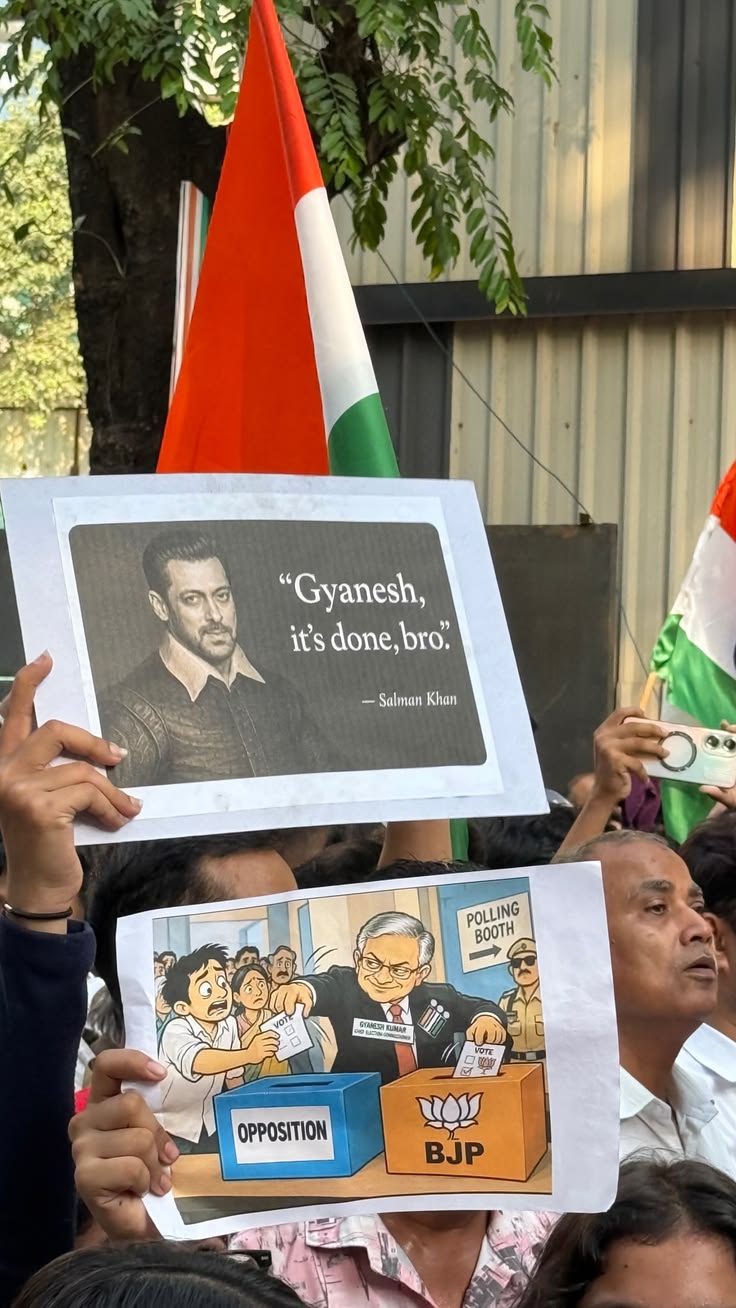
The ongoing SIR deletions and the fierce youth resistance against the Election Commission expose the ultimate thesis of modern biopolitics: fascism in the 21st century does not require a dramatic, bloody overthrow of the constitutional architecture. Instead, it operates through the quiet, administrative capture of the democratic apparatus itself. Under Narendra Modi’s government, this strategy manifests as a clandestine fascist agenda, a project that replaces overt state violence with algorithmic, database-driven disenfranchisement.
Far from being an isolated administrative error or a routine database update, the SIR exercise is the logical culmination of Hindutva biopolitics. Whereas classical fascism relied on physical concentration camps and racial statutes, the modern Hindutva state achieves the same goal through digital registers, legacy mappings, and bureaucratic opacity. By turning voter revision into a legacy-probing tribunal, the regime quietly achieves what cannot be easily achieved through overt legislation: the systematic disenfranchisement of religious minorities, migrant workforces, marginalised castes, and politically hostile youth demographics.

This is the hidden engine of the majoritarian state. It lets the Modi regime maintain the global facade of a thriving, vibrant democracy, replete with routine elections and high voter turnouts, while secretly curating the electoral roll to engineer a majoritarian outcome. The state transforms the voter roll from an inclusive record of the population into an exclusive register of the ethnos. In doing so, it embeds the refugee’s latent condition within every citizen’s body. When the threshold of political existence shifts from the biological fact of human birth to the possession of arbitrary ancestral archives, citizenship ceases to be an inalienable right; it becomes a temporary lease granted at the sovereign power’s sole discretion.






A voter is not a database entry, and the right to vote is not a privilege that the state can take away through opaque procedures and bureaucratic hurdles. SIR raises serious questions about electoral transparency, accountability and the very meaning of citizenship. The resistance of Gen Z is a powerful reminder that democracy cannot survive when citizens are reduced to numbers and their constitutional rights are put at risk. The real test of democracy is not how efficiently it manages voters, but how firmly it protects every citizen’s right to vote.