

The Vultures Are Returning — But India’s Ecological Warning Remains

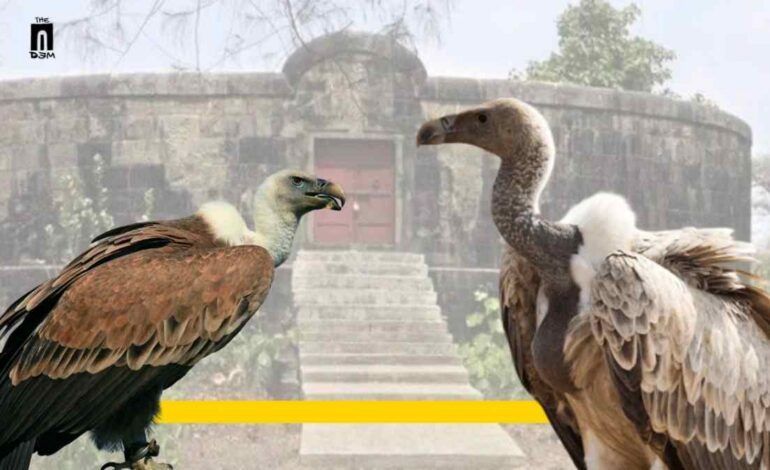
International Vulture Awareness Day, observed on the first Saturday in September every year, grew out of a conservation initiative launched in 2006 by the Birds of Prey Programme of South Africa’s Endangered Wildlife Trust and the Hawk Conservancy Trust in England. Conservation organisations use the occasion to raise awareness about the drastic decline in vulture populations worldwide and to challenge their undeservedly negative public image. It is an important day as it raises awareness about these misunderstood and ill-treated birds of prey and highlights their importance in the ecosystem.
They are nature’s best clean-up crew and the world’s only obligate scavenging birds. Unlike many other animals that may hunt at times and scavenge at others, vultures depend almost entirely on the carcasses of animals that have already died. Without vultures, carcasses can remain in the environment for longer, providing food for other scavengers and potentially increasing exposure to pathogens. Some of the diseases associated with decomposing carcasses include anthrax and botulism, while changes in scavenger populations can also have implications for diseases such as rabies. Vultures possess highly acidic digestive systems capable of destroying many dangerous pathogens, along with physiological adaptations that enable them to consume carrion safely.
There are nine species of vultures in India. Three species of Gyps vultures are residents in Asia. These include the White-rumped Vulture (Gyps bengalensis), Indian or Long-billed Vulture (Gyps indicus) and Slender-billed Vulture (Gyps tenuirostris). They were found in great numbers throughout South Asia and much of the Indian subcontinent during the twentieth century. However, their populations began collapsing at an alarming rate during the final decades of the twentieth century, with declines of more than 99 per cent recorded in some populations.
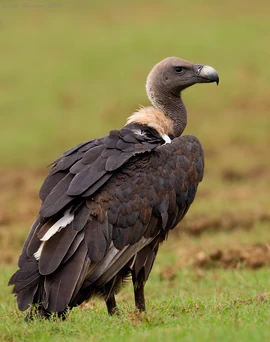
Presently, these species have small populations in different parts of the country, with some showing signs of recovery after years of conservation intervention. The Red-headed Vulture is categorised as Critically Endangered and the Egyptian Vulture as Endangered, while species such as the Himalayan Griffon and Bearded Vulture face varying degrees of conservation concern.
Scientist Vibhu Prakash was one of the first to report this disaster in scientific journals after noticing the extraordinary disappearance of vultures from areas where they had once been abundant. Initially, scientists tested dead birds for pesticides and heavy metals, but they found little that could explain the scale of the mortality. Researchers considered whether a new disease might be responsible. The ecological consequences of the decline also became a matter of concern, particularly as feral dogs and other scavengers increasingly fed on carcasses that vultures had once rapidly consumed.
It was in 2003 that Professor Lindsay Oaks and his colleagues identified the principal culprit: diclofenac, a widely used non-steroidal anti-inflammatory drug. Pathological examinations revealed that many dead vultures had suffered from visceral gout, a condition associated with severe kidney failure. Subsequent investigation and controlled exposure studies established that diclofenac residues in livestock carcasses could cause fatal renal failure and visceral gout in vultures.
The source of the painkiller was its veterinary use in livestock. Veterinary diclofenac was used to treat cattle and other animals for pain and inflammation. If an animal died while residues of the drug remained in its tissues, vultures feeding on the carcass could ingest diclofenac. Even small quantities can be highly toxic to Gyps vultures, causing acute kidney failure and an accumulation of uric acid that produces visceral gout and can ultimately kill the bird.
Diclofenac is also widely used in human medicine as a non-steroidal anti-inflammatory drug to relieve pain and inflammation. It is prescribed or sold in various formulations for conditions including arthritis, muscular and joint pain, menstrual pain and migraine. The conservation problem, however, arose primarily from vultures consuming carcasses of livestock that had been treated with the drug. After restrictions on veterinary diclofenac were introduced, conservationists also raised concerns about human formulations being diverted for use in animals because they remained readily available.

India moved to phase out veterinary diclofenac in 2005, and the government formally banned its veterinary use in 2006. Yet enforcement proved difficult. Diclofenac intended for human use remained available and could still be administered illegally to livestock. Authorities subsequently introduced measures intended to restrict such misuse, including warnings that human diclofenac formulations should not be used for veterinary purposes.
Meloxicam emerged as an important alternative because it was found to be considerably safer for vultures. But removing diclofenac from the livestock-treatment chain has remained crucial to the recovery of India’s threatened vulture populations.
The effects of the loss of vultures were deeply felt by the Parsi community, who practise the traditional exposure of the dead in Towers of Silence, where bodies are left to the natural elements and scavenging birds. The Zoroastrian religion teaches that the elements of earth, fire and water are sacred. Traditional funerary practice therefore sought to avoid contaminating these elements, with vultures historically playing a crucial role in the disposal of the dead.
The disappearance of vultures consequently created both a practical and a religious crisis. Solar concentrators were introduced at Mumbai’s Doongerwadi in an attempt to accelerate the desiccation of bodies through concentrated sunlight without resorting to burial or cremation. But the technology could not entirely substitute for the ecological function once performed by the birds.
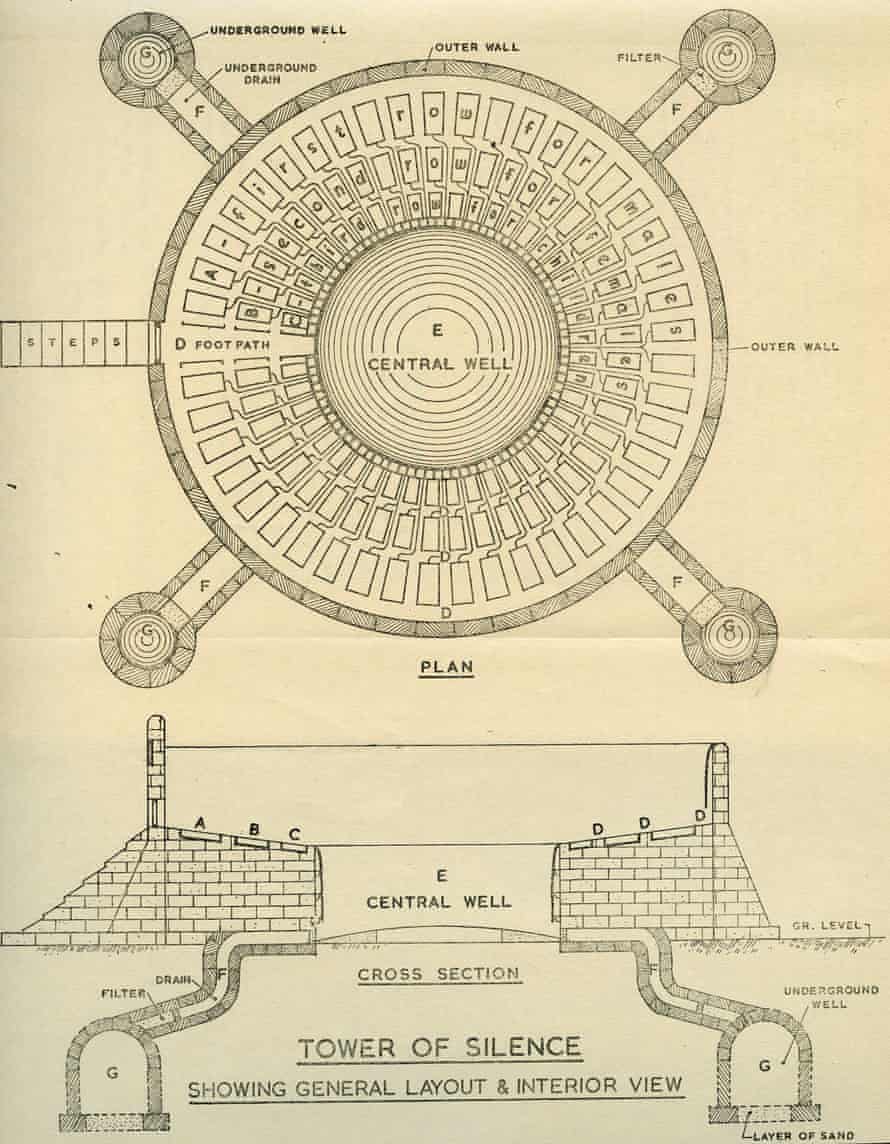
The innovation also divided opinion within the community. Dinshaw Rusi Mehta, a member of the Bombay Parsi Punchayet (BPP), argued that the solar concentrators could become “useless” after sunset and during the rainy season. Khandiyas and Nasusalars — the traditional pall bearers and corpse bearers associated with the Towers of Silence — have similarly spoken about the practical difficulties created by the disappearance of vultures, particularly during Mumbai’s monsoon months.
The larger debate goes beyond the effectiveness of solar technology. Some Parsis maintain that sky burial remains the most ecologically and religiously appropriate method of disposing of the dead and that a centuries-old tradition cannot simply be abandoned because the vultures have disappeared. Others, particularly among younger members, argue for adaptation, pointing to changes in Zoroastrian funerary practices elsewhere, including Iran. The vulture crisis has thus forced the community to confront a difficult question: how can religious continuity be preserved when the ecological system on which a ritual depended has itself collapsed?
The consequences of India’s vulture catastrophe therefore extended far beyond the disappearance of a group of birds. A pharmaceutical intervention in livestock medicine travelled through an extraordinary ecological chain — from cattle to carcasses, from carcasses to vultures, and from the disappearance of vultures to changes in scavenger populations, public-health concerns and even the funerary practices of an ancient religious community.
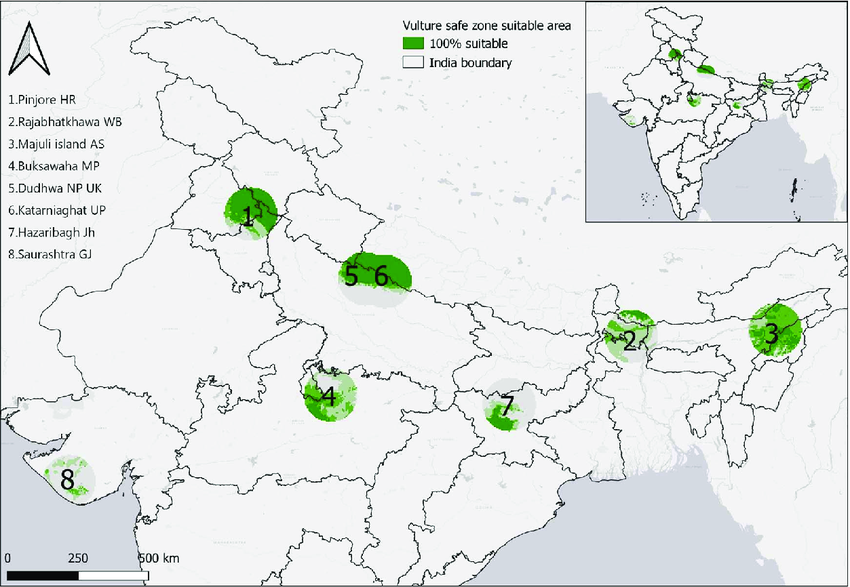
At the national level, there are now tentative signs of recovery, aided by conservation programmes, Vulture Safe Zones and captive-breeding and release initiatives across the country. Madhya Pradesh has emerged as an important centre of these efforts.
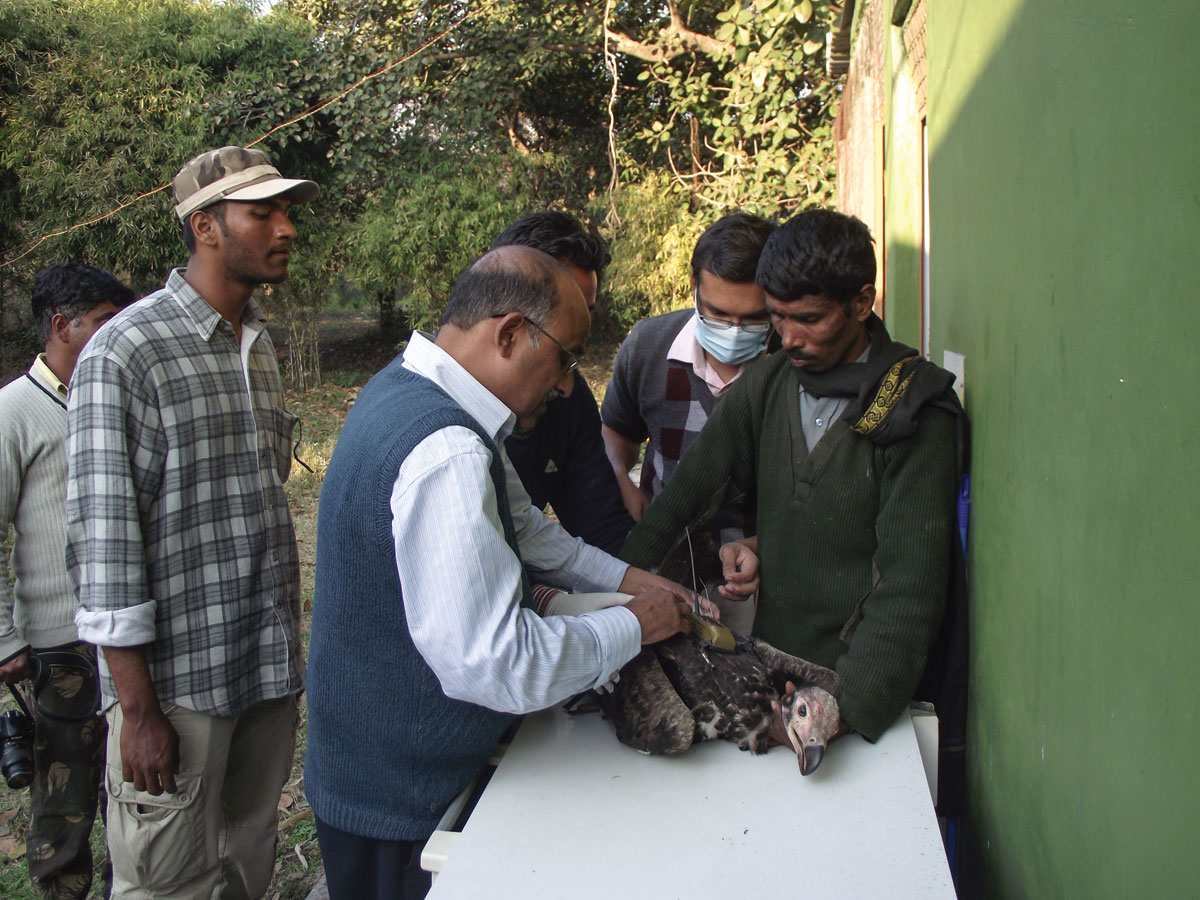
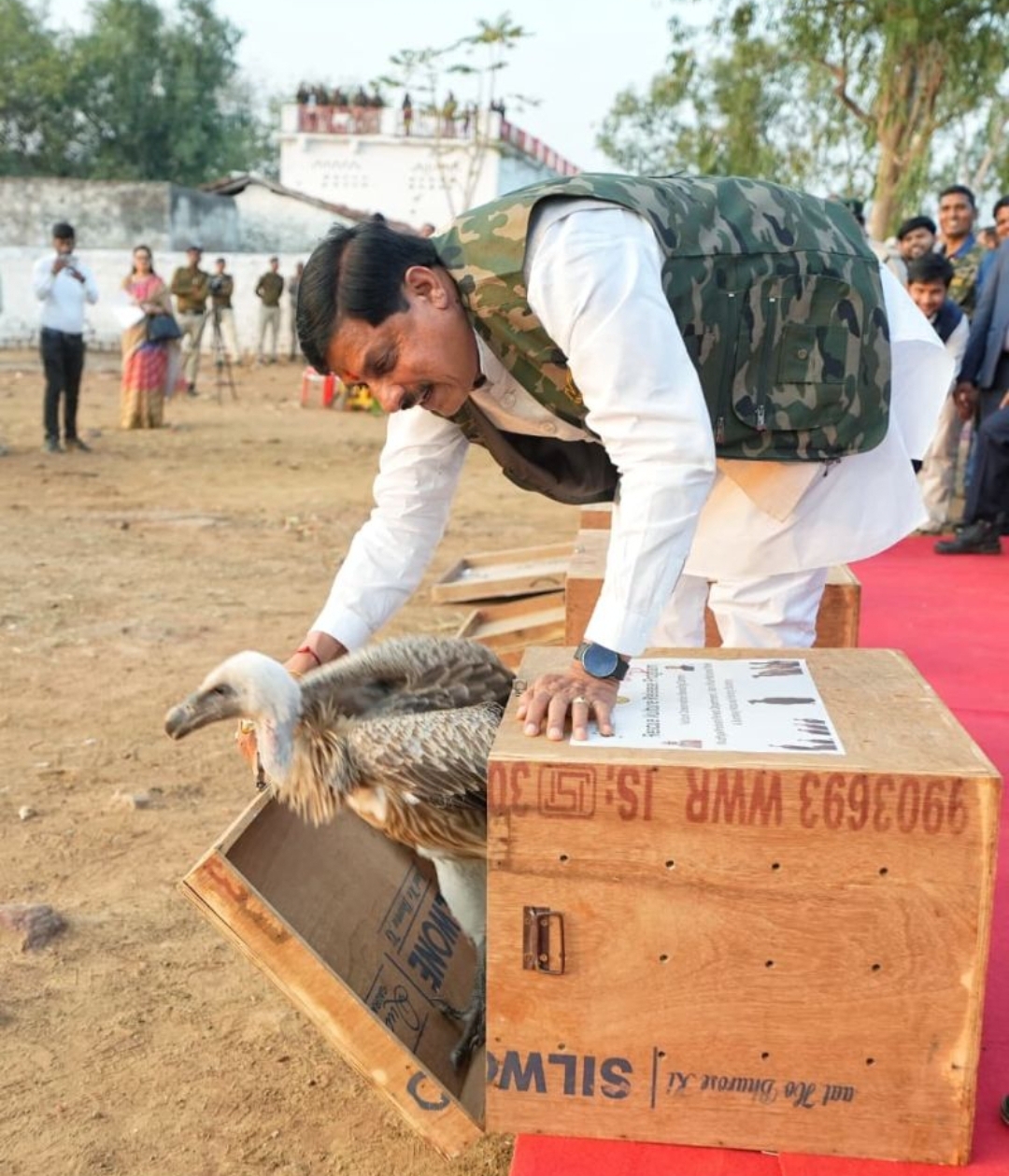
On 23 February 2026, Madhya Pradesh Chief Minister Mohan Yadav released five rehabilitated vultures — four Indian Vultures (Gyps indicus) and one Cinereous Vulture (Aegypius monachus) — into the wild in the Halali Dam area near Bhopal. The birds were fitted with GPS tracking devices as part of conservation efforts involving the State Forest Department, WWF-India and the Bombay Natural History Society (BNHS). Monitoring their movements is expected to provide researchers with valuable information about habitat use and the threats the birds encounter after release.
With significant vulture populations surviving in parts of Madhya Pradesh and conservation programmes beginning to yield results, there is reason for cautious hope. But recovery from a population collapse of more than 99 per cent is necessarily slow. Toxic veterinary drugs, poisoning, habitat disturbance, electrocution and other human pressures continue to pose threats. The return of a few birds to the wild, important as it is, should therefore not be mistaken for the end of the crisis.
India’s vulture catastrophe carries a warning that reaches far beyond conservation. A medicine designed to relieve the suffering of livestock passed almost invisibly through the food chain and pushed some of the subcontinent’s most efficient scavengers towards extinction. Their disappearance, in turn, altered the ecology of carcass disposal, affected other scavenger populations, created public-health concerns and disrupted a centuries-old human religious practice.
The story of the vulture is thus a story about interconnectedness. Human medicine, livestock, wildlife, disease, religion and culture turned out to be parts of the same ecological chain. Breaking one link produced consequences that travelled far beyond anything originally imagined.
As vultures slowly return to parts of India’s skies, their recovery offers both hope and a caution. Saving them is not merely about rescuing a spectacular bird from extinction. It is about restoring an ecological relationship whose importance became fully visible only when the birds almost disappeared.










This is a powerful and deeply important article by Prachi Jha. It reminds us that the return of vultures is not merely a conservation success story—it is a warning about how human actions can disrupt an entire ecological chain. Saving vultures means protecting the delicate balance between wildlife, public health, culture, and nature. A timely and thought-provoking piece. �
I haven’t seen a single vulture since our middle school days, but I just read some great news!