


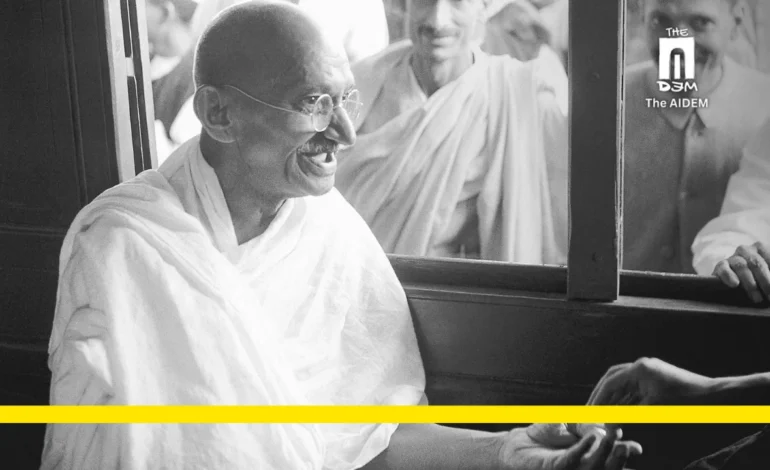
Gandhi and Finance- Part 2
For Mahatma Gandhi, the lessons he learnt about money in South Africa took on a new meaning when he returned to India in 1915. He began to transform fundraising from a means of sustaining a movement into a powerful form of mass participation, where coins, jewellery and everyday possessions became expressions of trust, sacrifice and national purpose.
This is the second article in a three-part series published by The AIDEM and written by Anu Jain exploring Gandhi’s experiments and encounters with finance. It traces how he democratised political fundraising, challenged dependence on wealthy patrons and turned every contribution, however small, into an act of participation in India’s freedom struggle.
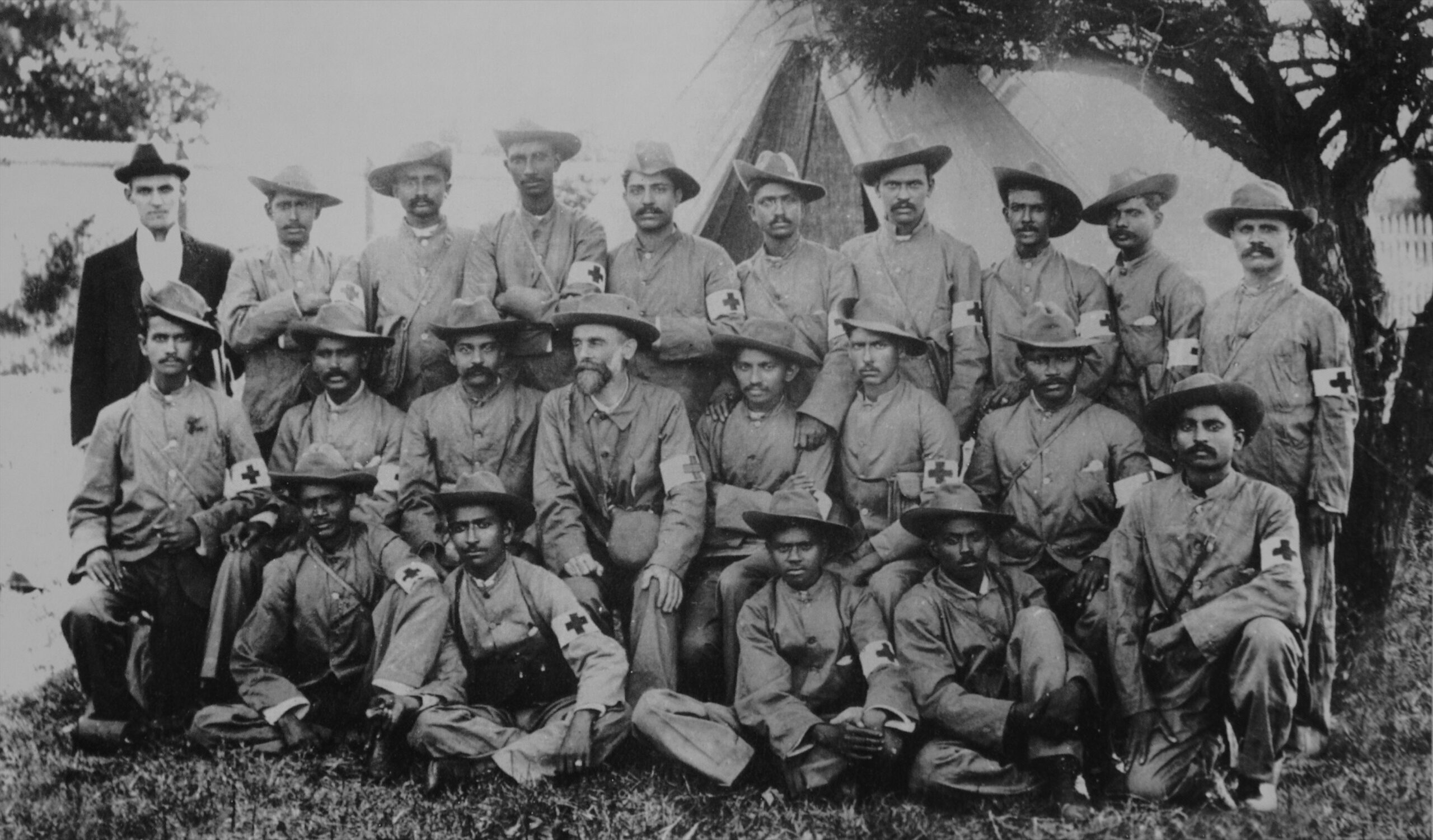
In the winter of 1915, a small steamship slipped into the harbour at Apollo Bunder in Bombay, carrying a man who looked less like a political revolutionary and more like a weary pilgrim. Mohandas Karamchand Gandhi had returned to his homeland after more than two decades in South Africa. The elite of Bombay rushed to welcome him with lavish garden parties and glittering receptions. Yet, beneath the silk turbans and the polished English pleasantries of the Indian aristocracy, Gandhi was listening for a different pulse. He brought with him a revolutionary realisation that would fundamentally upend the subcontinent’s struggle for freedom. A political movement could not survive without money, but money, if untethered from morality, would quietly rot the very foundations of freedom.
For Gandhi, a rupee was never just a piece of silver. It was a fragment of human labour, an expression of intent, and a moral choice. Before his return, Indian politics had largely been a gentleman’s game, financed by the deep pockets of landed barons and wealthy princes, who discussed in whispered tones within exclusive drawing rooms. Gandhi shattered this elite monopoly. He looked at the vast, impoverished expanse of India and decided that if the nation were to be liberated, the struggle must be financed not by the surplus wealth of the few, but by the sacred sacrifices of the many. From the dusty communes of Phoenix Settlement in Natal to the serene riverbanks of Sabarmati, Gandhi went about recasting fundraising from a cold administrative extraction into a grand, spiritual awakening. He became a moral alchemist, transforming copper coins, worn shawls, and discarded bangles into the golden currency of national self-respect.
The blueprint for this financial revolution was forged in the crucible of South Africa. In the experimental settlements of Phoenix and Tolstoy Farm, Gandhi had discovered that the muscle of satyagraha grew strongest when material resources were scarce. The struggles against colonial racism in the Transvaal had taught him that the moment an organisation accumulates excess wealth, it breeds comfort, and comfort is the mortal enemy of defiance.
In his reflections on Satyagraha in South Africa, Gandhi later noted a profound paradox: the movement did not endure because it was well-funded, but because it was disciplined. In those early days, funds were desperately scarce. To ensure that not a single penny was wasted, Gandhi institutionalised an almost religious obsession with bookkeeping. Every expenditure was tracked, and every receipt was filed. This meticulousness was not born out of administrative pedantry but out of an ethical commitment to public trust. He believed that an organisation that could not account for its pennies would eventually squander its principles.
When he stepped onto Indian soil in January 1915, he found a social and economic landscape vastly more complex, fractured, and unequal than the one he had left behind. The scale was dizzying, and the expectations were amplified. He knew he could not build a mass movement overnight. His initial institutional experiments, including the early days of his ashram life, still relied on the trust networks of the old world: the wealthy industrialists, reform-minded patrons, and local elites who were drawn to the legendary reputation he had carved out across the ocean. But even in these localised, elite-supported beginnings, the seeds of a radical transition were already being sown.
Birth of Symbolic Value
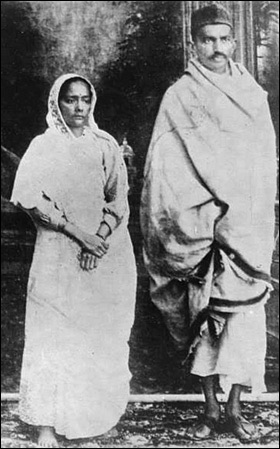
Shortly after his return, Gandhi and his wife, Kasturba, travelled by train to Porbandar, the seaside town of his birth. On their arrival, they were taken through the town in a horse-drawn carriage, cheered by large crowds lining the streets. Here, personal memory and public expectation came together with festive intensity. The Gandhi family name carried great weight in the region; both his father and grandfather had served as Diwans (Prime Ministers) of the princely state. Porbandar welcomed him with a spectacle that felt more like a royal homecoming than the arrival of an ascetic. Ceremonial arches spanned the dusty streets, houses were draped with vibrant banners, and schools closed for the day. A grand procession wound through the town. Cavalry horses pranced at the front, followed by infantry units and a booming military band, while the local ruler watched from his palace balcony.
The following day, more than five thousand people, including a remarkable gathering of women, assembled to hear Gandhi speak. It was during this meeting that a quiet but extraordinary transaction took place, one that revealed the future logic of Gandhian finance. A local merchant’s eyes fell upon the ordinary shawl draped across Gandhi’s shoulders. By any material standard, the textile was nearly worthless, coarse, weathered, and visibly reduced by years of relentless use. Yet, its proximity to Gandhi had altered its social life entirely. The merchant stood up and announced to the crowd that he would pay the princely sum of one hundred rupees for it, not for the quality of its thread, but precisely because it had been sanctified by the embrace of the Mahatma.
In accepting the offer, Gandhi did something instinctive that would become his lifelong rule: he immediately directed that the money be funnelled into a local charity. He refused to let the symbolic transaction settle into personal gain, ensuring it returned instead to the public domain. This moment marked a seismic shift. Value was no longer inherent in the object itself; it was generated through moral proximity. A piece of old cloth became economically meaningful because it had passed through an ethical presence. This was the birth of Gandhi’s symbolic economy, a system where gestures, everyday objects, and even time itself could be converted into political and financial capital for the nation.
Fragility of Elite Patronage
In May 1915, Gandhi paused his restless travels across India and turned his eyes toward Gujarat. He was not yet ready to throw himself into the whirlpool of national politics. He wanted to build a sanctuary first, a disciplined crucible where a dedicated band of workers could live out the vows of satyagraha before preaching them to the masses. Before he could remould India, he needed to create a miniature model of it.
Ahmedabad was chosen as his anchor, and for very pragmatic reasons. The city was a bustling hub of commerce, home to a wealthy class of Hindu and Jain textile merchants whose financial resources could sustain radical social experiments. It was also a place where Gujarati, his mother tongue, allowed him to speak directly to the hearts of the people, untranslated and unburdened by the British cultural dominance that saturated colonial presidency cities like Bombay or Calcutta. On the outskirts of this mercantile city, in a colonial-style bungalow loaned by his close associate, the barrister Jivanlal Desai, Gandhi founded the Kochrab Ashram.
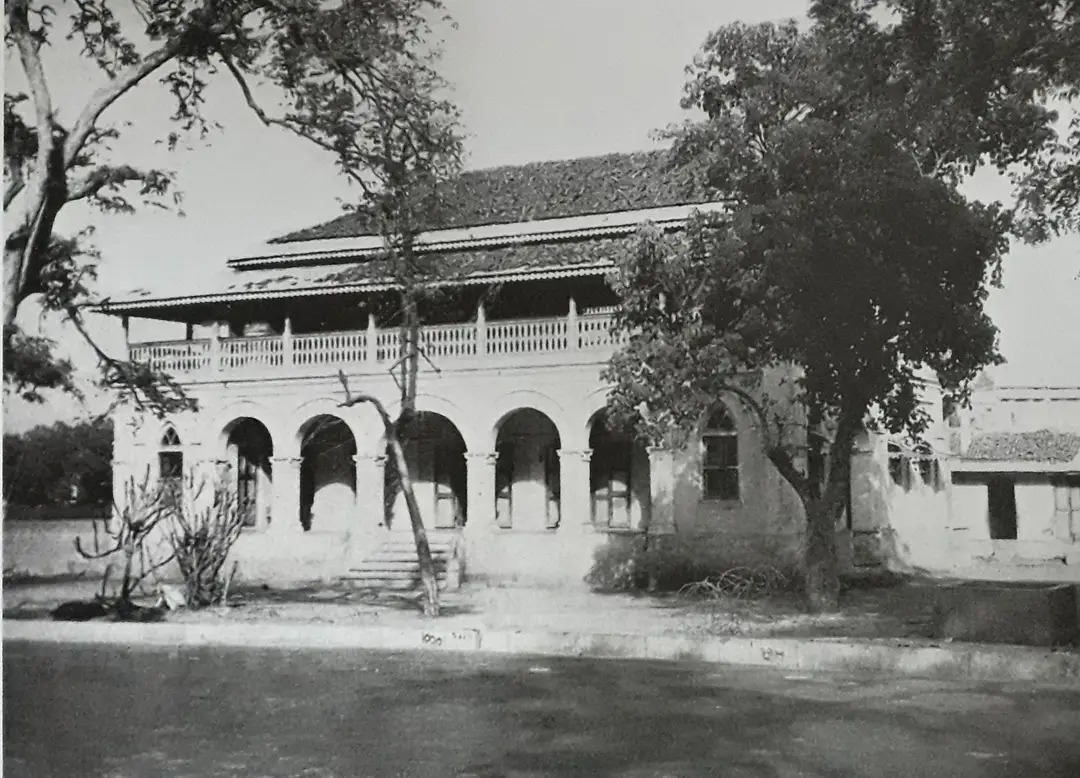
The ashram was less a residence and more a spiritual fortress. Life inside was governed by uncompromising vows: truth, non-violence, non-possession, control of the palate, and bread labour. These vows were not abstract philosophy; they dictated how money entered the institution and how it was spent. Initially, the ashram floated on the generous contributions of Ahmedabad’s wealthy elite, who were enamoured by Gandhi’s moral aura. But this financial honeymoon did not last long. The structural fragility of relying solely on wealthy patrons was exposed when Gandhi made a decision that struck at the very heart of orthodox Hindu society: he admitted a Dalit (“untouchable”) family, Dudabhai, his wife Danibehn, and their daughter Lakshmi, into the ashram community.
The backlash from the donor base was swift and icy. The orthodox merchants were scandalised. Leaflets of protest circulated, rumours flew through the markets, and one by one, the wealthy patrons closed their chequebooks. The ashram’s treasury dried up overnight, threatening the entire experiment with starvation and collapse. Gandhi’s companions grew anxious, but Gandhi remained entirely unshakeable. He calmly informed the ashram residents that if the funds ran out completely, they would pack their few belongings and move to a sweeper basti (slum) to live. He refused to let money dictate his moral compass.
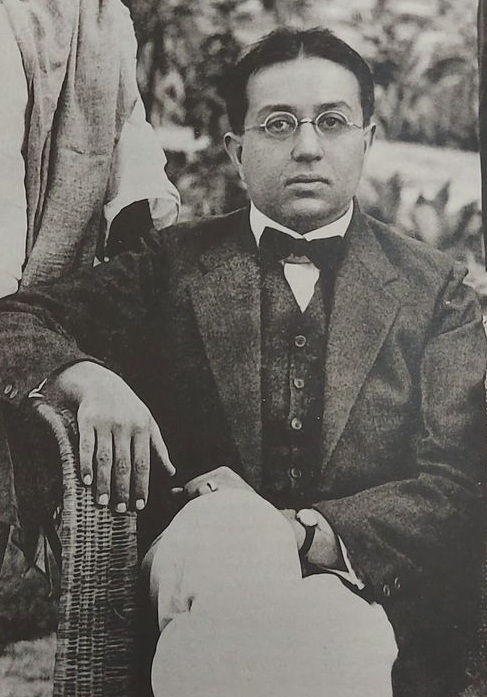
At the final hour, a grand car pulled up to the ashram. Ambalal Sarabhai, a wealthy textile magnate who respected Gandhi’s unyielding integrity, quietly handed over a sum of 13,000 rupees without any conditions and drove away. While Sarabhai’s intervention saved Kochrab, Gandhi walked away from the crisis with a profound lesson: a narrow circle of wealthy donors, no matter how philanthropic, created a dangerous vulnerability. Large donations carried the invisible risk of subtle influence, delayed reform, or softened social critique. If the coming struggle for Swaraj (self-rule) was to remain pure, its financial base had to be democratic.
Railway Stations, Objects, and the Birth of Symbolic Fundraising
Between 1917 and 1920, Gandhi began to refine a distinctive set of fundraising practises that blended immediacy with symbolism. At railway stations, where large spontaneous crowds gathered to see him, he would often extend his hand and ask for contributions. Coins, small notes, and occasionally ornaments would be placed directly into his hand. These were not planned fundraising events; they were moments of encounter in which political attachment translated instantly into material contribution.
Alongside this direct method, another form of fundraising emerged in urban settings: symbolic monetisation. Objects associated with Gandhi, shawls, photographs, and even ordinary items he had used, began to acquire extraordinary financial value once linked to him. A bale of cloth on which he had sat, for instance, could be auctioned for thousands of rupees, far exceeding its material worth. Similarly, photographs of Gandhi, especially those signed or distributed at public meetings, became collectible items sold for fundraising purposes. What emerged was a symbolic economy in which value was not fixed but produced through association, memory, and moral proximity. Gandhi’s own ascetic lifestyle made this transformation possible, as even the smallest object linked to him carried an aura of authenticity.
The Great Expansion
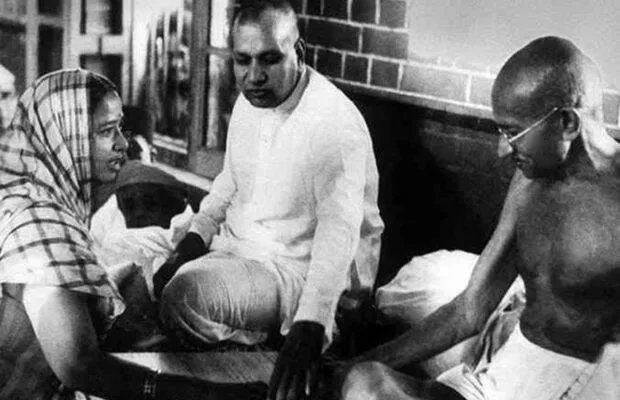
By 1918, the physical and social limitations of Kochrab forced a move to the wider, open spaces of Sabarmati. Supported by visionary donors like Jamnalal Bajaj, the Sabarmati Ashram evolved into a powerhouse of national consciousness, blending structured donor support with an ever-growing stream of small public offerings.
At the historic Nagpur session of the Indian National Congress in 1920, Gandhi completely revolutionised the party’s architecture, deliberately shifting its focus from the elite class to the common man to make the freedom struggle a truly national movement. This restructure was his deliberate way to involve every single adult directly with the cause. He dissolved the old British administrative divisions and reorganised the Congress along linguistic lines, ensuring people could finally participate in their own mother tongues. He established a beautifully organised hierarchy of elected committees stretching from remote rural taluks (sub-districts) and districts all the way up to the All India Congress Committee (AICC) and the Executive Congress Working Committee (CWC). Most importantly, he opened the doors wide to the poor. For a tiny, nominal fee of just four annas, any adult could join. Within a single year, the Congress transformed from an elitist, English-speaking debating club into a roaring mass movement of nearly two million members. Gandhi was building a nation, even as he was correcting a personal misjudgement.
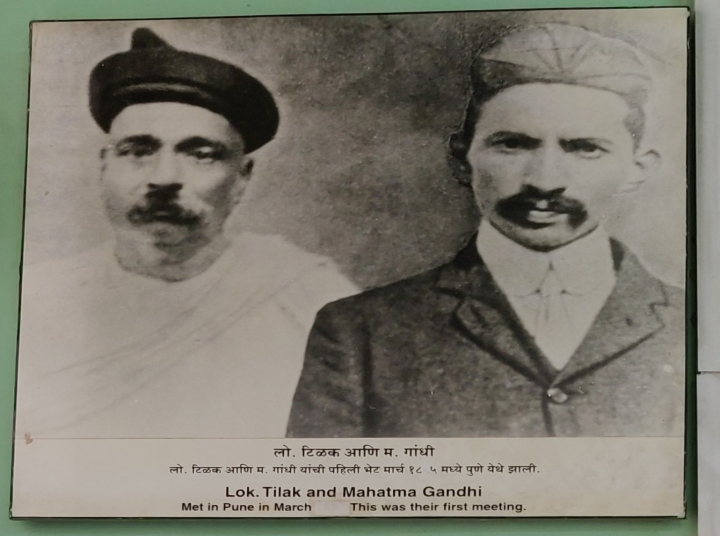
As the 1920s dawned, the nationalist movement erupted into the Non-Cooperation campaign. The scale of the struggle exploded, and with it, the need for an unprecedented volume of capital. The death of the legendary nationalist leader Bal Gangadhar Tilak in 1920 left a profound void in the nation’s heart. Gandhi moved swiftly to channel this collective grief into constructive action, launching the historic Tilak Swaraj Fund in 1921. The financial target was staggering for its time: one crore (ten million) rupees in a matter of months.
To achieve this, Gandhi mapped out a brilliant campaign that began with the geography of intimacy before expanding to the wider nation. He turned first to Kathiawar, writing with a poet’s touch: “Kathiawaris claim me as one of themselves… their affection must now be measured in response.” The region answered by exceeding its assigned quota fourfold. British-ruled Gujarat followed with immense energy, pouring in over thirteen lakh rupees, with the mills of Ahmedabad providing nearly half.
Then, Gandhi descended upon Bombay, the roaring financial engine of colonial India, where commerce and caste intersected in complex ways. The city’s merchant class was divided. While Hindu and Muslim traders had long supported Gandhi, the Parsi community remained deeply cautious, their commercial interests often tied closely to the colonial state. Instead of deploying political pressure or fiery rhetoric, Gandhi chose the path of relational persuasion. He penned an open letter titled simply “To the Parsis“, invoking the memory of his old mentor, Dadabhai Naoroji, and the vital support he had received from Parsi benefactors in the dark days of South Africa. The letter was neither defensive nor demanding; it was an invitation to a shared inheritance. The barrier broke. A member of the iconic Godrej family stepped forward with a contribution of three lakh rupees, the largest single donation to the fund, while his old South African ally, Parsi Rustomji, sent a massive draft from across the ocean.
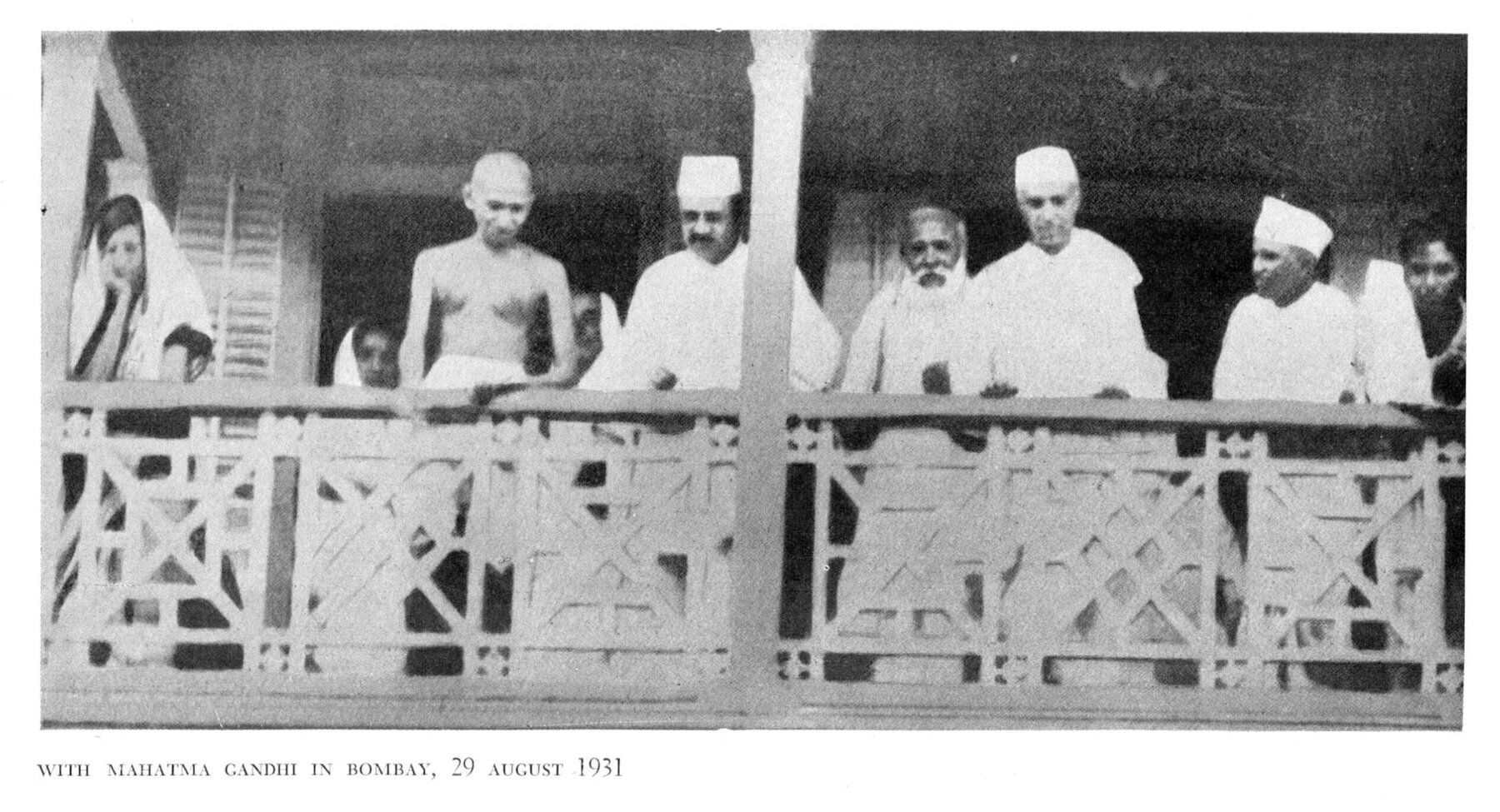
Yet, the true magic of the Bombay campaign lay not in these massive windfalls, but in the sheer physical endurance of Gandhi’s daily fundraising. For nearly a month, the Mahatma walked the streets of the metropolis, moving from neighbourhood to neighbourhood, chawl to chawl, gathering an endless stream of copper coins, crumpled paper notes, and family heirlooms. In a crowded, suffocatingly hot warehouse in the docks, twenty thousand labourers jammed together to hear him speak. The air was thick and oppressive; many could not bear the heat and began to faint or leave early. Yet, even as they fought their way toward the exits, they reached into their pockets and dropped their meagre earnings into the collection boxes stationed at the doors. Gandhi sat on the elevated platform until the very last person had left, entirely focused on the completeness of the collection. That single, gruelling meeting brought in nearly five lakh rupees.
Anatomy of the Collection
Consider the remarkable rhythm of a single day, June 30, 1921. Gandhi began his journey in the distant suburb of Borivili, gathering tens of thousands of rupees from suburban residents before cutting a path southward through the city. The itinerary was a masterclass in social cross-sections; each stop drew a different caste, community, or occupational group into a unified national consciousness.
At the Mangaldas Cloth Market, Gandhi stood alongside the fiery Ali Brothers and the poet-siren Sarojini Naidu. The setting was thick with irony. This was a space dedicated to the lucrative trade of foreign textiles. Here, Gandhi asked the merchants to finance a political movement whose core objective was the total boycott and destruction of the very goods they sold. In that single afternoon, contribution and critique danced together; the merchants willingly paid for the moral dismantling of their own trade.
By mid-afternoon, Gandhi was at Mandvi, addressing three thousand members of the Lohana community, including eight hundred women who sat together in a vibrant block. Together, they raised more than Rs 110,000.
As dusk began to settle over Colaba, the wealthy cotton merchants offered a massive purse and presented two large bales of raw cotton for public auction. Seeking to maximise the return or out of the sheer exertion of the day, Gandhi sat upon one of the bales. When the bidding began, the market witnessed an astonishing display of symbolic value: the cotton bale that had felt the physical presence of the Mahatma fetched a staggering Rs 6,100, while the identical companion bale, untouched by Gandhi, brought in a mere Rs 2,500. The raw commodity logic of the market had collapsed, replaced entirely by an economic valuation of charisma.
The gruelling day finally drew to a close at the Mandvi District Congress Committee, where an audience of ten thousand people had paid an admission price just to enter, turning a political assembly into a self-sustaining ecosystem of national fundraising.
The Ornaments of Sacrifice
As these mass campaigns swept through the 1920s and 1930s, Gandhi’s public meetings evolved from political rallies into secular temples of sacrifice. The moment he finished speaking, an emotional tide would sweep through the gathering as people surged toward the platform to offer whatever they possessed. It was here that Gandhi’s moral economy found its most powerful expression.
For Indian women, the sacrifice was especially profound. In traditional society, a woman’s jewellery, her streedhan, was often her only form of financial security, carrying deep emotional and familial significance. Yet, inspired by Gandhi’s call, thousands of women voluntarily removed their gold bangles, necklaces, silver anklets, and nose-rings, placing them at the service of the nation. What had once symbolised personal security was transformed into an offering for collective freedom.
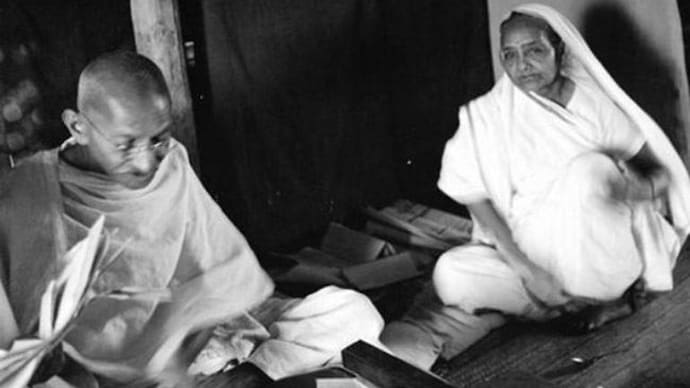
One memorable example occurred during a crowded Swaraj meeting in 1921. An enthusiastic supporter stepped forward and draped an expensive gold necklace around Kasturba Gandhi’s neck as a mark of personal devotion. Without hesitation, Kasturba removed the necklace and announced that such gifts no longer belonged to her personally but to the cause of India’s freedom. The gesture perfectly captured the transformation Gandhi sought, from private affection to public duty.
That transformation, however, had not come easily. It had been forged through years of personal struggle within Gandhi’s own household. In the late 1890s, as the Gandhi family prepared to leave South Africa, the local Tamil and Gujarati communities presented Kasturba with magnificent gold ornaments in recognition of her sacrifices. Gandhi insisted that these gifts belonged to the public cause and should be placed in a trust. Kasturba resisted, arguing that they were the only financial security for their young sons, and an emotionally charged domestic conflict followed before she finally accepted Gandhi’s ethical reasoning. By 1921, however, that painful private sacrifice had matured into an instinctive public commitment.
Gandhi never expected from others a sacrifice that he was unwilling to make himself. Throughout his travels, he appealed for voluntary contributions, encouraged people to donate their jewellery and valuables, and even auctioned his own personal belongings to support the freedom movement. During his visit to Almora in 1929, for instance, he auctioned a silver pot. Local resident Jawahar Shah purchased it for ₹11, far above its intrinsic value, as his contribution to the national cause. Preserved by the Shah family to this day, the pot remains a tangible reminder of Gandhi’s extraordinary ability to convert ordinary possessions into symbols of national service.
The colonial administration watched these developments with growing unease. Intelligence officers attending Gandhi’s meetings realised that the real challenge extended beyond his political speeches. Before their eyes, private wealth was being voluntarily transformed into an open fund for the nationalist movement, while acts of personal sacrifice deepened public commitment to the cause. Gandhi had succeeded in turning jewellery, household objects, and even his own belongings into instruments of political mobilisation, a form of mass participation that the British administration found both unprecedented and deeply unsettling.
Appeal Across India
When Gandhi’s fundraising tours reached their peak toward the end of the 1920s, sweeping through the southern districts of Tamil Nadu, the princely hills of Travancore, and the vast villages of Andhra Pradesh, his method had reached its full, beautiful maturity. In his five-week tour of Andhra in the spring of 1929, documented day-by-day by the chronicler Chandubhai Dalal, Gandhi moved through scores of remote hamlets. He spoke about the eradication of untouchability, the beauty of Hindu-Muslim unity, and the economics of the spinning wheel. And at every single stop, he asked for pennies.
Every single coin collected from a barefoot peasant was meticulously recorded in the next issue of Young India. He travelled in simple, locally arranged transport, keeping travel costs down to a fraction of a per cent of the collection. For Gandhi, transparency was a form of Ahimsa (non-violence). To waste a single paise of public money was an act of violence against the poor who had given it.
Ultimately, Mahatma Gandhi’s fundraising was never about the accumulation of wealth; it was about the distribution of conscience. By refusing to rely on conditional elite money and by valuing a copper coin from a weaver as deeply as a gold bar from a tycoon, he did something far greater than bankrolling a revolution: he built a nation. He proved that when an ordinary citizen gives to a cause, they are no longer a passive spectator to history; they become an investor in destiny. The meticulous ledgers kept by Gandhi were not just records of silver and gold; they were the sacred maps of an empire’s awakening conscience, tracking the precise moment an occupied people began to purchase their own freedom, anna by anna, rupee by rupee.
REFERENCES:
- Ambedkar, Bhimrao Ramji. (1936/2014). Annihilation of Caste. Navayana.
- Parekh, Bhikhu. (1997). Gandhi: A Very Short Introduction. Oxford University Press.
- Chandra, Bipan., Mukherjee, Mridula., Mukherjee, Aditya., Panikkar, K. N., & Mahajan, Sucheta. (1989). India’s Struggle for Independence. Penguin.
- Desai, Mahadev. (Ed.). (1948). The Diary of Mahadev Desai. Navajivan Publishing House.
- Gandhi, Mohandas Karamchand d. (1909/2009). Hind Swaraj and Other Writings (Anthony J. Parel, Ed.). Cambridge University Press.
- Gandhi, Mohandas Karamchand. (1927). An Autobiography: The Story of My experiments with Truth. Navajivan Publishing House.
- Gandhi, Mohandas Karamchand. (1958–1994). The Collected Works of Mahatma Gandhi (Vols. 1–100). Publications Division, Government of India.
- Hardiman, David. (2003). Gandhi in His Time and Ours: The Global Legacy of His Ideas. Columbia University Press.
- Nayyar, Pyarelal. (1956–1960). Mahatma Gandhi: The Last Phase (Vols. 1–2). Navajivan Publishing House.
- Sarkar, Sumit. (1983). Modern India: 1885–1947. Macmillan.
- Tendulkar, Dattatraya Govind. (1951–1954). Mahatma: Life of Mohandas Karamchand Gandhi (Vols. 1–8). Publications Division.
Make sure to check back tomorrow for the last part of article in this series.
To read previous article from the series, click here.









Very elaborate writing style. Good research work.
Sharing with my professor of economics ,
This is a powerful reminder that Gandhi transformed fundraising into a form of mass participation in India’s freedom struggle. From a small coin offered by an ordinary citizen to the jewellery sacrificed by women, every contribution carried a sense of trust, responsibility and national purpose. His insistence on transparency and his refusal to let wealth dictate the moral direction of the movement made finance itself part of the struggle for freedom. A deeply thought-provoking account of how Gandhi turned people’s contributions into people’s participation.