
Who Are You, Jean Drèze?

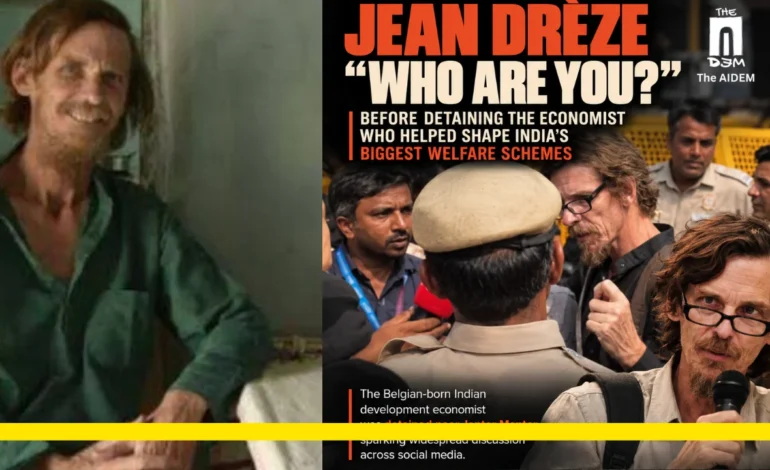
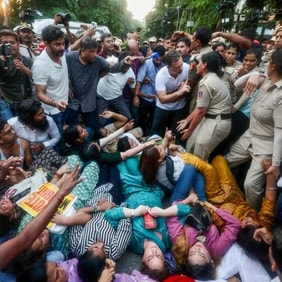
Saturday’s Gen Z led mass protest at Jantar Mantar was marked by demands for the resignation of Chief Election Commissioner Gyanesh Kumar and a brutal crackdown by security forces. But amid the turmoil, something else unfolded that spoke volumes about the state of our democracy.
A man holding a phone mounted on a selfie stick questioned a renowned economist about his identity. Ordinarily, this might not have been news, but the incident was, unfortunately, symptomatic of the state of affairs confronting us.
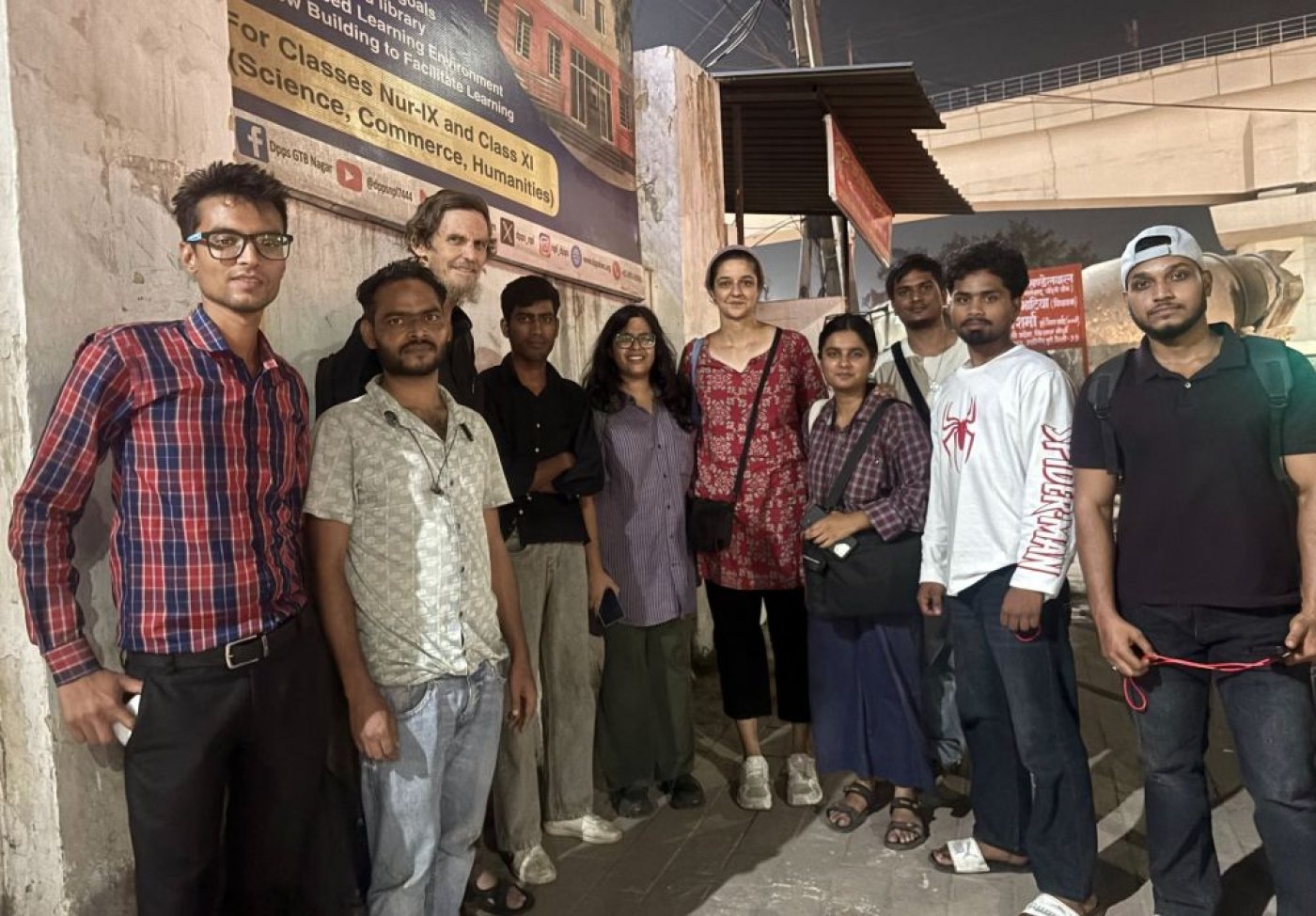
Professor Jean Drèze, associated with the Delhi School of Economics, was at the protest site with his students and colleagues when he encountered the misplaced questions of a YouTuber posing as a journalist. The man asked again. The economist, who had come to explain to reporters why citizens must not be quietly struck off the electoral rolls, tried to carry on with his sentence. The man interrupted him with another question, as though the first had not been sufficiently pointed: “Which country have you come from?”
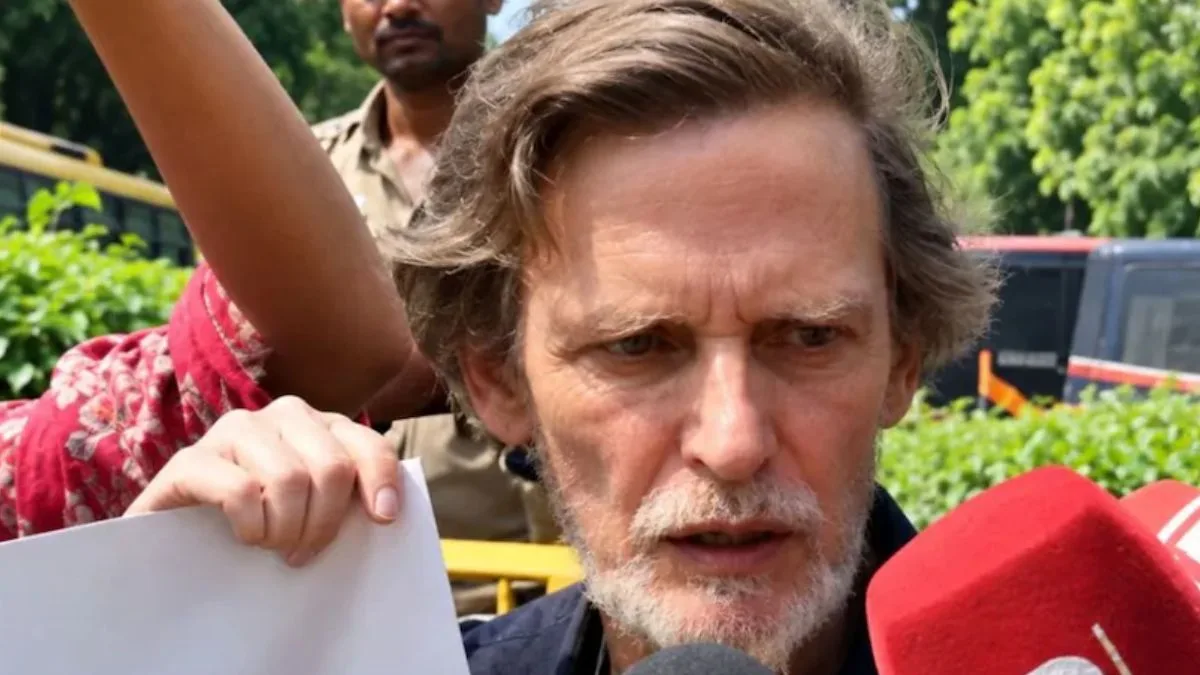
Let us admire the timing. The protest was against the alleged efforts of the government and the Election Commission to deprive citizens of their right to vote. Yet, in the middle of it, a self-appointed reporter staged, unpaid and unrehearsed, a live demonstration of exactly what the protesters feared: a citizen, mid-sentence, being asked to prove his identity. No placard could have made the point so economically.
The Opposition and critics of the voter-roll exercise had spent weeks building their case. A YouTuber supplied the exhibit in under a minute. And note the persistence. This was not a slip of the tongue. The question was asked, repeated and asked again, with the patience of a man who had spotted his clip of the day. It took senior journalists, people who still remember that the job involves listening to the answer, to step in and tell him to stop.
So let us allow ourselves to do what the gentleman could not be bothered to do. Let us answer the question: Who are you, Jean Drèze?
The Credentials: Since You Asked, Mr Journalist
Since the question was posed so loudly, let us answer it properly. We will go slowly, in case the camera is still rolling. He is an Indian citizen, born in Belgium, who chose this country. That is more than most of us ever had to do. We arrived here by the accident of birth and never had to make such a choice. And what Jean represents stands in sharp contrast to the attitudes of much of India’s elite and political class, who send their children abroad for higher education and often encourage them to settle overseas in pursuit of a supposedly better life.
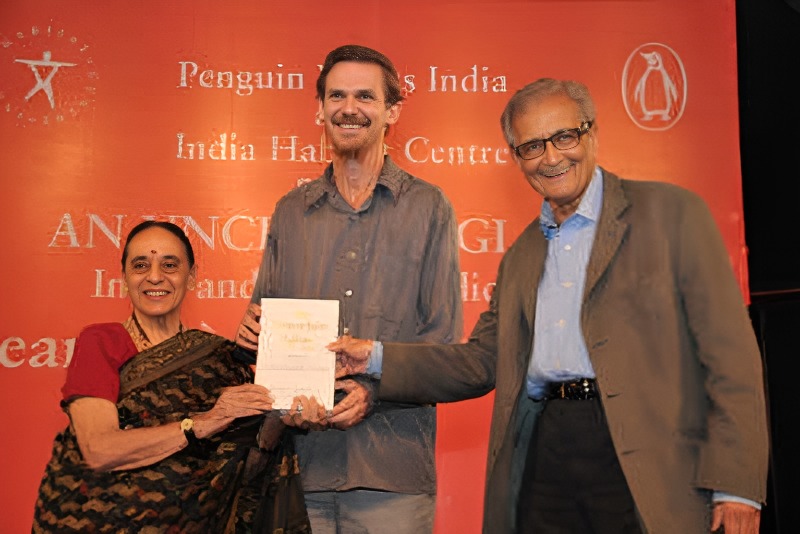
He is an economist who has taught at the Delhi School of Economics, where Manmohan Singh also once taught. He is one of the minds behind the idea that a rural household should have a legal right to work, a guarantee that eventually took shape as the National Rural Employment Guarantee Act (NREGA). He campaigned for the right to information, so that a villager could ask the government how public money had been spent. He fought for the mid-day meal, helping ensure that generations of Indian children could learn their alphabet on a full stomach rather than an empty one.
He has spent decades among the people whom other economists put in footnotes: labourers, widows, pensioners and schoolchildren. According to his own accounts and those who have written about him, he lived among workers and domestic workers in a slum near Delhi University to understand their lives rather than make assumptions about them from the comfort of a seminar room. This reflects the honest ethnographic spirit of a committed researcher.
Note what is missing from this list: a television studio, a verified handle, or a sponsor. His work is measured in wages paid, meals served and files opened, none of which trends.
If the journalist who questioned him needs documents, there are plenty on the record. The statute books carry them. The muster rolls in villages across the country carry them. The court orders on the right to food carry them. The man could have found all of this in under a minute. The search bar was right there, somewhere between the selfie stick and the thumbnail.
There is a name for what happened at Jantar Mantar, and it is not journalism. It is heckling with a press tag. A question is meant to open a door. This one was meant to slam it. The point of asking “Who are you?” repeatedly is not to learn who someone is. It is to make sure nobody hears what that person has to say.
Consider economics, since the man being heckled is an economist. An interruption is cheap and an explanation is expensive. Thirty seconds of an elderly scholar being hounded will travel further than thirty minutes of patient explanation about how voter lists work. The attention market rewards the question that embarrasses over the question that informs, and so we are served more of the former.
The logic has also been reversed. A man holding a microphone at a public meeting owes his audience an account of his own purpose. Who sent him? What was he hoping to find? What did he want the answer to be? Instead, the person speaking about the rights of every citizen was the one asked to justify his presence in the capital of his own country.
We should make no claim about the questioner’s politics. Whether he acted out of zeal, ignorance or the quiet encouragement of an algorithm, the effect was the same. A scholar was treated as a suspect at a public gathering in the world’s largest democracy.
A free press needs tough questions, and nobody here is asking for kid-glove treatment. Ask him about the evidence. Ask him about the numbers, the claims and the alternatives. That is what the profession is for. Demanding that he establish his nationality is not scrutiny. It is scrutiny reduced to a performance.
Later that Saturday, Delhi Police detained Drèze along with others. Article 14 reports that, after about four hours, the police offered to let him go. He declined. He would leave, he said, only with the others held alongside him. They included poor students and other men, many of them Muslims from Assam and West Bengal, who, according to the report, had been picked up simply while going about their day. After nearly eleven hours, the police gave in, and all the detainees walked out together.
Reflect on the symmetry. In the morning, a camera demanded that he prove who he was. In the afternoon, the state offered to acknowledge his standing. Both times, he was being invited to accept treatment different from that accorded to the people around him. The man with the microphone wanted to strip him of standing. The police offered to confer it. He refused both.
That is the answer to the question. Credentials are what you show when you are asked for them. Character is what you demonstrate when you are told that you may leave.
Which Country Has He Come From?
Roads will be named after him, in due course, once the committee has met and the paperwork has cleared. Lectures will be delivered in his honour by some of the same people who looked away on Saturday. That is how we treat our great ones. We heckle them in their lifetime and build statues to them afterwards, at a safe distance.
But the urgent question is not about him. Who are you, Jean Drèze? Someone whom India has far more reason to thank than to interrogate. The question that needs an answer is about us and our democracy. Who are we, when a scholar can be hectored in public and the clip becomes viral content? Who are we, when a demonstration about the right to vote is met with a demand for papers? Who are we, when a journalist’s first instinct, faced with a man explaining why every citizen counts, is to ask whether he counts?
The man with the microphone failed that test in front of a crowd, and so did every channel that ran the clip and called it content. One day, each of us may be asked for our papers. We had better hope someone stays behind and says, “We leave together.”




Brilliant. Tight slap on the rabid ignorants. .
Jean Drèze represents the rare combination of a sharp intellect, deep compassion, and unwavering commitment to social justice. His life and work remind us that development means nothing if the poorest and most vulnerable are left behind. In a world obsessed with economic growth and political power, his voice stands for dignity, equality, and the right to live with respect. True greatness lies not in power or privilege, but in standing with those whose voices are often ignored.
This has a sarcastic take. Different from other Jean stories read today.
Aidem these days are giving space to many talented writers, I also wanna publish.