


Revisiting Nehru Part II
In the second part of her Nehru anniversary series, researcher and writer Anu Jain examines how Jawaharlal Nehru sought to secure India’s independence in world affairs through non-alignment, anti-colonial solidarity and cooperation across rival power blocs.
Tracing the achievements and limitations of his approach, she explores a question that remains central to Indian foreign policy: how can a country grow stronger while preserving its freedom to decide for itself?
Hardly anyone expected India to last. Winston Churchill had warned that if the British left, India would slide back “through the centuries into the barbarism and privations of the Middle Ages.” A country this vast, this poor, this crowded with languages, faiths and castes could not possibly survive as one democracy. That was the polite view of the sceptics.
India did not collapse. It did something much harder. It began to evolve as a role model for newly independent nations. Partition had left it bleeding. Millions were refugees. Violence had ripped through Punjab and Bengal. Kashmir was already engulfed in war. The princely states were still being stitched into the Union, the Constitution was unfinished, and the treasury was nearly empty. Outside, the world was splitting into two armed camps led by Washington and Moscow.
Into this turmoil stepped Jawaharlal Nehru, the Prime Minister who was also, in practise, the foreign minister. His problem was not just whether India leaned towards America or Russia. It was far more basic: could a poor, weak, newly free country avoid becoming dependant on whichever great power was closest? Nehru had been grappling with that question for years. He didn’t learn international politics in a diplomatic academy. He learned it by watching Europe walk towards disaster.
In 1936, after his wife Kamala died in Lausanne, Nehru travelled through Europe, grieving and watching. Mussolini’s government sought a meeting with him. Italy was invading Ethiopia, and the regime loved to parade famous foreign visitors as proof of its respectability. Nehru said no. When a second invitation reached him in Rome, he said no again. Two years later, Nazi Germany invited him. He declined that invitation too.
These were not small gestures. Nehru believed foreign policy could not be stripped of values. Fascism was not just another government you did business with. It was a form of domination that mocked everything India’s freedom struggle stood for. By the end of his 1938 travels through Spain, Britain, France and Czechoslovakia, he was convinced that imperialism, racism, fascism and war were not separate evils. They were one family.
So when people call his later talk of peace and anti-colonialism naive idealism, they miss something. He had seen what happened when nationalism and militarism went unchecked. His idealism came from experience.
Gandhi’s influence ran through all of this. Nehru liked to recall the Mahatma’s advice that India should stay open to the world, but “we must not allow any wind from anywhere to sweep us off our feet.” Independence did not mean isolation. It meant learning without surrendering one’s judgement.
Nehru’s foreign policy did not appear on 15 August 1947. A year earlier, on 30 August 1946, with the Interim Government about to take office, he said India would follow “an independent policy compatible with her own national interests.” It would be friendly with the major powers, but “only on the basis of complete freedom.” A month later, he added that India would stay out of “the power politics of groups aligned one against another.”
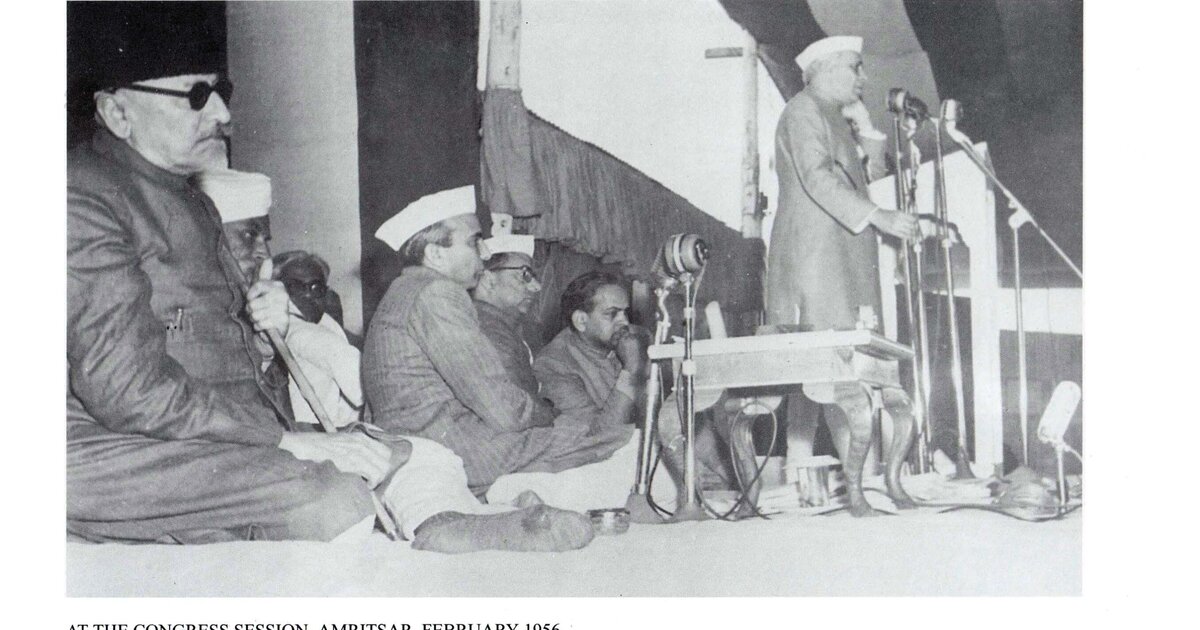
Years afterwards, at Amritsar in 1956, he waved away the idea that all this had sprung from his own head. Anyone who thought so, he said, was mistaken. You had to look back ten, fifteen, twenty years or more. He saw himself less as the inventor of a doctrine than as its interpreter. Still, there was a catch, and he knew it. India was weak.
In 1946 he admitted the country would need over 300 people to staff its diplomatic posts, while the number of experienced Indians was barely a sixth of that. Sovereignty had arrived before the machinery to use it.
His answer was disarmingly honest. At Amritsar, he conceded that India’s armed forces were good, but “we cannot compete with the big powers.” Then came the line that explains much of what followed: “The real strength of a nation lies in its economic condition, its progress and stamina.” A poor country that tried to copy the armies of America and Russia would end up poorer and no safer. Divert even a fraction of the world’s arms spending to development, he said, and “the world will be transformed.”
Peace, in other words, was not just a moral preference. It was a development strategy.
This is where non-alignment comes in, and where it is most often misunderstood. People picture India standing between two giants, refusing to pick a side, arms folded. Nehru’s idea was livelier than that.
Writing in July 1962, he explained that in its narrow sense, it meant staying out of military blocs. But the real point was “having the freedom to follow our own policy” rather than being pushed by allies into following somebody else’s. The key word was not “non-alignment.” It was freedom.
He disliked the word “neutralism.” India was not neutral between right and wrong. It judged issues on their merits, keeping in mind its own interests and the cause of peace. And he could poke fun at his own side. India, he joked at Amritsar, was fond of “throwing principles at other people’s heads.” What mattered was not resolutions but actions.
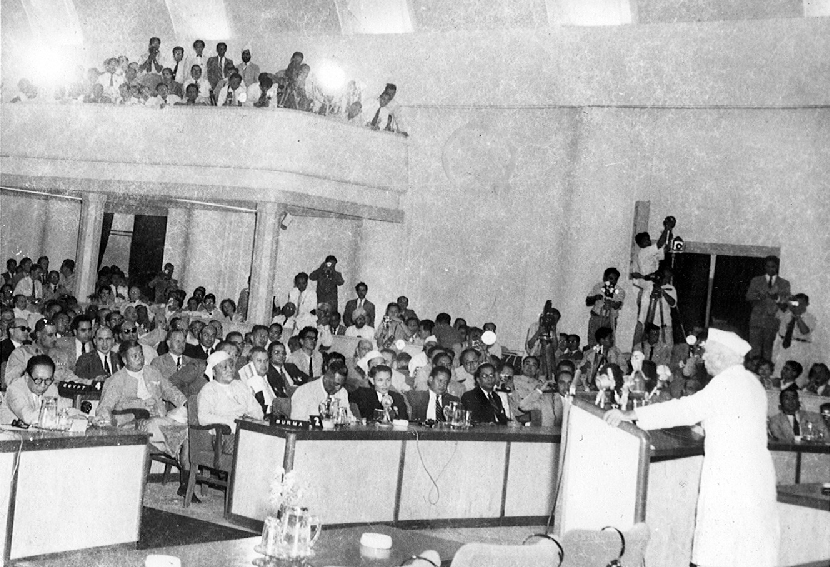
The brightest expression of this outlook came in April 1955, when Nehru set off for the Bandung Conference. For centuries, he told a crowd in Delhi, decisions about Asia and Africa had been made by others. Now a new mood was rising, a wish “to rely upon themselves in cooperation with others.” Countries that had recently been colonies were starting to act like players rather than pawns.
At Bandung, he was fascinated by Zhou Enlai, whom he described to Lady Mountbatten as the “star performer,” quiet, restrained and determined to make the conference work.
That is worth remembering, because Nehru’s China policy is now remembered largely through the disaster of 1962. But his hope was not blind admiration for a distant communist state. He recalled China’s help during the Bengal famine of 1943 and had followed its fight against Japan. India recognised the People’s Republic early, in December 1949, because China was a big neighbour with a stable government, not because India approved of it.
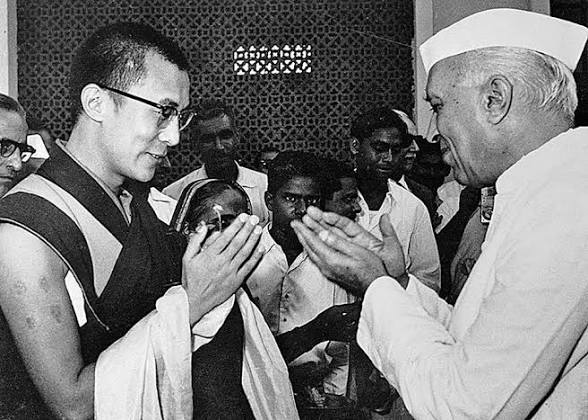
Tibet shook that optimism. In November 1950 he admitted privately that India might have deceived itself. Yet he still believed Indo-Chinese friendship mattered, in both the short and the long term. So the familiar slogan, Hindi-Chini Bhai-Bhai, hides a more complicated man. Nehru saw the danger. He was trying to manage it without giving up on co-operation.
Panchsheel, the five principles of peaceful coexistence, was that attempt. It looked like a vindication for a while. But beneath the fine language lay an unresolved border dispute.
With the United States, Nehru sought a delicate balance. Both were democracies. India needed American food, capital and technology. But he would not join America’s Cold War system.
When Washington brought Pakistan into its military arrangements, the problem sharpened, because that changed the balance in India’s own neighbourhood. His answer was neither to break with America nor to join its alliances, but to keep talking. Even on his 1956 visit, he told Indians in Washington that friendship with America had survived the “ups and downs.”
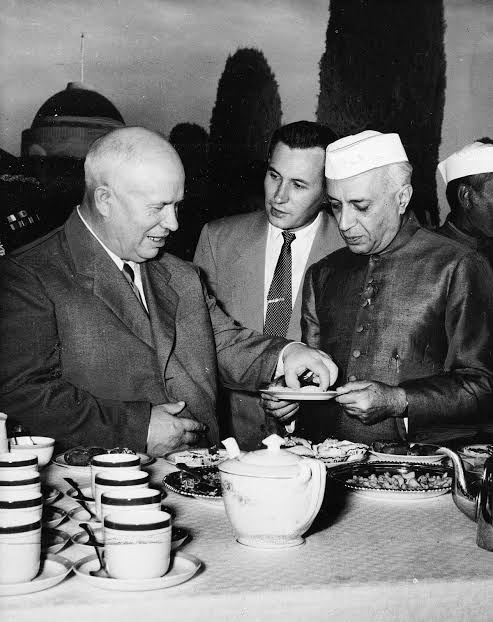
With Moscow, the challenge was the reverse: take the help without becoming a satellite. Soviet technology helped realise India’s dream of steel plants, heavy engineering and a public sector built almost from scratch. When Khrushchev and Bulganin toured India for nearly three weeks in December 1955, the crowds were enormous. Yet Nehru wrote to U Nu that the Soviet leaders had accepted India’s friendship with other countries and its non-alignment. “They have accepted that stand,” he noted.
That was non-alignment in practice. Cooperate where interests converge, disagree where they diverge, and never let either relationship determine the whole of foreign policy.
Geography, of course, has a way of humbling theory. With Pakistan and Kashmir, Nehru was not a gentle internationalist. When outside powers pressed India over Kashmir in 1949, he told his sister Vijayalakshmi Pandit that India was not weakening its stand and “indeed we cannot.” Non-alignment never meant neutrality about India’s own interests. It meant India would decide for itself how to defend them.
Nor was he the only voice in the room. After Chinese forces entered Tibet, Vallabhbhai Patel wrote his famous letter warning of a new and dangerous situation on India’s frontiers. This wasn’t a simple case of Patel being right and Nehru wrong. The two leaders differed over how to respond to the same danger. That difference matters when we get to 1962.
The war with China showed the limits of Nehru’s approach more brutally than anything before it. The friendship had rested on a hope that two big Asian nations, both emerging from colonial rule, could live side by side. Panchsheel gave it words. Bandung gave it a stage. Slogans gave it popular resonance. But the border had never been settled, and the Himalayas no longer felt like the safe wall they once had. Nehru himself had asked, back in 1950, what would happen when a stronger, more assertive China stood at India’s doorstep.
The warnings were there. Policy failed to keep pace with them. Francine Frankel calls his expectation that friendship could ease a border settlement a historic miscalculation. The war exposed gaps in preparedness, intelligence and strategic judgement. Polite words about coexistence could not stop an army.
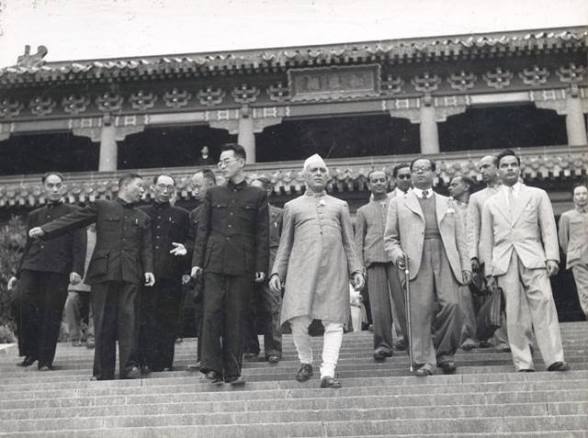
The lesson is plain. Strategic autonomy is not just the freedom to choose. It is the strength to defend what you choose. Nehru understood half of that equation: economic strength is the root of national power. 1962 revealed the other half: a country also needs defence capabilities, intelligence and a clear-eyed assessment of other countries’ intentions.
So was his policy idealist or realist? It was not wholly one or the other. He understood power. He worried about alliances, China, Pakistan and India’s weakness. But he also believed ideas mattered, that anti-colonialism, racial equality and disarmament could change how nations behaved. The real tension was between principle and capability. He wanted India to act like an independent power before it had the means to do so. That was the strength of the approach, and its weakness.
The Cold War ended. The Soviet Union vanished. India reformed its economy and integrated more closely with the world. The vocabulary changed too, and non-alignment gave way to strategic autonomy, multi-alignment and issue-based partnerships.
Today, India is close to the United States, works with Japan and Australia, keeps its old ties with Russia and reaches across Asia, Africa and the Global South. It joins many groupings without letting any one of them force it to drop the others. This is not Nehru’s foreign policy copied into a new century. India now has a far bigger economy, a stronger military and wider reach. But the aim is recognisable: preserve the freedom to decide.
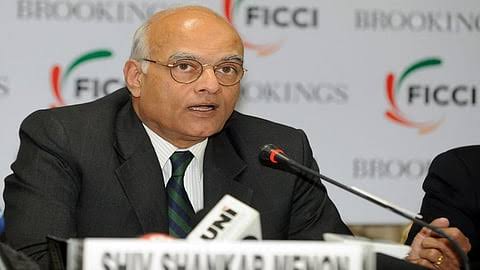
Shivshankar Menon made this point in his 2015 paper on Nehru’s foreign policy. Non-alignment, he argued, was never passive neutrality. It was a way of maximising India’s freedom and influence, and Nehru was ready to use force when the state’s interests required it. Nehru, in short, wasn’t trying to keep India away from the world. He was trying to stop the world from making India’s choices for it.
The most modern thing about him may be his dislike of rigid rules. Foreign policy, he said, doesn’t come “out of a hat.” He called it a collection of foreign policies with different countries. India didn’t have to love everyone, only remain able to talk to everyone. In 1956, he said that if Zhou Enlai had been welcomed in India, then Eisenhower would be too, and a country friendly with both sides might “clear the air” and even serve as a bridge.
At its heart, Nehru’s foreign policy was a contradiction he never resolved. India wanted to be independent before it was powerful. It wanted a voice while still wrestling with poverty at home. It wanted peace beside neighbours with rival claims, industrial help without strings, friendship with America without its alliances, cooperation with Moscow without becoming its satellite, and partnership with China without compromising its security.
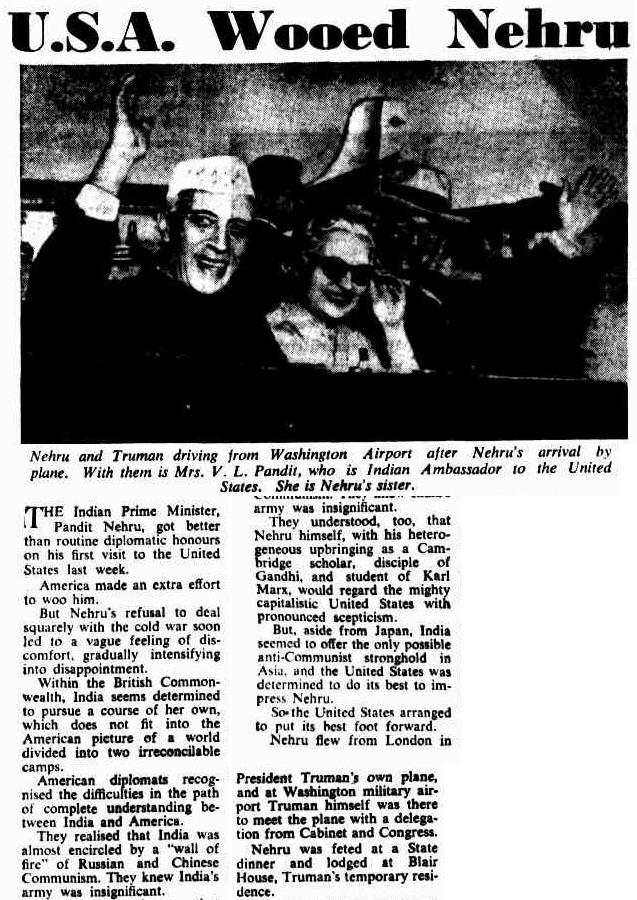
So Nehru should neither be romanticised nor dismissed. The man who rejected invitations from Mussolini’s government and Hitler’s Germany was shaped by a world that had seen fascism and war at their worst. The leader at Bandung believed colonised nations should never again let others decide their futures. The Prime Minister who courted Washington and Moscow at once was trying to make a poor country less dependent. And the statesman who trusted China too far learned painfully that goodwill could not settle a border dispute.
Beneath the conviction, calculation, ambition and misjudgement ran one stubborn idea. India had won its political freedom. Nehru wanted that freedom to mean something beyond its own borders. He did not want India’s foreign policy written in Washington, Moscow, London or Beijing.
He wanted it written in New Delhi.
The question he faced in 1947 is the one every government since has faced: how does a country grow stronger without losing the freedom to decide for itself? Nehru never found a final answer. Neither will anyone else. But he made sure India could never stop asking.
To read previous article from the series, click here.
Make sure to check back tomorrow for the final part of article in this series.

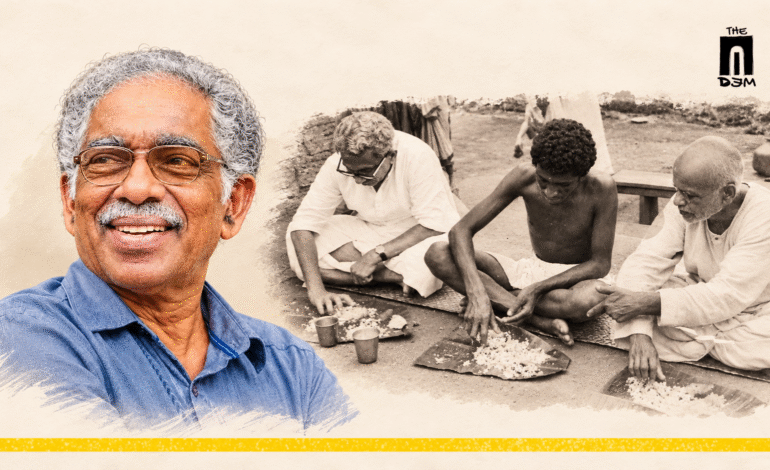




Nehru’s greatest contribution was not merely building modern India, but laying the foundations of a democratic, secular and inclusive nation. Today, when constitutional values, pluralism and democratic institutions face serious challenges, India must confront the very question Nehru sought to answer: What kind of nation do we want to be? His vision of unity in diversity, scientific temper and social justice remains profoundly relevant. The real tribute to Nehru is not to worship his legacy, but to defend the democratic ideals that shaped modern India.
ये लेख कुछ बेहद नई जानकारी के साथ लिखा है