


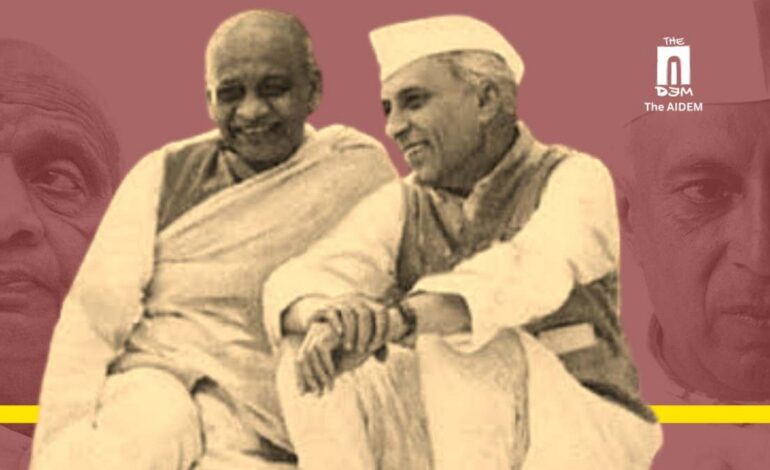
Part V– From Barrister to Sardar: Patel, Gandhi and the Making of a National Leader
This fifth and concluding part brings to a close Anu Jain’s series examining the political life, ideological convictions and historical legacy of Sardar Vallabhbhai Patel, against the backdrop of his 150th birth anniversary.
The series has sought to assess Patel’s contributions to the freedom struggle, the integration of princely states and the consolidation of independent India, while examining his political relationship with Mahatma Gandhi and Jawaharlal Nehru including the differences in their approaches to some of the major challenges facing the country.
Taken together, the five articles underline the importance of understanding Patel and Nehru in their historical context, rather than through the selective interpretations that characterise much of the contemporary political discourse. Their differences were real, but so were their shared commitments to the freedom movement, nation-building and the constitutional framework of independent India.
The series concludes by placing Patel’s legacy within this larger historical perspective, beyond attempts either to diminish his contribution or to appropriate his stature for present-day political purposes.
The assassination of Mahatma Gandhi on 30 January 1948 changed the political atmosphere of the newly independent Indian state. For more than two decades, Gandhi had been an important influence on the relationship between Jawaharlal Nehru and Vallabhbhai Patel. He had not prevented their disagreements, but he had often helped them find a way forward. Now, the two men had to continue without him.
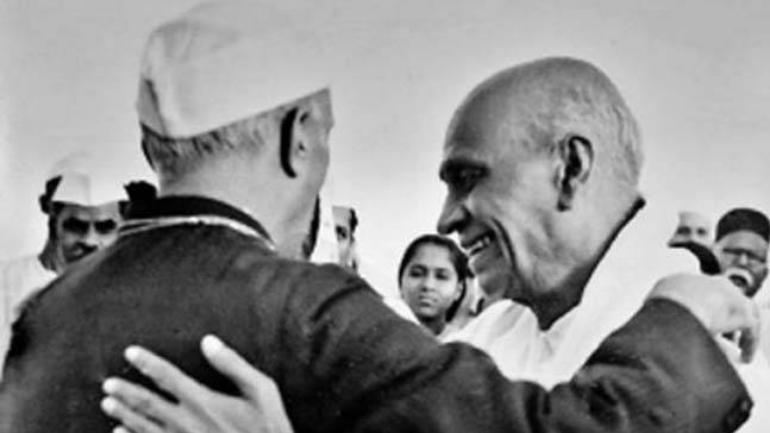
Nehru was Prime Minister, responsible for the overall direction of the government and India’s place in the world. Patel, as Deputy Prime Minister and Home Minister, concentrated on internal security, administration and the integration of the princely states. Their priorities differed, but the responsibilities of governing a newly independent country required them to work together.
A Letter After Gandhi
On 3 February 1948, Nehru wrote to Patel, recalling that they had hoped to meet Gandhi together to discuss their differences. Gandhi, Nehru said, had wanted them to continue working together despite their differences of temperament and opinion.
“Now, with Bapu’s death, everything has changed and we have to face a different and more difficult world,” Nehru wrote. The urgent need, he continued, was for them to function “as closely and cooperatively as possible.”
Nehru was also concerned that rumours about their differences were spreading among foreign representatives and affecting the civil services. He reminded Patel of their long association and expressed his affection and regard for him. Patel’s reply on 5 February, as recorded in the Nehru Archive‘s editorial note, conveyed how deeply Nehru’s letter had touched him and affirmed his agreement on the need for cooperation. The exchange did not end their disagreements. It established, however, that both understood the consequences of allowing their differences to become a public or institutional rupture. The government needed both men.
The RSS Ban and the Question of National Unity
On 4 February 1948, the Government of India banned the Rashtriya Swayamsevak Sangh (RSS), following Gandhi’s assassination and amid the government’s concerns about communal activities and public order.
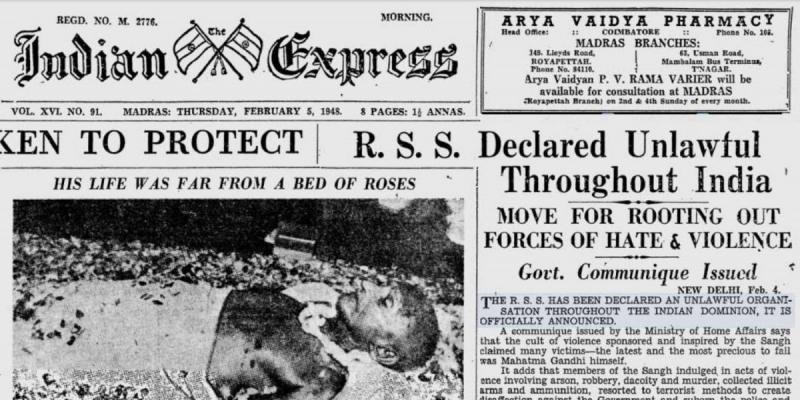
Nehru was deeply concerned about communal organisations and the atmosphere in which Gandhi had been assassinated. Patel’s position was more complex than either an unconditional defence or a simple rejection of the RSS. He acknowledged that its volunteers had organised and rendered service to sections of Hindu society during the violence of Partition, but he distinguished such service from the encouragement of hostility or revenge against innocent Muslims.
In a letter to RSS chief M. S. Golwalkar dated 19 September 1948, Patel criticised the organisation’s communal rhetoric, writing that its speeches were “full of communal poison”. He argued that such activities had contributed to an atmosphere of hatred.
The Government sought assurances concerning the RSS’s constitution, its public and democratic functioning, and its rejection of violence and secrecy. The Ministry of Home Affairs’ Annual Report for 1949–50 records that the Government examined the organisation’s written constitution and clarifications before withdrawing the ban in centrally administered areas on 12 July 1949. The conditions included loyalty to the Constitution and the national flag and a commitment to function openly and democratically.
The episode illustrates the difficult balance the government was attempting to maintain: protecting freedom of association while responding to concerns about communal mobilisation and public security. It also makes clear that Nehru and Patel’s positions should not be reduced to a simple opposition between one who rejected the RSS and another who supported it.
Junagadh: Accession and Popular Consent
Junagadh, situated on the Kathiawar peninsula and surrounded by Indian territory, had a Hindu-majority population under a Muslim ruler. In August 1947, its Nawab announced accession to Pakistan. The decision created a dispute because of the state’s geographical position and opposition among sections of its population.
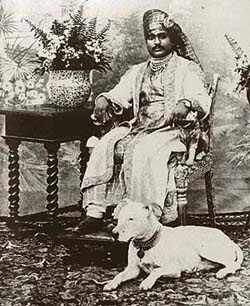
After the Nawab left for Pakistan, the Government of India took over the administration on 9 November 1947, at the request of the Nawab’s Council. A referendum was held in Junagadh and adjoining smaller states in February 1948. The Government of India’s White Paper on Indian States described the vote in favour of accession to India as virtually unanimous. The administration was transferred to the Government of Saurashtra on 20 January 1949.
Junagadh raised a question that would recur in the integration of princely states: how should the wishes of a ruler be weighed against the preferences of the population? The Government of India invoked popular consent in this case, while also emphasising geographical and administrative realities. The circumstances of each state differed, and integration did not follow a single, uniform procedure.
Hyderabad: the Limits of Negotiation
Hyderabad was the largest princely state in India. The Nizam, Mir Osman Ali Khan, wished to remain independent after British paramountcy lapsed, despite the state’s geographical position within Indian territory. For Sardar Vallabhbhai Patel, Minister for States, this was an arrangement India could not accept indefinitely.
Patel and his Secretary, V. P. Menon, took the lead in dealing with the crisis. Patel brought political determination to the task, while Menon’s negotiating skills and administrative experience helped them navigate the difficult negotiations with the Nizam. In November 1947, Hyderabad signed a Standstill Agreement with India, allowing existing arrangements to continue for a year while negotiations proceeded. But no agreement on accession followed.
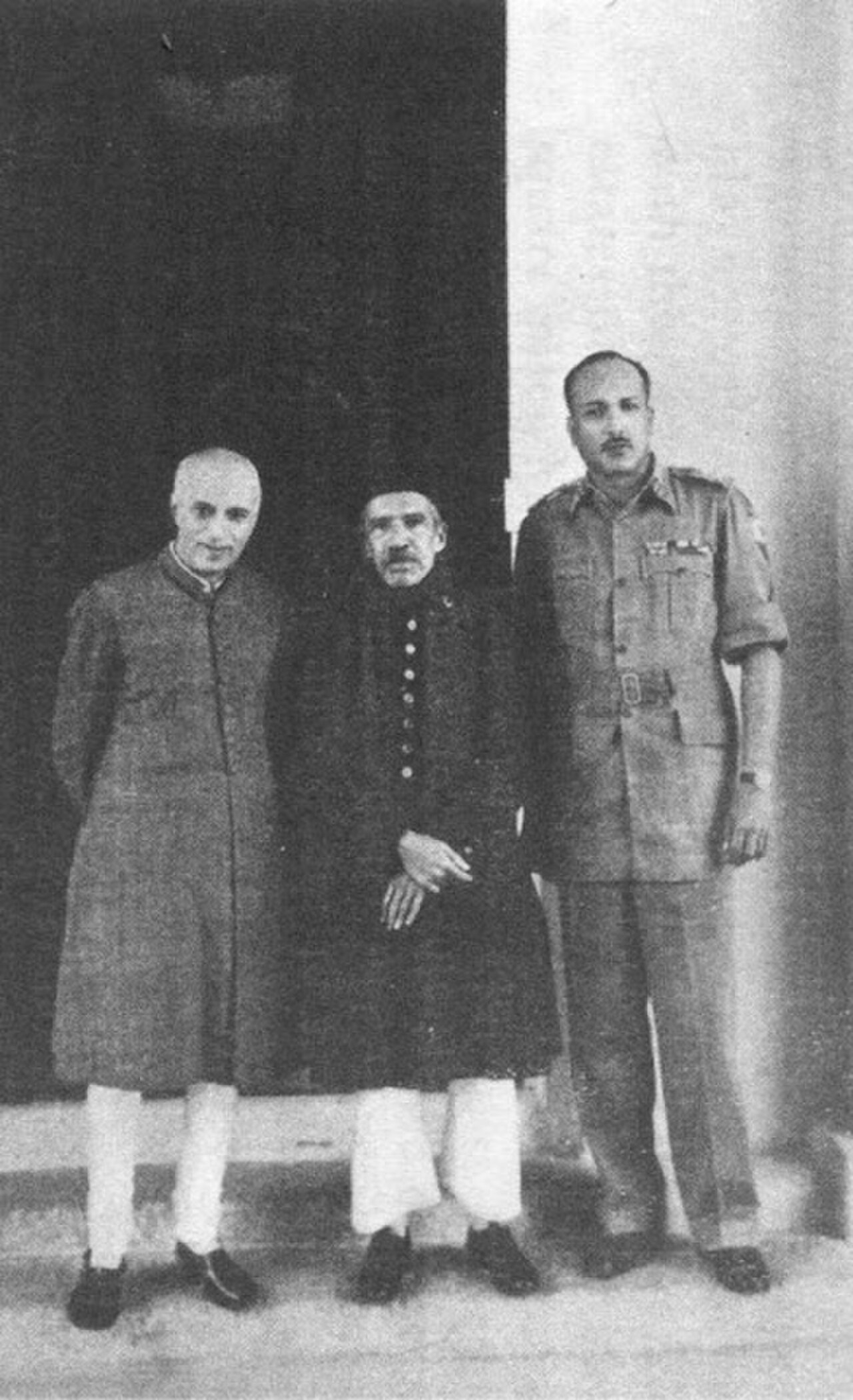
Meanwhile, the Hyderabad State Congress demanded responsible government, while the Razakars, associated with the Majlis-e-Ittehadul Muslimeen, expanded their activities in support of the Nizam. The Telangana region was also witnessing a peasant movement against oppressive landlordism. As negotiations failed and violence increased, the Government of India moved towards military action. Nehru, too, was involved in the deliberations, explaining the government’s position in the Constituent Assembly on 7 September 1948.
On 13 September, Indian forces entered Hyderabad in what the government described as a police action, known as Operation Polo. Five days later, the Nizam announced a ceasefire. Hyderabad came under Indian control. Patel’s political resolve and Menon’s administrative and negotiating abilities had been central to bringing about this outcome, while Nehru and the wider government were involved in the final decision.
The integration, however, came at a human cost. In his note The True Situation in Hyderabad, dated 14 November 1948, Nehru recorded reports of killings and violence against Muslims after the operation. The Sunderlal Committee, appointed to investigate the disturbances, also documented such violence. Hyderabad’s integration must therefore be remembered alongside the suffering that accompanied it.
Kashmir: the Unresolved Exception
Kashmir remained unresolved even as the integration of other princely states advanced. Its accession to India in October 1947 was followed by armed conflict. The Government of India took the matter to the United Nations in January 1948, and a ceasefire came into effect on 1 January 1949. The state remained divided by a ceasefire line, while its political future continued to be contested.
Nehru’s personal connection with Kashmir and his relationship with Sheikh Abdullah influenced the attention he gave to the state. He believed that the political aspirations of Kashmir’s people had to be considered. Patel’s approach placed greater emphasis on security, administrative authority and the wider integration of the Union.
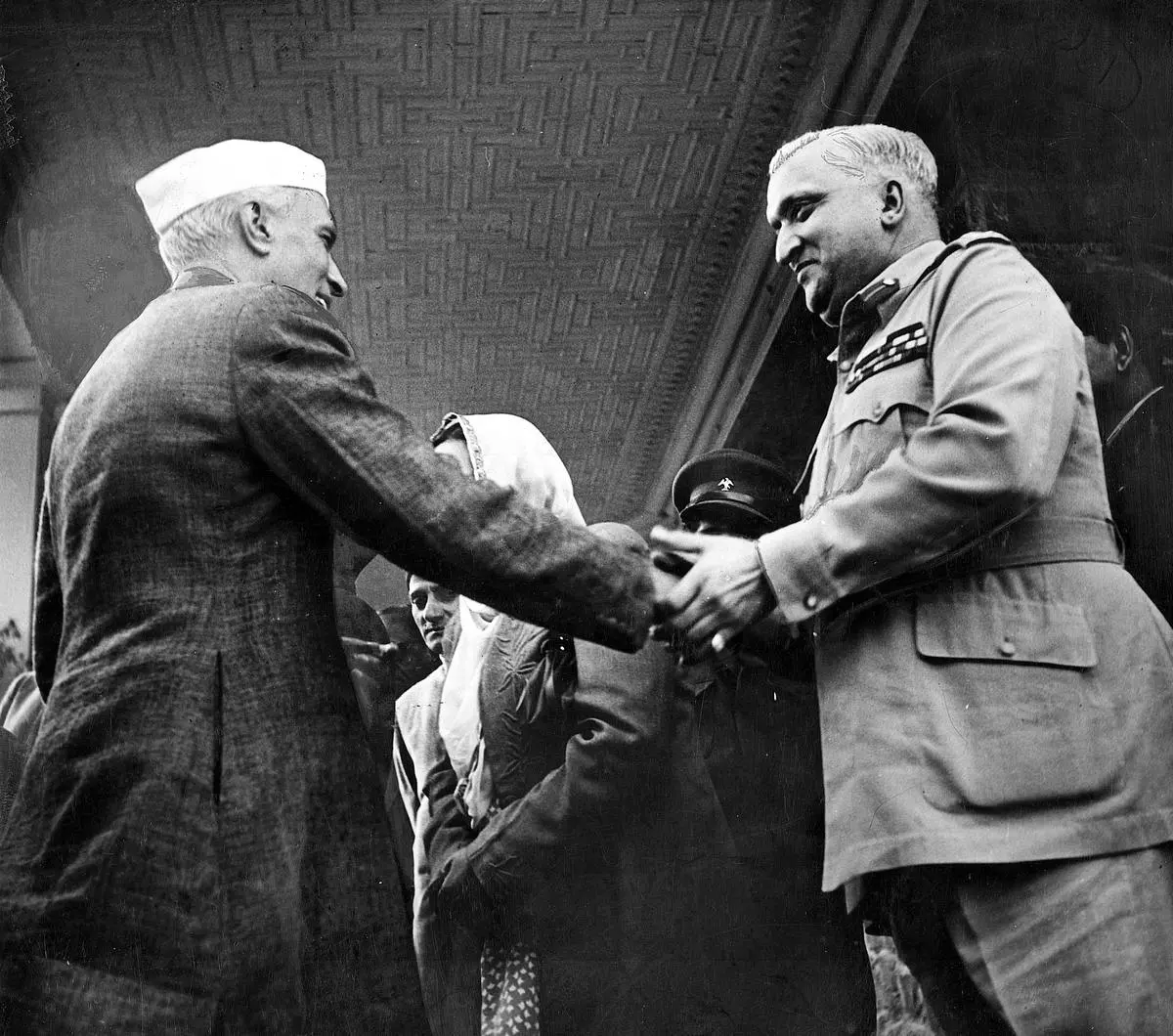
It would be misleading to describe this as a simple contest between the two men. Both were members of the same government and were concerned with India’s position in Kashmir. Their differences concerned political priorities and the means of addressing the problem. Kashmir also demonstrated that the integration of princely states could not be treated as a uniform process: Junagadh, Hyderabad and Kashmir each had distinct circumstances.
Patel and the Making of the Constitution
While the government dealt with integration and security, the Constituent Assembly continued its work on the Constitution. Patel chaired the Advisory Committee on Fundamental Rights, Minorities and Tribal and Excluded Areas, which examined individual rights and safeguards for different communities. He also chaired the Provincial Constitution Committee, which dealt with aspects of the constitutional organisation of the provinces.
These responsibilities placed Patel at the centre of discussions about the structure of the new Union. The Constitution, however, was a collective achievement, shaped by the Assembly and the contributions of B. R. Ambedkar, Nehru, Rajendra Prasad, K. M. Munshi and many others.
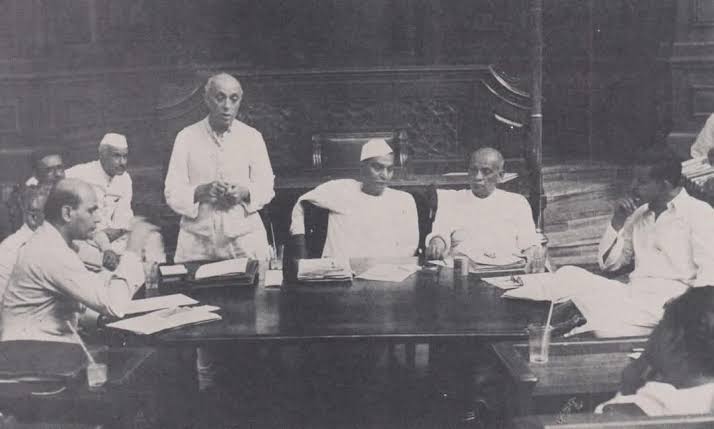
Patel also defended the administrative services during the transition from British rule. In the Constituent Assembly debate of 10 October 1949, he defended the guarantees and service conditions negotiated for members of the former Secretary of State’s services. He argued that India could not afford to lose experienced administrators at a time when the Union faced extraordinary pressures. He also insisted that officers should be able to give ministers frank advice without fear. His argument reflected a wider concern: political unity required institutions capable of functioning across regions and beyond the tenure of individual leaders.
Two Leaders, One Government
Nehru and Patel’s partnership after Gandhi’s death was marked by differences as well as mutual dependence. Nehru was concerned with the overall direction of government, foreign policy, economic planning and the democratic ideals of the new state. Patel’s work centred on internal security, the integration of princely states and the administrative foundations of the Union.
These responsibilities were not entirely separate. Foreign policy could not be isolated from internal security, nor could territorial integration be separated from constitutional questions. Their disagreements were sometimes serious, but their correspondence, Cabinet work and participation in the Constituent Assembly show that their relationship was not defined by confrontation alone.
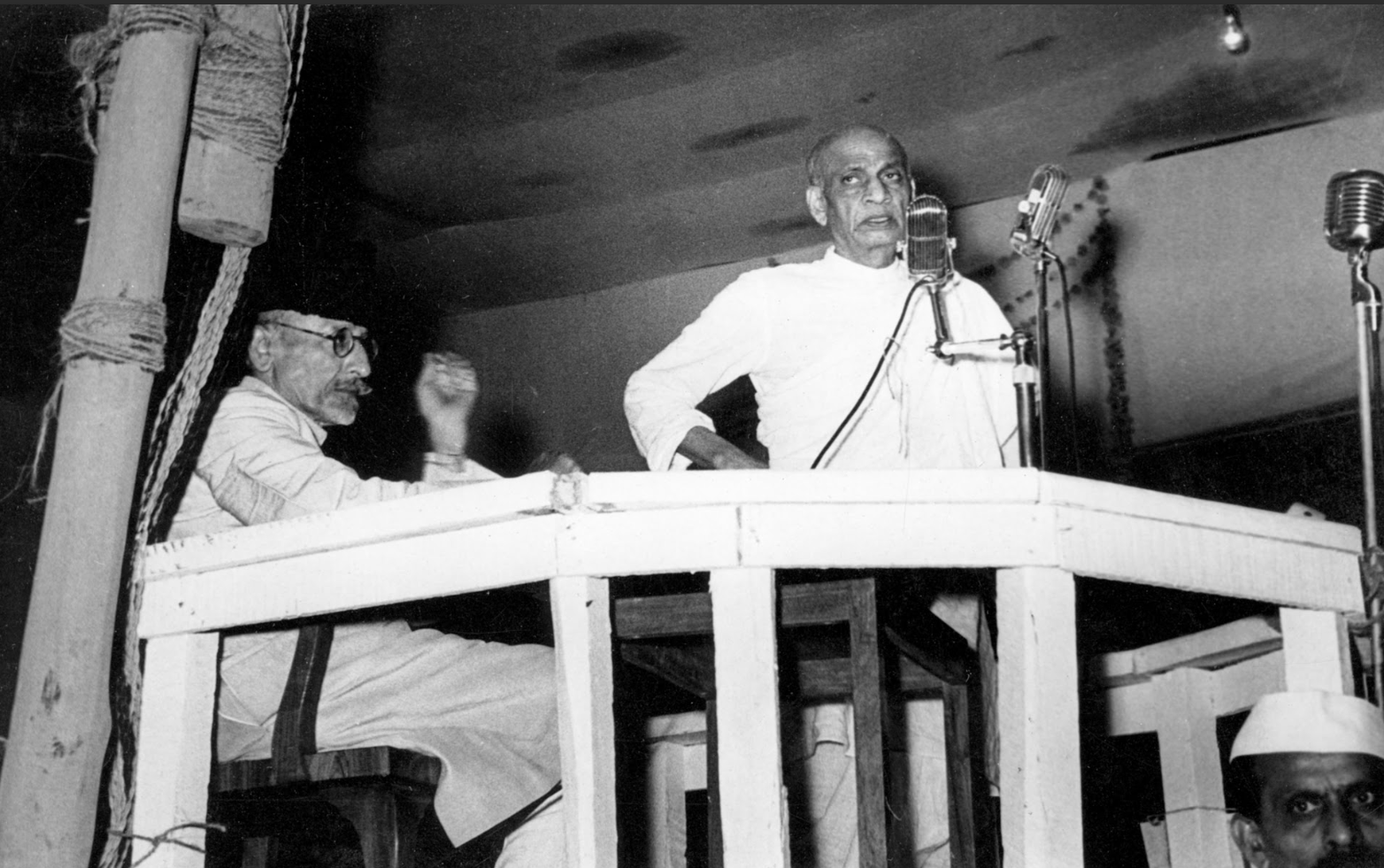
Gandhi had hoped that the two men would continue to work together. After his death, they had to sustain that relationship themselves. They did so not because they agreed on everything, but because the responsibilities of governing India required cooperation.
The Republic and Patel’s Final Years
On 26 January 1950, India became a republic and the Constitution came into force. The transition marked the culmination of years of debate and institution-building, although many challenges of governance remained.
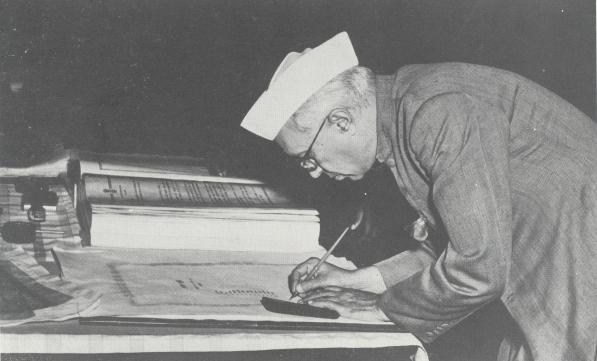
Patel continued to discharge his responsibilities, despite his declining health. He died in Bombay on 15 December 1950, aged 75. Nehru announced his death in Parliament and remembered him as a friend, colleague and comrade whose absence would be deeply felt. His death came less than three years after independence and Gandhi’s assassination. Nehru remained Prime Minister, but the government had lost a figure whose administrative authority and political influence had been central to its early consolidation.
Patel in Public Memory
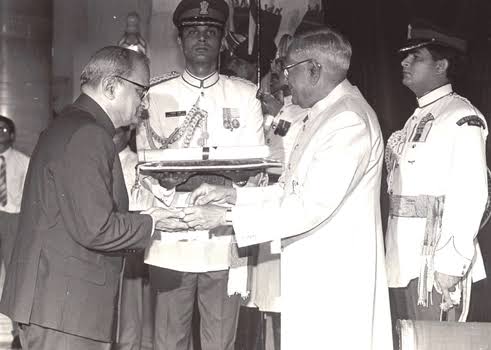
Patel was posthumously awarded the Bharat Ratna in 1991. In 2014, the Government of India began observing his birth anniversary, 31 October, as Rashtriya Ekta Diwas. The Statue of Unity, inaugurated on 31 October 2018 in Gujarat, stands at 182 metres and commemorates his role in India’s integration.
The Statue of Unity also generated debate over land rights and the concerns of Adivasi communities in the surrounding villages. In July 2020, The Indian Express reported protests by residents of six tribal villages in Kevadia over land acquisition and tourism-related development. The Ministry of Culture lists the commemorations marking Patel’s 150th birth anniversary as running from 31 October 2024 to 31 October 2026.
Remembering Patel only through the integration of princely states would leave out his work in the Constituent Assembly, his defence of the administrative services and his role in the early administration of independent India. Equally, remembering Nehru only through his differences with Patel would present an incomplete picture of the first years of the Republic.
The Work of Building India
The story of Nehru and Patel after Gandhi’s death is not simply one of disagreement followed by reconciliation. It is the story of two political figures who had to govern a country whose survival as a united state could not be taken for granted.
Patel’s work in integrating the princely states and strengthening the administrative structure gave the Union a territorial and institutional foundation. Nehru’s leadership helped shape the political direction of the Republic and its place in the world. Their responsibilities were distinct, but neither could have been carried out in isolation from the other.
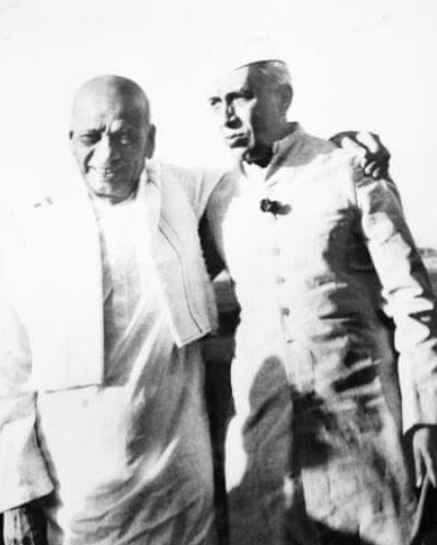
Gandhi had often acted as the mediator between them. After his assassination, the two men had to sustain their working relationship without that intervention. Their partnership was not free of tension, nor should it be turned into a story of perfect agreement. But the making of independent India cannot be understood through the contribution of one leader alone.
India’s independence had been won through a mass struggle. Its transformation into a functioning Union and then a Republic required negotiation, administration, constitutional deliberation and difficult decisions. Nehru and Patel carried much of that responsibility in the years immediately after Gandhi’s death. By the time Patel died in December 1950, the foundations of the Indian Union and the Republic had been laid. The task of building India had moved from the struggle for freedom to the demanding work of making freedom governable.
To read the previous articles from the series, click here.





Gandhi, Nehru and Patel represented different political visions, temperaments and approaches, yet their ability to work through differences shaped the making of modern India. Gandhi’s role as a moral and political mediator was crucial in holding these competing perspectives together. Understanding what happened when that mediating influence disappeared is essential to understanding the complexities of India’s freedom struggle and the challenges of nation-building. History deserves to be examined beyond political myths and selective narratives.