

D.K. Shivakumar: Rasheed Kidwai’s Passkey to Karnataka Politics

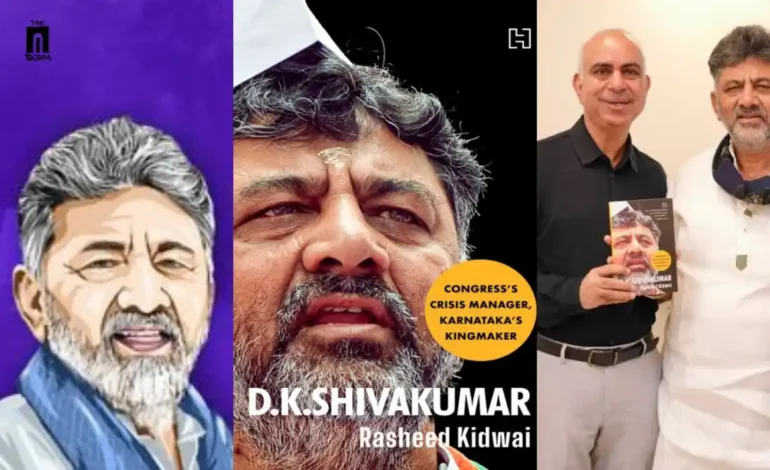
What does it take to understand the making of a political leader who rises from the grassroots to the highest echelons of power? In this edition of Everything Under the Sun, his column in The AIDEM, author Nalin Verma draws on Rasheed Kidwai’s biography of D.K. Shivakumar to examine not only the extraordinary political journey of the powerful Congressman from Karnataka, but also the complex political milieu that shaped him.
The article offers an engaging reading of a book that uncovers the less visible facets of Karnataka’s political landscape—from caste dynamics and party rivalries to personal convictions, political resilience and the art of survival.
When Ali Baba uttered “Open Sesame,” the jagged rock face split open, revealing a cavern dripping with gold, rubies, and secrets long buried under the desert dust.
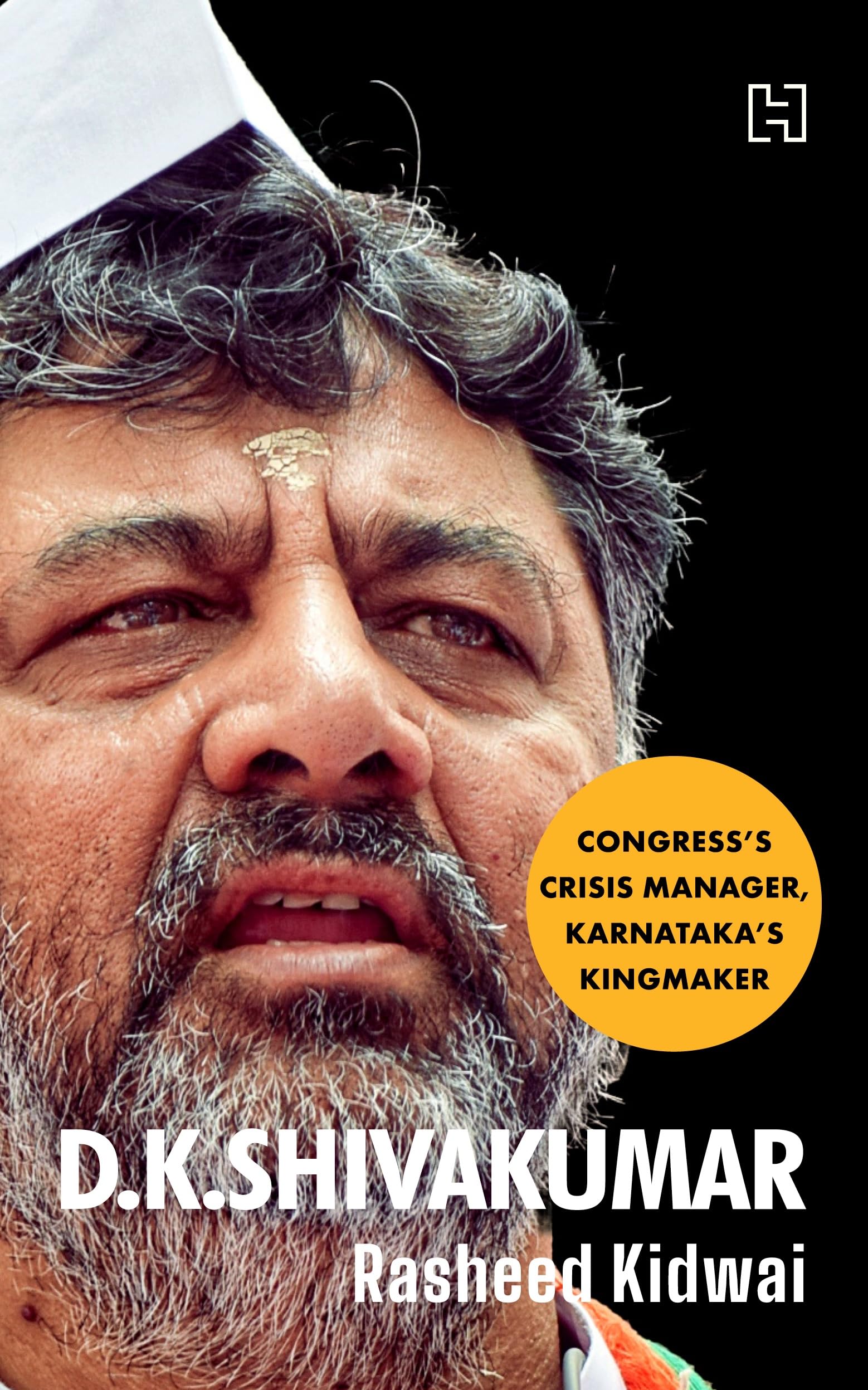
Rasheed Kidwai’s biography of D.K. Shivakumar acts as that very magic incantation. With a swift turn of the page, the heavy, iron-gated vault of Karnataka politics swings open, exposing the glittering, treacherous and high-stakes arena of a modern political titan. Rasheed does not merely chronicle a life; he gives us the passkey to the hidden chambers where power is brewed, loyalties are tested, and the son of the soil from Kanakapura turns into the ultimate architect of survival.
For journalists, political writers and politically aware people of Karnataka, D.K. Shivakumar: Congress’s Crisis Manager, Karnataka’s Kingmaker can serve as flavourful chutney, a condiment to spice up their meal of knowledge about the southern state. But, for a scribe like me and others operating in north India—not much knowledgeable about the southern state—the book serves as a whole meal along with the chutney, papadam and varieties of pickles.
The way the author of Arabian Nights creates an ambience for the entry of a group of brigands into the desolate woods, enabling the poor but curious Ali Baba to discover the hidden treasure trove, Rasheed Kidwai begins the saga of Karnataka and its son D.K. Shivakumar. He first takes the readers to have a glimpse of Karnataka politics, particularly since 2014—the year marking the ascendancy of Narendra Modi to Delhi’s ‘throne’.
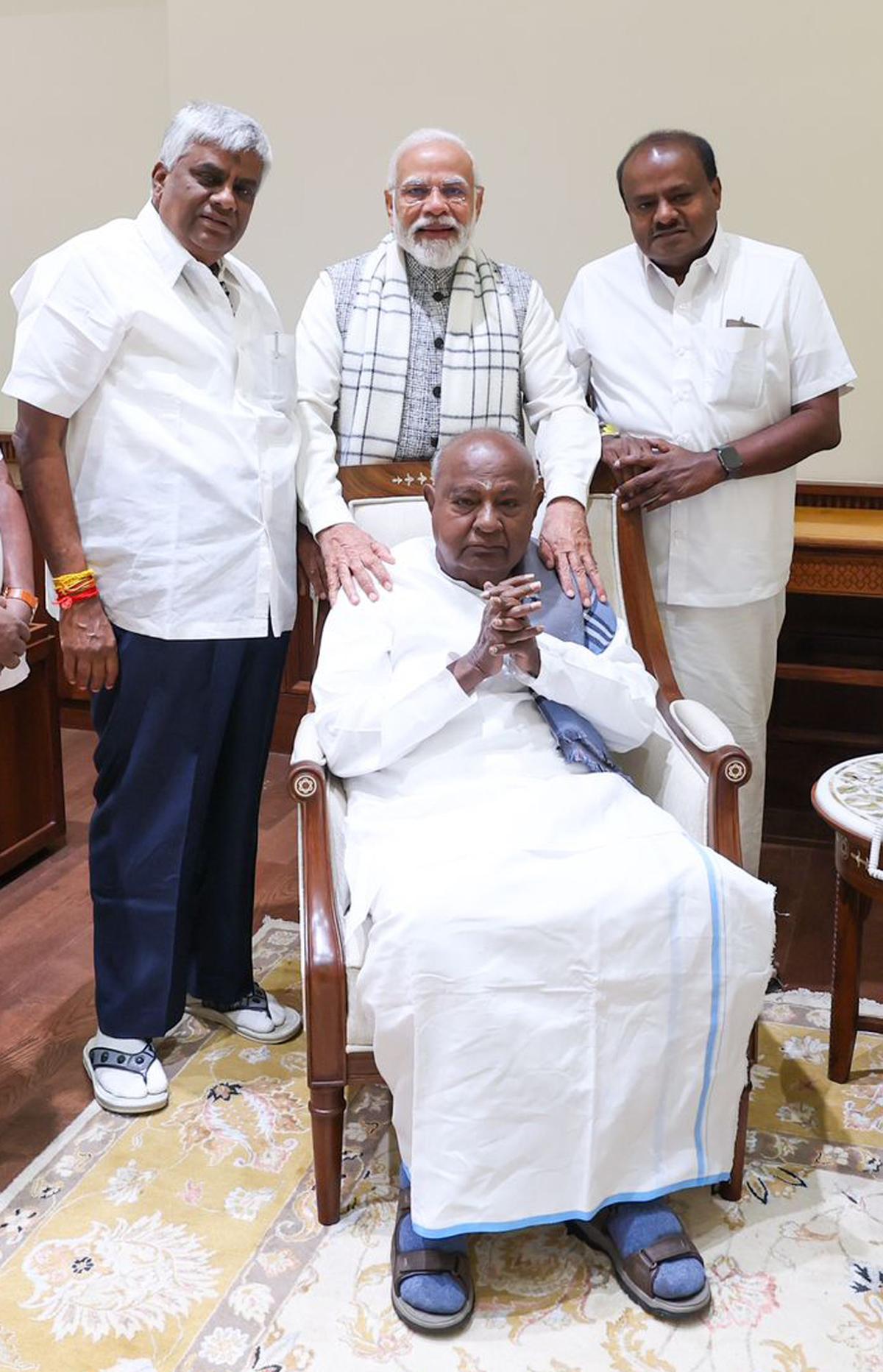
The first chapter of the book, ‘Understanding Karnataka Politics’, gets one to peep into the power politics of Karnataka from historical as well as contemporary perspectives. It makes us understand the role of castes and religion, the standing of H.D. Deve Gowda and his son H.D. Kumaraswamy, their JD(S), the Bharatiya Janata Party and the Indian National Congress. It gives an idea about the two dominant castes—Lingayats and Vokkaligas—vis-à-vis the BJP’s and Deve Gowda’s equations with them. It explains the Congress’s deployment of AHINDA—a conglomeration of minorities, backward classes and Dalits—a strategy closely associated with Siddaramaiah to counter the domination of Lingayats and Vokkaligas.
Interestingly, the chapter decodes the relationship between Deve Gowda, Kumaraswamy and their JD(S) with Narendra Modi and Amit Shah. It offers an irony in the sense that it was the same Deve Gowda whom the mercurial Lalu Prasad Yadav put his weight behind and preferred as Prime Minister in 1996 over his long-time friend and caste brethren from Uttar Pradesh, Mulayam Singh Yadav. If Deve Gowda, after his split from Lalu’s Janata Dal, developed a cordial relationship with Modi and Shah, Lalu developed enmity with the Modi-Shah combine in the way the legendary generals of Mahoba, Alha and Udal, had developed against Prithviraj Chauhan in the 12th century.
The subsequent chapter, ‘The Rise of ‘DKShi’, epitomises what the word ‘interesting’ means in the context of a political treatise. The chapter narrates the story of the birth, bringing up, initial interests, struggle, endurance and rise of the man who has risen from Doddalahalli, near Kanakapura, to become the Chief Minister of Karnataka. The life journey of D.K. Shivakumar has all the elements of an enchanting folktale told in the manner only Rasheed Kidwai could have.
A baby Shivakumar giving up on his efforts to learn swimming after nearly drowning in the pool of the family manor, developing an interest in football, a passion for riding a Yezdi motorcycle, an inherent knack for leadership, joining student politics, enjoying the chores of the temple and family’s religion, and his dalliance with astrologers—Shivakumar represents a typical common Indian from Karnataka making his way through relentless hard work, endurance and perseverance.
It’s hardly easy for a common villager to rise by circumventing the intricate layers and bureaucracy of the grand old party of India, particularly for one who didn’t have parents or ancestors connected to the Nehru-Gandhi lineage. But Shivakumar is a living example of not only becoming the CM of Karnataka, but also emerging as a key troubleshooter and confidant of the Congress high command comprising Sonia, Rahul and Priyanka Gandhi.
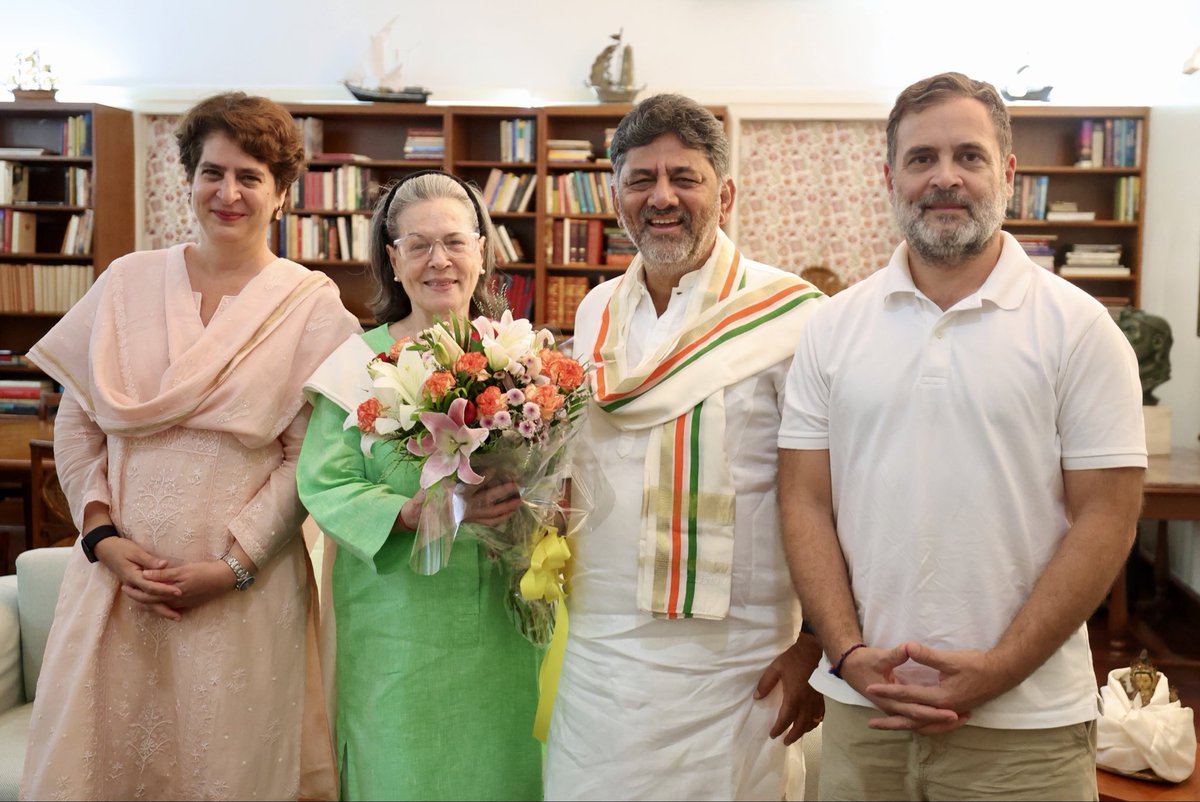
Shivakumar’s success in rescuing his party in Maharashtra and Gujarat against the ‘chakravyuh’ of the BJP may sound like a fairytale. But it’s Rasheed’s skill at spicing up anecdotes, small tales and lighter moments that makes it so readable. Most Indian politicians—either Hindus or Muslims—are known to court astrologers and seek the help of occult practitioners and exorcists, but they have a tendency to keep these traits under the veil of secrecy.
Say it is D.K. Shivakumar’s nature not to conceal his beliefs and practises or Rasheed’s enquiry into these traits, the book copiously refers to Shivakumar’s reliance on astrologers and gurus, Dwarakanath Guruji, Shivaswami and others, to navigate difficult situations. D.K. Shivakumar also narrates the ethical values that Shivakumar carried through most parts of his life—he made his children study in the educational institutions he opened, unlike other netas who make a business of education while keeping their own children away from it.
The book, running into ten chapters, from Understanding Karnataka Politics to The Rise of the Rock, serves as a perfect window to look into how an ‘outsider’ grew into an ‘insider’ of Congress politics, his subtle and smart moves, unwavering commitment to secularism and inclusive existence to save India’s soul, dexterity as a troubleshooter, penchant for strategising and campaigning relentlessly to achieve the goal, grassroots connection, vision for his state, and rise onto the national stage. Shivakumar’s is a story in the making, as his biography by Rasheed hints.
The book delicately but enchantingly narrates the life journey of D.K. Shivakumar from a village boy to a rich and powerful political figure. My only criticism of the book, and that’s a minor one, is that Rasheed could have fleshed out DKS’s weaknesses, fears, moments of helplessness and dejection a bit more to enlighten the readers about how DKS battled to come out of those frailties. After all, human beings, however resilient they are, are known to suffer from some inherent weaknesses.
But I do confess that my criticism might be quite subjective in the context of my own lens. The biggest attribute of this book is that it’s unputdownable—once I began reading it, I couldn’t stop myself before reading the last lines: “Where Shivakumar goes from here is another question—reserved for another day, maybe for another book.”
Hello, Rasheed Kidwai: Your D.K. Shivakumar has inspired yours truly to keep a watch on the Karnataka Congress leader’s journey and wait for ‘another book’ as his journey progresses. Hachette India deserves accolades for the fine editing and production of the book.
Mostly Malini by Geetha Mahesh
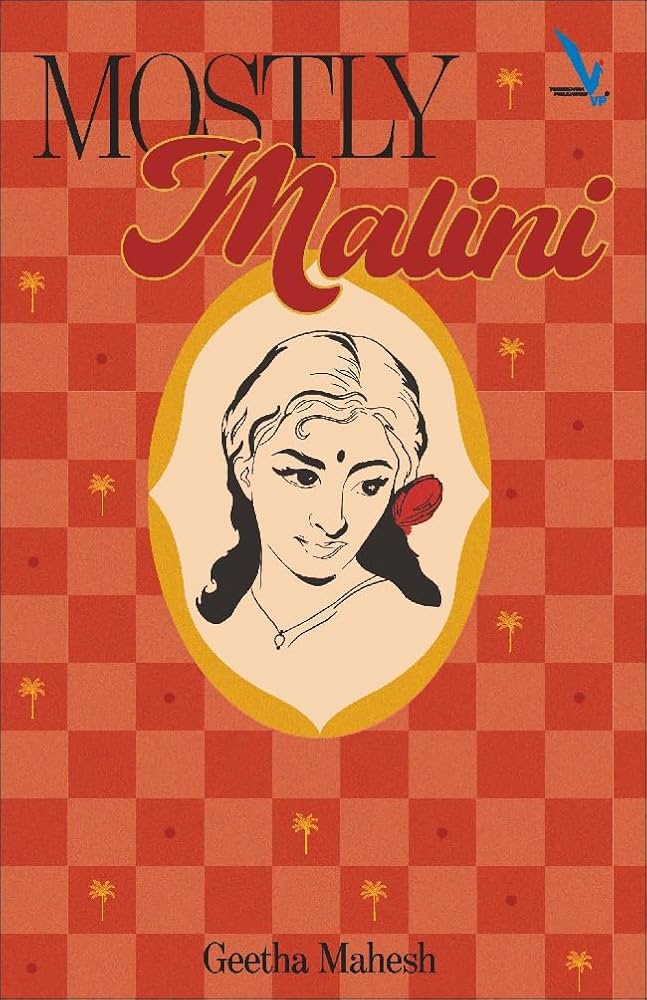
Another work that drew the attention of yours truly recently was Mostly Malini, a debut novella by Geetha Mahesh, a storyteller from a picturesque Kerala hamlet nestled among the ghats. What attracted me more towards the work was her penchant for telling the story from her surroundings. Raised in a model household by her grandmother and widowed mother through stories of love, warmth, courage and resilience, Geetha studied Commerce, got married to Mahesh and moved to Dubai. But she nursed and preserved the stories that were her emotional anchor.
The character of Malini is an enchanting portrait of a modest homemaker in her 40s whose natural struggle with ageing and menopause coincides with the Covid-19-induced lockdown. The novella narrates how Malini navigates through the frailties of childhood in the serene Kerala hamlet to teenage love, unfulfilled dreams and the intricate situations she never imagined as a child.
The book takes the reader into Malini’s world of nostalgia, mystery and quiet suspense. Her literary agent, Suhail Mathur, The Book Bakers and Vishwakarma Publications have done a commendable job by collaborating to bring out this work. Keep writing, Geetha Mahesh. Best wishes to you.








Nalin Verma’s piece brilliantly shows how D.K. Shivakumar’s journey is not just about power, but about political survival, grassroots organisation and the complex equations of Karnataka politics. Rasheed Kidwai’s work opens an important window into how leadership is built—and sustained—in Indian politics. A sharp and insightful read.