

The Making of Technological Power: From Menlo Park to the AI Age — Part I

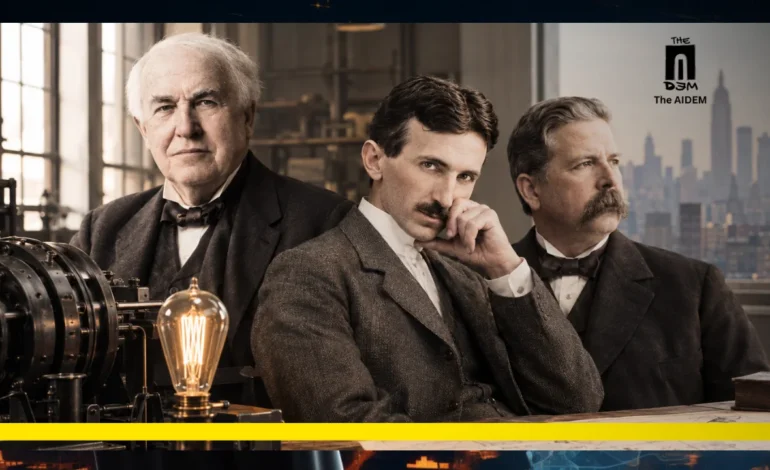
Ajith Balakrishnan’s sustained exploration of artificial intelligence has increasingly turned the spotlight away from the technological spectacle of AI to the formidable structures of capital and power taking shape around it. Following Artificial Intelligence: The Next Stage of Digital Capitalism and The Great AI Buildout: A Race for Capital, Energy and Control, this two-part essay travels further back — to Edison’s Menlo Park and the electrification revolution — to trace the historical making of technological power.
In Part I, Balakrishnan examines a decisive transformation that long preceded AI: the movement from the individual inventor and the singular breakthrough to technological systems built through organised research, industrial infrastructure and institutionalised knowledge. Edison, Tesla and Westinghouse become more than heroic figures in the history of electricity; their intertwined stories illuminate the process through which invention itself became organised, systematised and increasingly embedded within large institutions.
It is a history with an unmistakable resonance in the age of AI, when knowledge is once again being reorganised — this time on a scale that reaches into the processes of invention and intellectual labour themselves.
From the Lone Inventor to Organised Invention
On the afternoon of September 4, 1882, an engineer at a generating station on Pearl Street in lower Manhattan, New York, pulled a switch. Steam engines spun dynamos, underground copper cables carried direct current through the surrounding streets, and incandescent lamps flickered to life in nearby establishments. Thomas Alva Edison, the 35-year-old inventor behind the venture, was already renowned for the phonograph and light bulb. But what came alive that afternoon was arguably more important than either invention. Within a few years, the Pearl Street station was supplying thousands of lamps. Electricity was transforming from a novelty into a network, a system, a core economic infrastructure, and a utility.
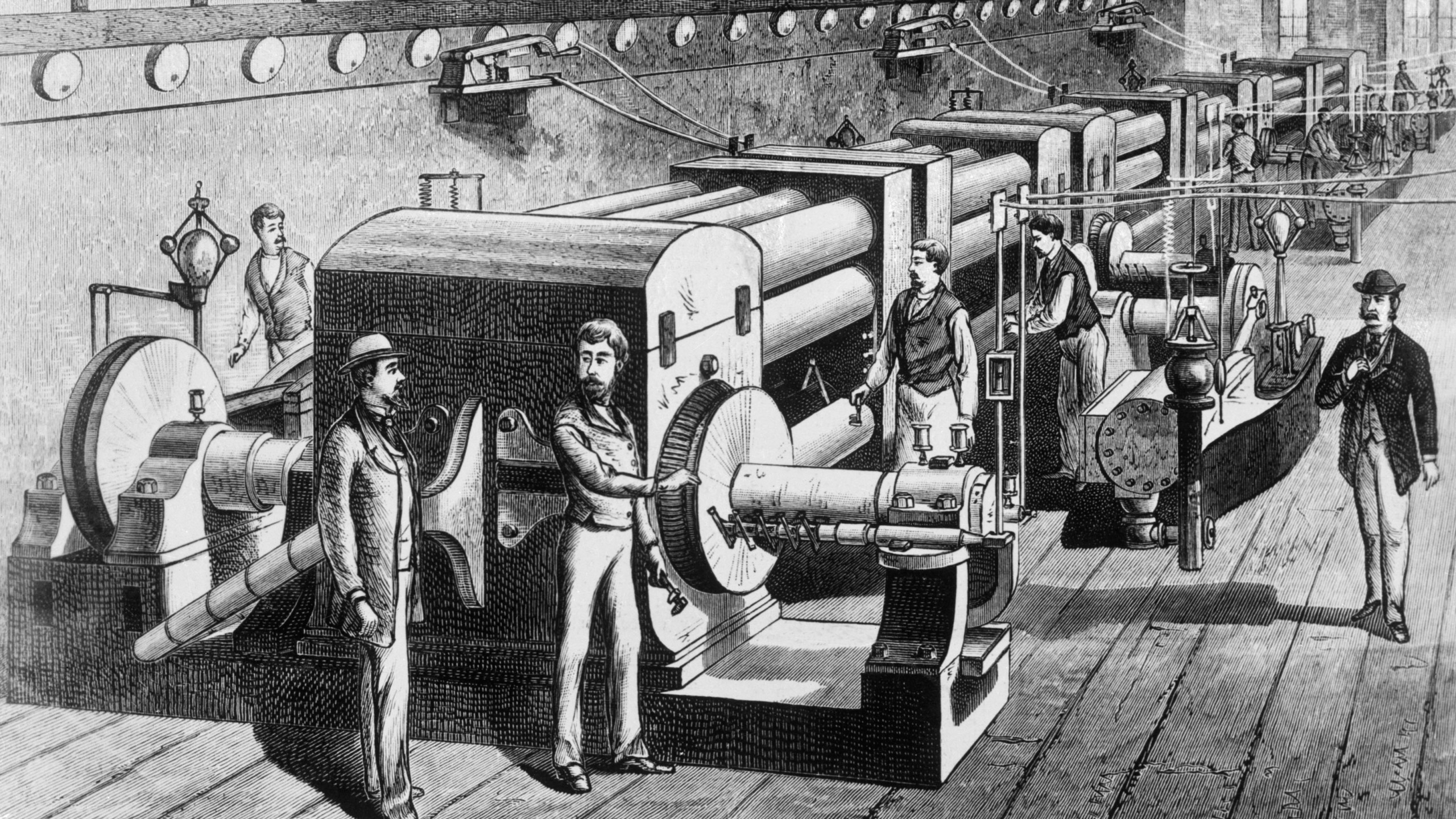
Among the first establishments connected to this grid was the investment bank Drexel, Morgan & Company, co-founded by J.P. Morgan. Around the same time, Morgan’s Manhattan residence became the first private home in the country lit entirely by Edison electricity. There is rich symbolism in Morgan being part of the earliest adopters of this new technology. The revolution Edison set in motion would soon demand financiers like Morgan almost as much as it needed inventors like Edison.
Popular history usually portrays electricity’s rise through heroic figures and dramatic breakthroughs: Edison, the Wizard of Menlo Park, hunting for the right filament; Nikola Tesla, conjuring rotating magnetic fields; and George Westinghouse, staking his industrial empire on alternating current. However, far more important was what unfolded after invention. Electricity could reshape society only after it became part of a much larger system. Generators, cables, transformers and factories had to be built. Patents, corporations, banks and eventually regulated utilities had to develop around them. As this system grew, the centre of innovation shifted away from the solitary inventor toward institutions capable of mobilising vast amounts of capital and technical knowledge.
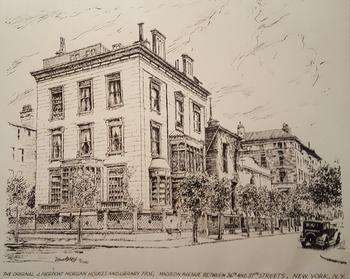
Electrification offers perhaps the single strongest historical parallel for artificial intelligence among earlier technological revolutions. This is not because AI is simply “the new electricity” or because the 19th century supplied a script that the 21st must faithfully replay. Rather, electrification shows how capitalism turns technological breakthroughs into systems, infrastructure and economic power. AI is following a similar path. But the comparison becomes most revealing precisely where the analogy begins to break down.
Three Men and the Making of a Technological System
Jill Jonnes, a historian and author, provides a fascinating account of the figures and the technological, financial and personal rivalries that shaped the era in her book Empires of Light: Edison, Tesla, Westinghouse, and the Race to Electrify the World. The three great protagonists of this early electrical drama represented sharply different relationships between knowledge and enterprise.
Edison was an obsessive experimenter and organiser. At his laboratory in Menlo Park, New Jersey, he assembled machinists, chemists, engineers and technicians to join what became known as his “invention factory”. Tesla could scarcely have been more different. Where Edison approached invention through exhaustive trial and error, Tesla claimed to construct and refine machines in his imagination before touching a tool. After briefly working for Edison, he secured patents for a polyphase alternating current system and an induction motor, offering an elegant solution to one of the central problems of the infant industry: transmitting power efficiently over long distances. Then came Westinghouse, the Pittsburgh industrialist who understood what neither pure science nor raw invention could provide by itself. In 1888 he acquired rights to Tesla’s AC patents. Tesla could conceptualise an electrical future; Westinghouse could build the enterprise required to deliver it.
The resulting “War of the Currents” between Westinghouse’s alternating current (AC) and Edison’s direct current (DC) is usually remembered as a colourful personal feud. In reality, it was a contest between technological systems and design choices. Edison commanded generating equipment, manufacturing facilities, patents, customers and power stations built around DC; Westinghouse was assembling a rival ecosystem around AC. Engineering choices had become capital-allocation decisions. Technical elegance mattered, but so did manufacturing, finance, complementary equipment, networks and the ability to scale. The decisive unit of competition was no longer the invention alone.
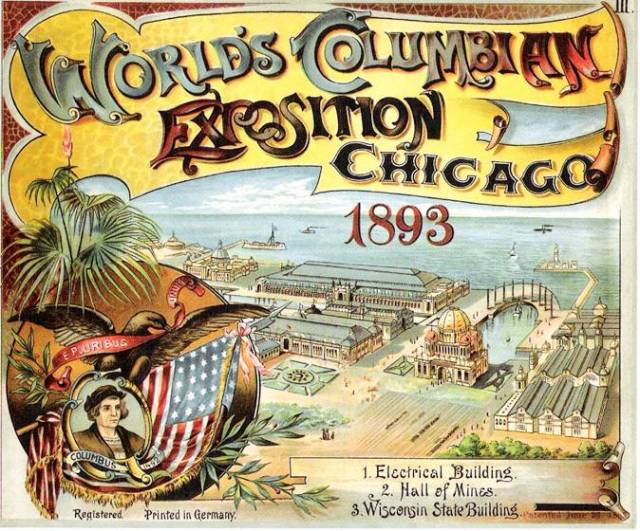
The public spectacle arrived in Chicago in 1893, when Westinghouse won the contract to illuminate the World’s Columbian Exposition. Visitors entering the fair after sunset witnessed a fantastical display of electric light. Niagara Falls soon supplied a more consequential demonstration: massive generators converted falling water into alternating current, and it was transmitted 26 miles to Buffalo. Power no longer had to be consumed beside the place where it was produced. The geography of production itself could change.
In Networks of Power: Electrification in Western Society, 1880–1930, historian Thomas P. Hughes argued that electrification was not simply a series of inventions. It was the creation of vast technological systems that brought together machines, engineers, businesses, financiers and political institutions. Economists later came to regard electrification as one of the classic examples of a general-purpose technology: technologies that spread across industries, continue improving and stimulate complementary innovation.
But, as the economic historian Paul David showed, the electric motor did not transform manufacturing simply by substituting electrical power for the older steam-driven system. Factories eventually had to be redesigned around the flexibility that distributed electric power made possible. The technology became revolutionary when production itself began reorganising around it. That distinction is worth keeping in mind amid today’s obsession with AI model benchmarks and flashy demonstrations. Ubiquity alone does not constitute a general-purpose technological revolution like this. The true test is whether firms and institutions systematically recast production, information flows, decision-making, and the division of labour around machine intelligence. A chatbot bolted onto an unchanged workflow is the modern equivalent of an electric motor dropped into a steam-era factory: useful, perhaps, but far short of a genuine structural transformation.
The Invention of Organised Invention
A technological system of this complexity also changed the nature of invention itself. Perhaps the most significant thing Edison invented was not a device at all. Almost inadvertently, the great cultural icon of individual invention helped invent organised invention.
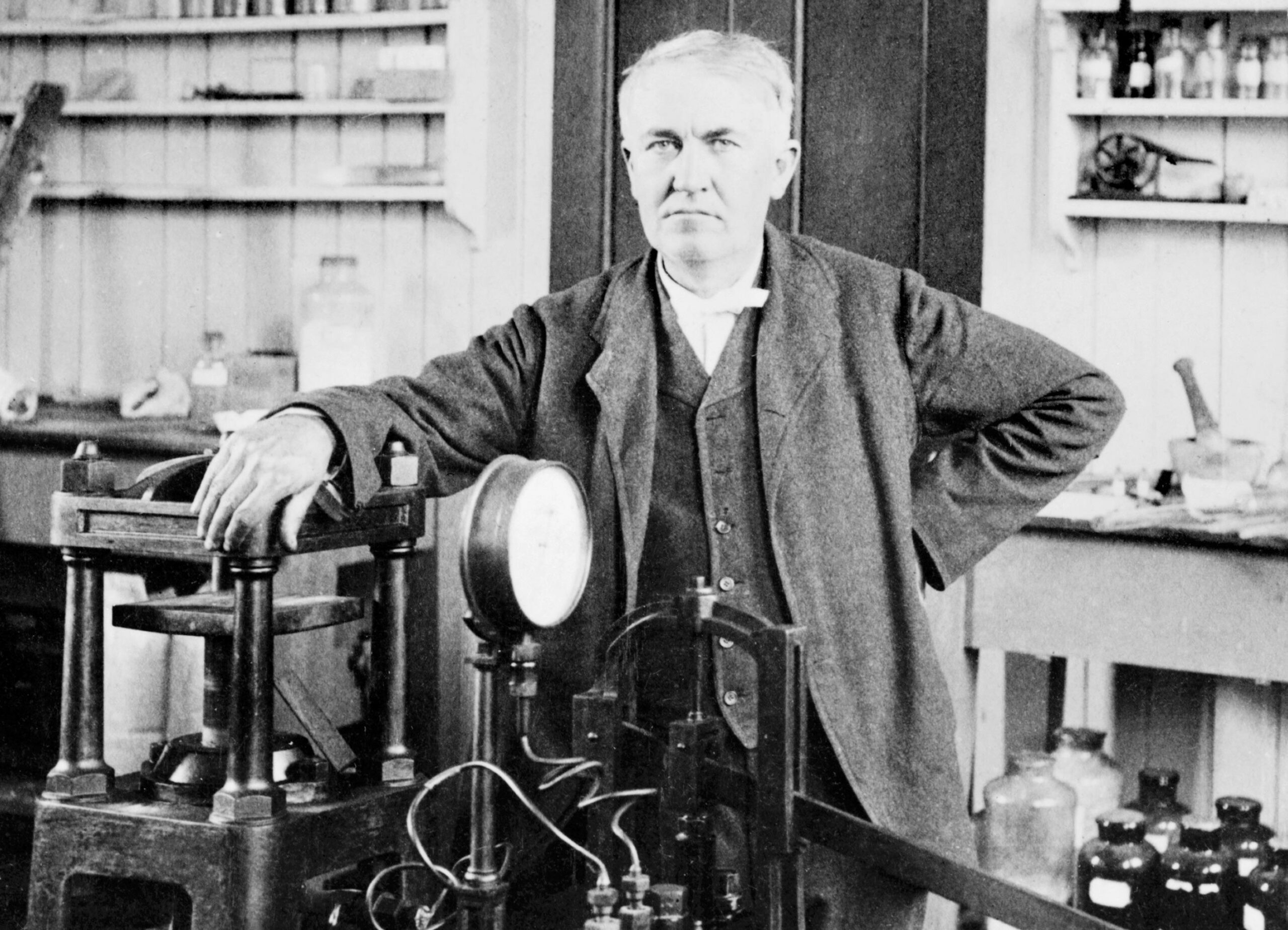
Menlo Park represented something different from the nineteenth-century image of invention personified in exceptional minds. With a carefully assembled team, Edison turned invention from an intermittent activity into something resembling a production process. He was explicit about the ambition: the laboratory, he said, would turn out “a minor invention every ten days and a big thing every six months or so.” Invention was acquiring a production schedule. His later West Orange complex expanded the principle; corporate laboratories carried it much further. General Electric, Westinghouse, Bell and others accumulated permanent staffs of scientists and engineers.
The significance was not merely that corporations employed more inventors. Knowledge itself was acquiring an institutional home, where technical capabilities could be divided among specialists, reproduced and accumulated. In Labour and Monopoly Capital, Harry Braverman saw the late-nineteenth-century scientific-technical revolution as a watershed for precisely this reason. Science ceased to be merely a general social resource upon which industry occasionally drew. Increasingly, it was systemised, financed and directed within capitalist enterprise—becoming, in his striking formulation, “capitalist property at the very centre of production”.
But it was not a one way relationship. Industrial capitalism did not simply appropriate science; its growing technological complexity also generated new scientific problems and state institutions to address them. One example was Germany’s Physikalisch-Technische Reichsanstalt (PTR), established in 1887 to combine fundamental research with the precision measurement and standardisation increasingly required by industry, particularly the expanding electrical sector. Dynamo pioneer and industrialist Werner von Siemens and physicist Hermann von Helmholtz were the driving forces behind it; Siemens even donated land for its construction.
The consequences extended far beyond immediate industrial needs. Precision experiments on blackbody radiation, driven by the need to make better light bulbs, at the PTR provided crucial evidence for Max Planck’s radiation law and the quantum hypothesis that followed in 1900. Industrial electricity had thus helped foster an institution that contributed to quantum physics, which would eventually underpin semiconductors, electronics and computing. The relationship continues in new forms today. Google DeepMind researchers Demis Hassabis and John Jumper shared the 2024 Nobel Prize in Chemistry for AlphaFold2, while Geoffrey Hinton, who spent a decade at Google, shared that year’s Physics Nobel for foundational work on artificial neural networks.
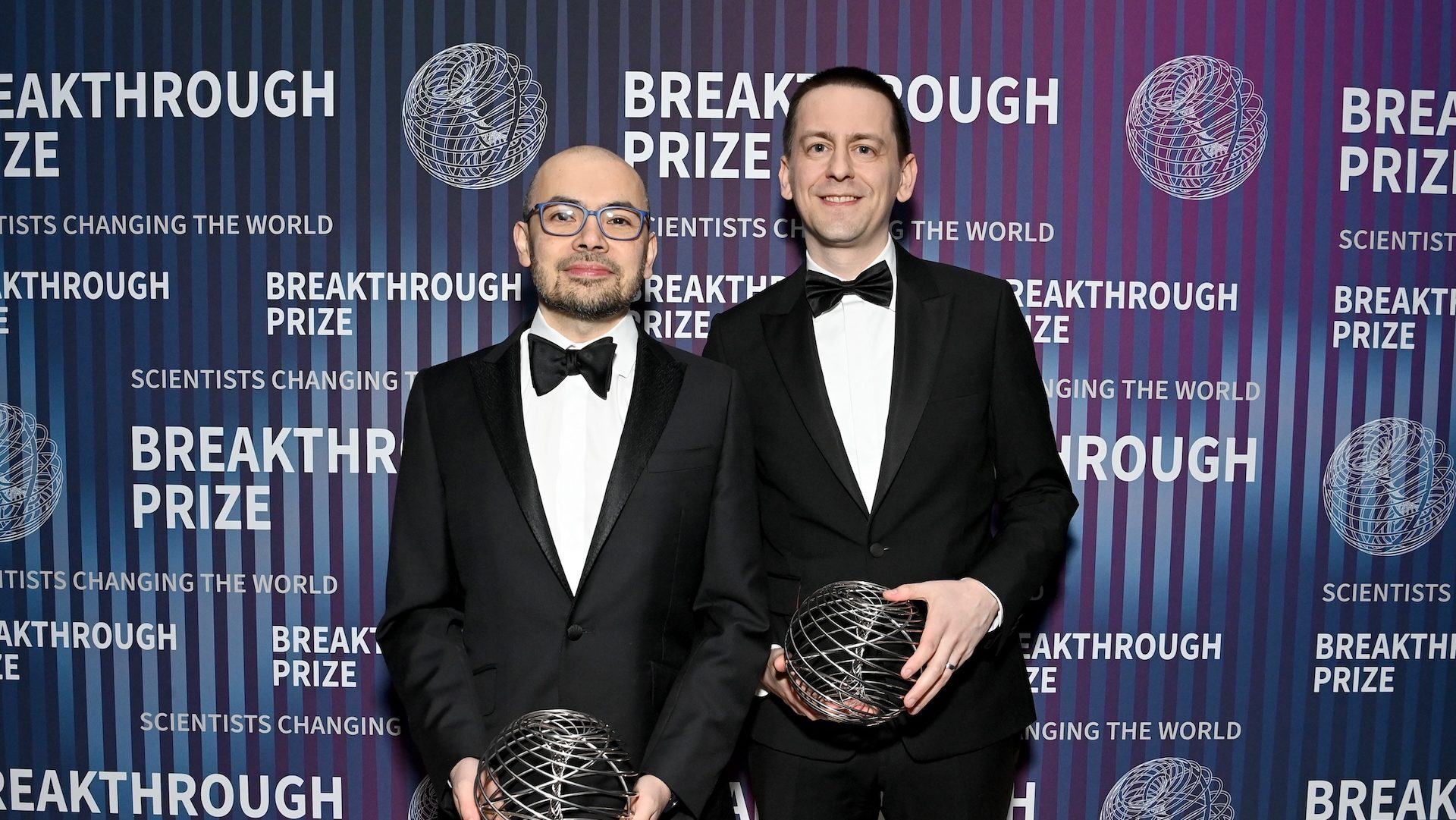
The trajectory Braverman identified has travelled a remarkable distance: from industry drawing upon science, to institutions systematically organising it, to corporations possessing the resources and computational infrastructure to produce frontier science themselves.
AI sits firmly within this historical lineage but may push it further. Frontier research already requires large teams, specialised engineering and enormous computing resources. Now the products of organised research are beginning to participate in research itself—writing code, analysing data, searching literature, generating hypotheses and exploring designs. Menlo Park organised people into a system for producing inventions; AI raises the possibility that the machine itself becomes part of that system.
Sources and Further Readings:
- Jonnes, Jill. Empires of Light: Edison, Tesla, Westinghouse, and the Race to Electrify the World. New York: Random House, 2003.
- Karen Hao, Empire of AI: Dreams and Nightmares in Sam Altman’s OpenAI (2025).
- Kate Crawford, Atlas of AI: Power, Politics, and the Planetary Costs of Artificial Intelligence (2021).
- Bresnahan, Timothy F., and Manuel Trajtenberg. “General Purpose Technologies: ‘Engines of Growth?’” Journal of Econometrics 65, no. 1 (1995).
- Hughes, Thomas P. Networks of Power: Electrification in Western Society, 1880–1930. Baltimore: Johns Hopkins University Press, 1983.
- David, Paul A. “The Dynamo and the Computer: An Historical Perspective on the Modern Productivity Paradox.” American Economic Review 80, no. 2 (1990): 355–361.
- Marx, Karl. Grundrisse: Foundations of the Critique of Political Economy. London: Penguin Books, 1973
- Braverman, Harry. Labour and Monopoly Capital: The Degradation of Work in the Twentieth Century. New York: Monthly Review Press, 1974.
- National Park Service. “Thomas Edison National Historical Park.” U.S. Department of the Interior.
- PBS. Tesla: Master of Lightning.
- The Rutgers-New Brunswick School of Arts and Sciences: Thomas A. Edison Papers.
- Smithsonian Magazine: “Nikola Tesla and the Tower That Became His ‘Million Dollar Folly’”.
- Physikalisch-Technische Bundesanstalt (PTB), PTR and PTB: History of an Institution.
- Ng, Andrew. “Why AI Is the New Electricity.” Stanford Graduate School of Business, March 11, 2017.
Make sure to check back tomorrow for Part II of article in this series.








A fascinating and deeply relevant exploration of how technological power is actually built. From Edison’s Menlo Park to today’s AI giants, the real story is not just about brilliant inventors or spectacular breakthroughs, but about the growing alliance of capital, infrastructure, organised research and institutional power. The comparison with electrification is especially striking: technology becomes truly transformative when it reorganises production, knowledge and society itself. AI may be taking that process one step further by turning the machine from a tool of invention into a participant in invention. A powerful piece that makes us look beyond the hype and ask the most important question—who controls the systems that shape our technological future?