

Viksit Bharat and the Crumbling Pillars of Democracy

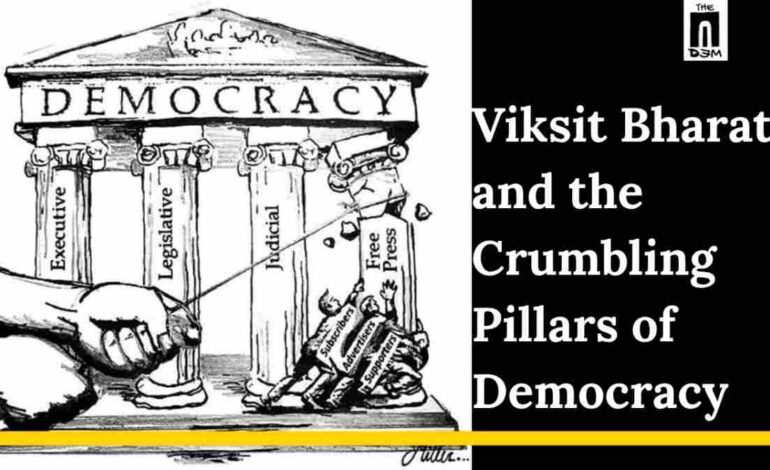
Even as the target of achieving the dream of “Viksit Bharat” is just about two decades away, almost all the major institutions of the world’s largest democracy appear to be crumbling. The news from various quarters during the last few days is disturbing, to say the least.
Be it the functioning of Parliament, the executive, the judiciary, the media, law enforcement agencies or the Election Commission, there has been a noticeable and sharp decline in the standards and functioning of these institutions.
Parliament and the Judiciary Under the Lens
Take the just-concluded monsoon session of Parliament. The Lok Sabha had to be adjourned repeatedly almost every day of the session. Several bills were cleared in only a few minutes amid Opposition protests. It reflected the failure of the government to reach out to the Opposition and make sincere attempts to resolve the issues.
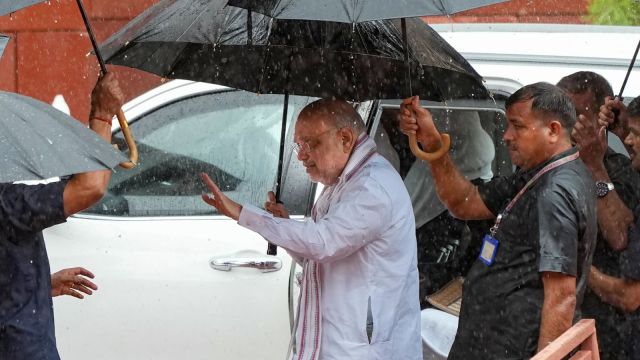
The Prime Minister as well as the Home Minister did not attend the session except for brief appearances, despite the fact that they remained in the Parliament premises during the session.
It was one of the least productive sessions in the last decade due to repeated disruptions. Parliament functioned for only 15 per cent of its scheduled time.
The Lok Sabha functioned for just 17.5 hours during the month-long session. Question Hour, which is generally provided for one hour every day of the session, was confined to merely nine minutes during the entire session.
The functioning of the judiciary is also increasingly coming under the lens. The latest instance is that of a Supreme Court judge questioning the integrity of the acting Chief Justice of the Rajasthan High Court and accusing him of misusing his powers.
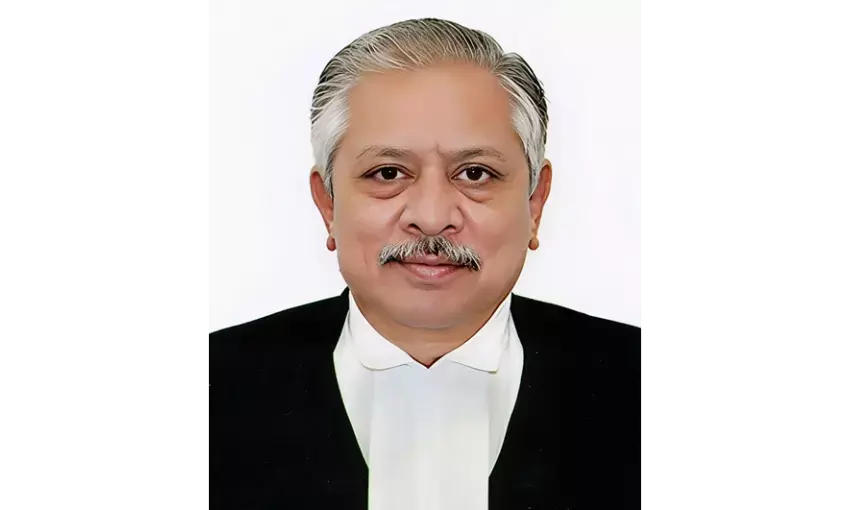
Lawyers practising in the High Court were also forced to stage a protest demanding that the judge be relieved of judicial and administrative duties.
The judge subsequently proceeded on leave, or was asked to do so, but the allegations have cast a shadow on the functioning of a section of the judiciary. It is an institution from which the highest standards of ethics and integrity are expected.
Questions Over Electoral Integrity
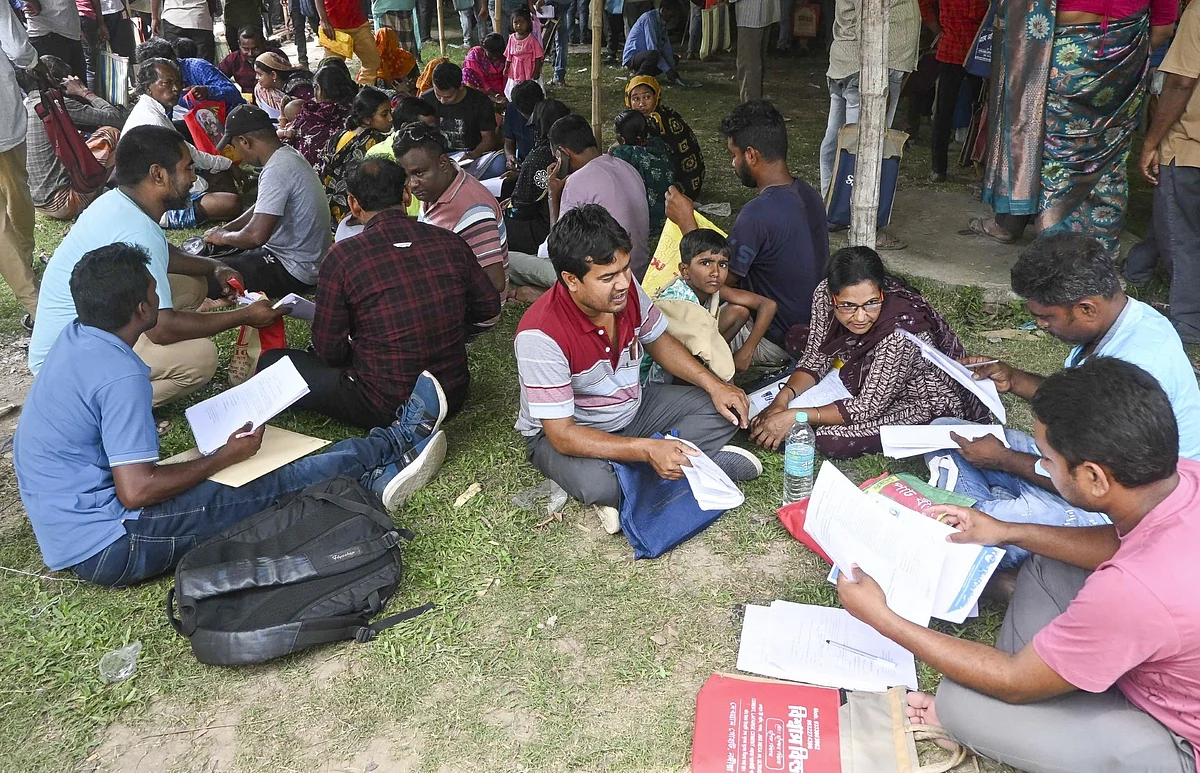
The Election Commission, which has been losing its credibility due to several acts of omission and commission, has much to answer for in its conduct of the ongoing Special Intensive Revision of electoral rolls. The Commission has put the entire burden of proof on citizens to establish their eligibility as voters.
It does not matter if you had voted before or after 2002, you have to produce evidence, including that related to your parents and grandparents. Even defence officers, diplomats and other well-known citizens have been asked to prove their bona fides.
No wonder the draft rolls published so far record 13 crore deletions, amounting to a 13.37 per cent reduction from the previous voters’ list. There is no doubt that one has to take into account deaths, migration or the unavailability of voters, which can lead to the genuine deletion of names, but the entry of an increasing number of new voters also has to be factored in.
What explains the sudden rise and fall in the number of electors in Maharashtra? As per the electoral rolls for the Lok Sabha elections in the state, the number of voters was 9.2 crore in 2024. This rose sharply within four months to 9.7 crore for the Assembly elections and has now come down drastically to 7.7 crore after the SIR!
Freedom of Expression and the Shadow of Cronyism
Another disturbing piece of news during the week was about the decision of Penguin India not to release Sonia Gandhi’s autobiography. Apparently, this was due to objections raised by the publishers regarding references to Narendra Modi, communal incidents and the Chinese incursion into Indian territory. Sonia Gandhi declined to delete the references.
Significantly, a sister organisation of Penguin India has declared that it is going ahead with the publication of the unedited version of the book in the US. It has also declared that the first print order would be for one lakh copies.

Thus, the book would be available across the world, except in India, in its unedited form. In this age of social media, it will not take too long for the portions which the publishers, and presumably the government, did not want to reach the public.
This kind of interference, or what you might call the hidden hand of the government, raises questions about the fundamental right to freedom of expression and speech. If the powers that be disagree with any content, they can write another book or get one written to have their say.
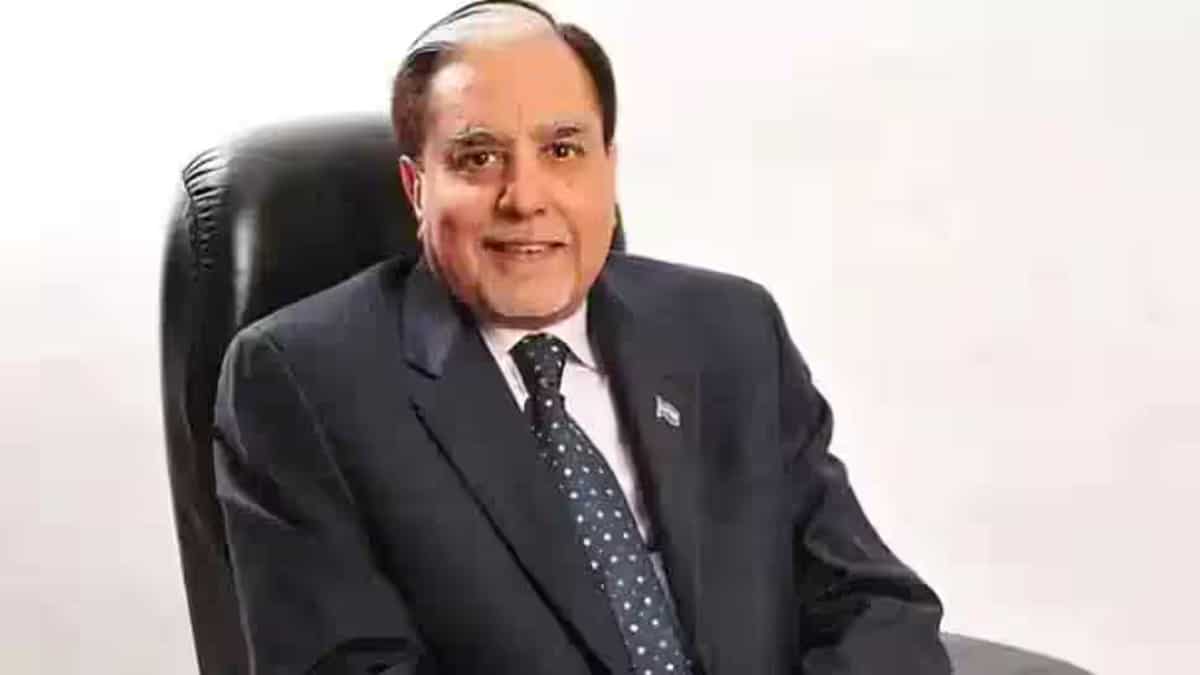
Then there was the news about Essel Group founder Subhash Chandra, who had been allowed to settle his personal insolvency proceedings by paying Rs 6.25 crore against admitted claims of Rs 22,006.57 crore. It only adds to the perception of crony capitalism so obviously taking place in India.
This is certainly not how democracies function. Well-known author, journalist and former Union minister Arun Shourie said in a recent interview that we should stop calling ourselves a democracy. Instead, it should be called an “electoral autocracy”. Given the centralisation of power in the country, the description does not appear to be inappropriate.
This piece was originally published by Punjab Today News and can be read here.




“Viksit Bharat” cannot be built on the weakening foundations of Parliament, the judiciary, electoral institutions and freedom of expression. Development is meaningful only when democratic institutions remain independent, accountable and strong. A powerful and timely reminder that economic progress without democratic integrity is not true progress—it is merely a grand slogan hiding a crumbling reality. :::