

Martha Ellis Gellhorn

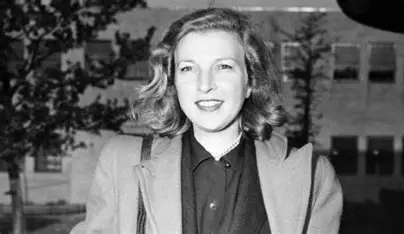
Martha Ellis Gellhorn was a war correspondent who never ceased telling the world about the harrowing and tragic face of war.
In a journalistic career spanning nearly sixty years, Martha Ellis Gellhorn (1908–1998) reported firsthand on many of the major wars and conflicts that took place across the world. She ranks among the foremost women war correspondents of the last century. What set her apart was that she went beyond political and military matters to bring before the world the suffering of ordinary people who had become the victims of war. From the Spanish Civil War to the Vietnam War and the conflicts in Central America, Martha Gellhorn travelled relentlessly through war zones, reporting from the ground.
When she was denied official permission to cover the 1944 D-Day invasion of Normandy simply because she was a woman, she secretly boarded a hospital ship and reached Normandy. Gellhorn was in London when the Normandy invasion began on 6 June. On hearing the news, she made her way to Southampton and boarded the hospital ship HMHS Prague, which was leaving for Normandy. She gained entry by saying that she wanted to interview the nurses. Once the ship had sailed, she hid in a bathroom. When it reached the vicinity of Omaha Beach on 7 June, she went ashore in a water ambulance with the medical team and helped bring wounded soldiers back to the ship. She became the only woman war correspondent to report the Normandy invasion from the shore.
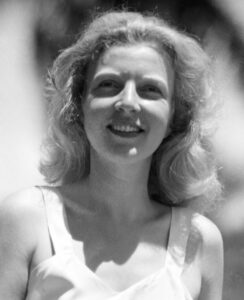
Martha Gellhorn’s reports did not focus only on the strategies of war or military victories. She wrote about families who had lost everything in bombings, the misery of refugees, wounded children, and ordinary people living in fear and uncertainty. Her articles thus went beyond mere news reports to become vivid portraits of human suffering.
Advancing with courage and confidence in the male-dominated field of war reporting, Gellhorn became a great inspiration to later generations of women journalists. Martha Gellhorn, who stood for truth and questioned authority, is remembered as one of the bravest war correspondents in the history of world journalism.
Martha’s reports, filled with courage, honesty and a profound sense of humanity, gave war journalism an entirely new dimension.
This American journalist was also renowned as a novelist and travel writer.
After completing her schooling at John Burroughs School in St. Louis, Martha Gellhorn enrolled at Bryn Mawr College near Philadelphia for her undergraduate studies. But her desire to become a journalist led her to leave college without completing her degree. Her first articles appeared in The New Republic.
In 1930, determined to become a foreign correspondent, Martha went to France. She worked at the Paris bureau of the United Press news agency. She lost the job after complaining about sexual harassment by a man associated with the agency. She then travelled through different countries in Europe, writing articles for newspapers in Paris and St. Louis. At the same time, she also covered fashion for Vogue.
During this period, Martha Gellhorn was involved with the pacifist movement. Drawing on those experiences, she wrote the book What Mad Pursuit.

After returning to the United States in 1932, she worked under Harry Hopkins, a close adviser to President Franklin D. Roosevelt. Gellhorn formed a close friendship with the First Lady, Eleanor Roosevelt. She was also a guest of the Roosevelt family at the White House.
Gellhorn was appointed a field investigator with the Federal Emergency Relief Administration (FERA), which functioned as part of President Roosevelt’s programmes to lift the country out of the suffering caused by the Great Depression. Travelling across different parts of the United States, she studied and reported on how the Great Depression had affected the lives of ordinary people.
One of her early investigations was in Gastonia, North Carolina. She later joined the celebrated photographer Dorothea Lange in documenting the life stories of the hungry and the homeless. Martha’s reports became part of the official government record of the Great Depression. Martha Gellhorn continued her investigations, courageously entering many places and taking up subjects to which women had little access at the time.
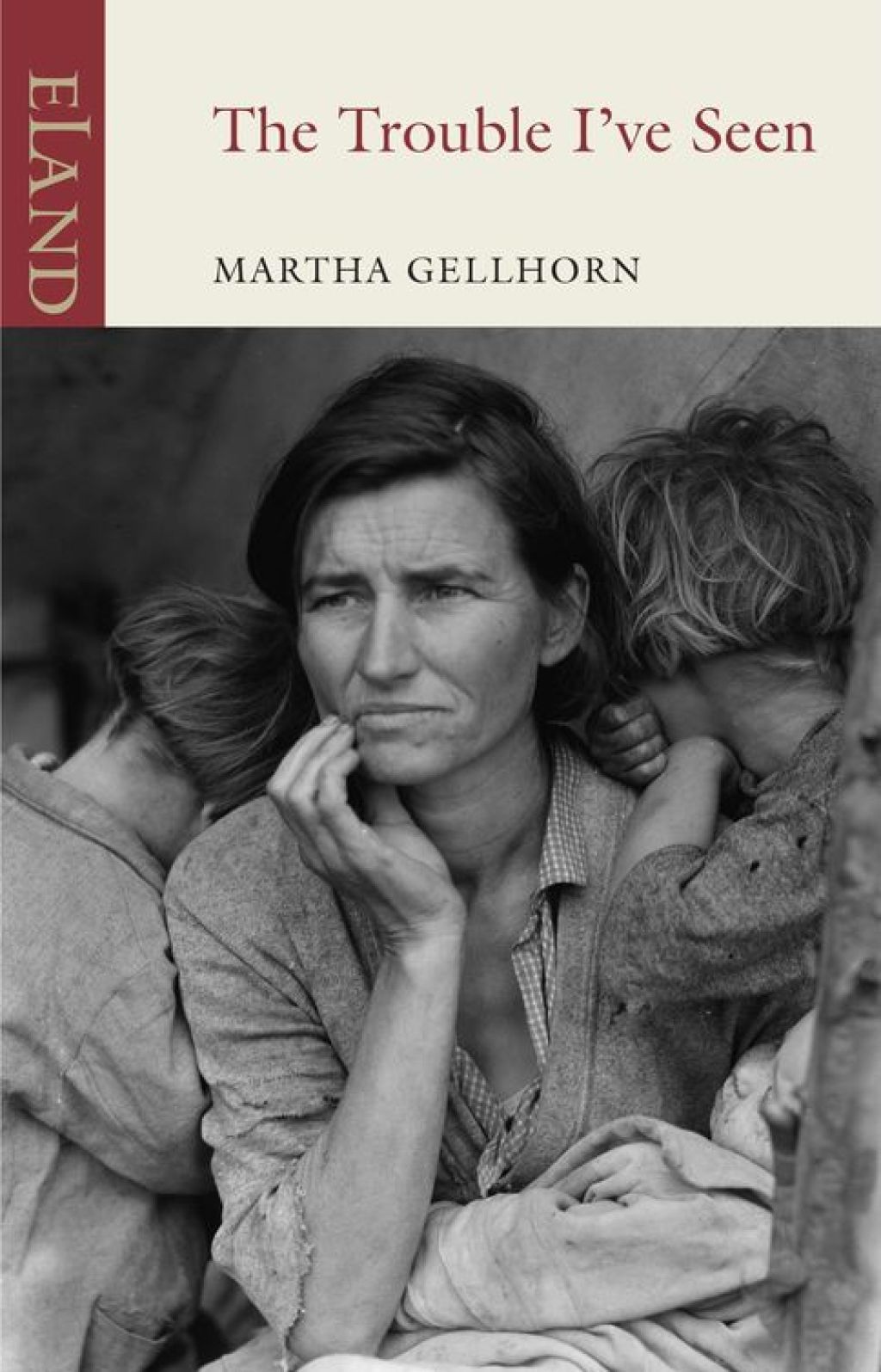
With these investigations and experiences as their background, she published the short-story collection The Trouble I’ve Seen in 1936.
Her independent and combative nature often landed her in trouble. To draw public attention to the actions of a corrupt official, she urged a group of workers to break the windows of a FERA office. The incident sparked a major controversy. Gellhorn lost her job at FERA.
Many such incidents stand as evidence that Martha Gellhorn was more than a journalist: she was a fearless writer and human-rights activist who fought for social justice.
Martha Gellhorn met the celebrated American writer Ernest Hemingway when she arrived in Key West, Florida, with her family during the Christmas holidays of 1936. The following year, Gellhorn went to Spain to report on the Spanish Civil War. Her reports were for Collier’s. Hemingway, too, arrived in Spain to cover the war.
From 1937 onwards, the reports Gellhorn sent from the Spanish battlefront were filled with the hardship and suffering endured by ordinary people because of the war. She spent Christmas 1937 in Barcelona with Hemingway.
While in Europe, she also reported on the rise of Adolf Hitler in Germany. In 1938, a few months before the Munich Agreement came into effect, she was in Czechoslovakia. She portrayed her experiences after the outbreak of the Second World War in the novel A Stricken Field (1940). Martha Gellhorn filed war reports from Finland, Hong Kong, Burma, Singapore and England.

In June 1944, Gellhorn sought official press accreditation to report on the Normandy invasion. But women journalists were not permitted to cover the Normandy landings.
Gellhorn did not retreat. Learning that the invasion had begun on 6 June, she reached the southern coast of England. She boarded a hospital ship that was preparing to leave for France, saying she wanted to interview the nurses. After the ship had sailed, she crossed the English Channel hiding in a bathroom.
Reaching the vicinity of Omaha Beach on 7 June, Gellhorn joined the medical team in the work of rescuing wounded soldiers. She later faced action by the military authorities for entering the war zone without official permission. But none of this made her retreat.
War carried her, again and again, to new fronts.
“I followed the war wherever I could reach, wherever war was being fought,” she later said.
She was also among the first journalists to reach and report from the Dachau concentration camp when Allied forces liberated it in 1945. Her reports, which exposed the horror of Nazi atrocities to the world, became major documents of war journalism.
After years of a close relationship, Martha Gellhorn and Ernest Hemingway married on 21 November 1940. But the relationship was fraught with conflict. Hemingway was unsettled by the long periods she spent on the battlefront. When she was leaving for Europe in 1943 to report the war, Hemingway asked in a message to her:
“Are you a war correspondent, or are you my wife?”
Gellhorn, however, was not prepared to give up her profession—or, still more importantly, her freedom to pursue it.
Hemingway placed obstacles in the way of Gellhorn’s attempts to travel to Europe to report on the Second World War. When she could not secure air passage, she crossed the Atlantic and reached England after a perilous journey aboard a cargo ship loaded with explosives. By then, she had concluded that their relationship could no longer continue.
Their divorce was officially finalised on 1 March 1945.
Gellhorn never wanted to be known merely as “Hemingway’s wife.” Throughout her life, she insisted on being known for her own writing and journalism. She fiercely opposed being presented as a “footnote” in Hemingway’s life.
Risking her life on battlefronts in pursuit of the truth, she is remembered even today as one of the bravest and most independent women correspondents in the history of world journalism.
Martha Gellhorn continued in journalism even after the Second World War. During the 1960s and 1970s, she reported on the Vietnam War and the Arab–Israeli conflicts. In 1966, she wrote six reports from Vietnam for The Guardian. The authorities later denied her press accreditation to work in South Vietnam.
Even after she had crossed seventy, she did not retire from journalism. In the 1980s, she travelled to report on wars and conflicts in Central American countries such as El Salvador and Nicaragua.
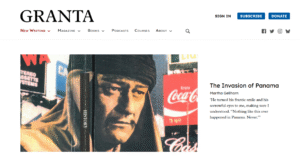
Following the United States military invasion of Panama in December 1989, Gellhorn went to Panama. Moving from house to house in Panama City’s poor neighbourhoods, she gathered information about ordinary people killed or wounded in the American assault. It was an attempt to show that the true impact of war falls upon the lives of civilians. Her essay The Invasion of Panama was published in Granta in 1990.
By the early 1990s, age and deteriorating eyesight had made travel increasingly difficult. Her vision declined significantly after cataract surgery. She openly acknowledged that she had grown too old to report on the wars in the Balkans in the 1990s.
Even then, she did not stop writing. Towards the end of her life, she prepared a long report on street children and poverty in Brazil. Although her eyesight had deteriorated so badly that she could not even read her own manuscripts, she overcame immense difficulties to complete the report.
Martha Gellhorn’s major work The Face of War (1959) is a collection of her reports and articles on different wars.

The Lowest Trees Have Tops (1967) is a novel set against the background of political fear and the consequences of the McCarthy era. Travels with Myself and Another (1978) is a travelogue drawn from her experiences of travelling the world. Hemingway is the “Another” in the title. The View from the Ground (1988) is a collection of her journalistic writings beyond war reporting.
The defining feature of Martha Gellhorn’s life was her ceaseless travelling. Hers was the soul of a wanderer.
She was never interested in settling permanently in any one place. Living by turns in different parts of the world, she kept seeking new people, stories and experiences.
For Gellhorn, “home” was not merely a building or an address. Her journeys in search of new people, stories and experiences were her true home.
Martha Gellhorn was not merely a war correspondent, but a rare humanitarian who confronted the suffering of the world with her own eyes and recorded those sights in her own words. She remains immortal in world history as one of the bravest and most independent women journalists of the twentieth century.
Read the First Article of the series here
Read the Second Article of the series here
Read the Third Article of the series here







Martha Ellis Gellhorn was far more than a war correspondent; she was a fearless journalist who brought the suffering of ordinary people into the spotlight when the powerful preferred to look away. She proved that journalism is not about serving those in power, but about speaking truth to power and giving a voice to the voiceless. Her extraordinary courage and independent spirit remain a powerful reminder that the duty of a journalist is not to please the powerful, but to confront injustice and expose the human cost of war. Her legacy continues to inspire every generation that believes truth must never surrender to power.