

Freedom’s Unfinished Journey: The Turbulent Birth of India

Part IV – From Barrister to Sardar: Patel, Gandhi and the Making of a National Leader
The making of independent India was shaped not only by the triumph of the freedom movement but also by the formidable challenges that followed the transfer of power.
Partition, the integration of princely states, the crisis in Kashmir and the deepening communal tensions tested the political judgement and convictions of the country’s foremost leaders. Gandhi, Nehru and Patel approached these challenges from different perspectives, sometimes disagreeing sharply on priorities and methods. Yet their interactions, disagreements and shared responsibilities played a decisive role in shaping the foundations of the Indian republic.
In Part IV of the series “From Barrister to Sardar: Patel, Gandhi and the Making of a National Leader” writer and researcher Anu Jain examines this critical period, including Gandhi’s final political interventions and the circumstances surrounding his assassination.
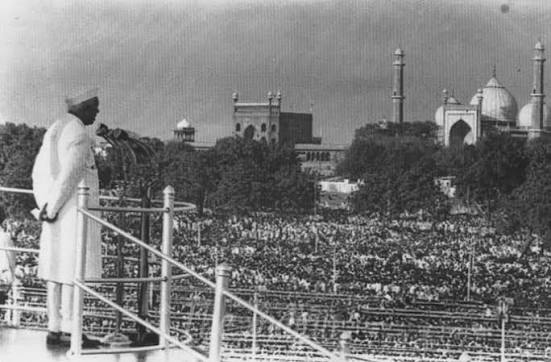
India became independent on 15 August 1947, but independence did not bring an end to the struggles that had shaped the freedom movement. The country inherited the consequences of Partition, the task of integrating hundreds of princely states, the displacement of millions of people and the urgent responsibility of building a functioning government. These challenges demanded different kinds of leadership.
Mahatma Gandhi continued to approach the crisis through the moral language of communal harmony and non-violence. Jawaharlal Nehru, as Prime Minister, was concerned with the political direction of the new state and its place in the world. Vallabhbhai Patel, as Deputy Prime Minister and Home Minister, was responsible for internal security, administration and the integration of the princely states. Their responsibilities were different, but the decisions they took were closely connected.
The relationship between the three men was not without disagreement. They did not always see the same problem in the same way, nor did they always agree on the means to resolve it. Yet the making of independent India cannot be understood without examining how their different approaches worked alongside one another.
1947 — Independence and the New Challenge
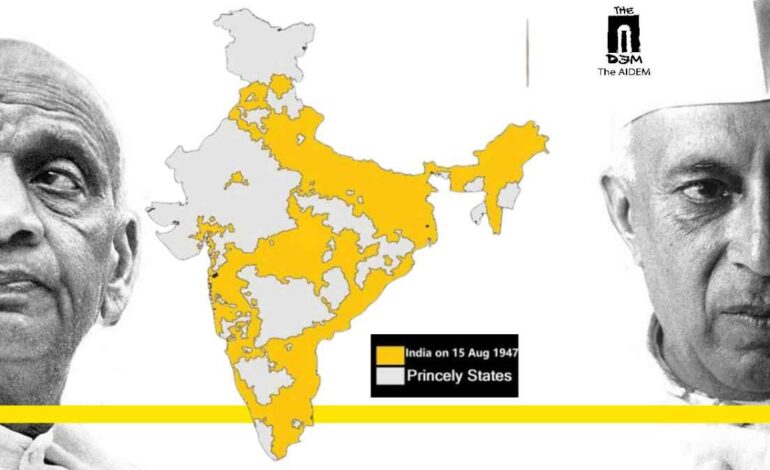
The transfer of power brought with it a question that could not be postponed: what would happen to the princely states? British paramountcy was due to lapse with independence. The rulers of more than 560 princely states were therefore faced with the question of their future relationship with the two new Dominions, India and Pakistan.
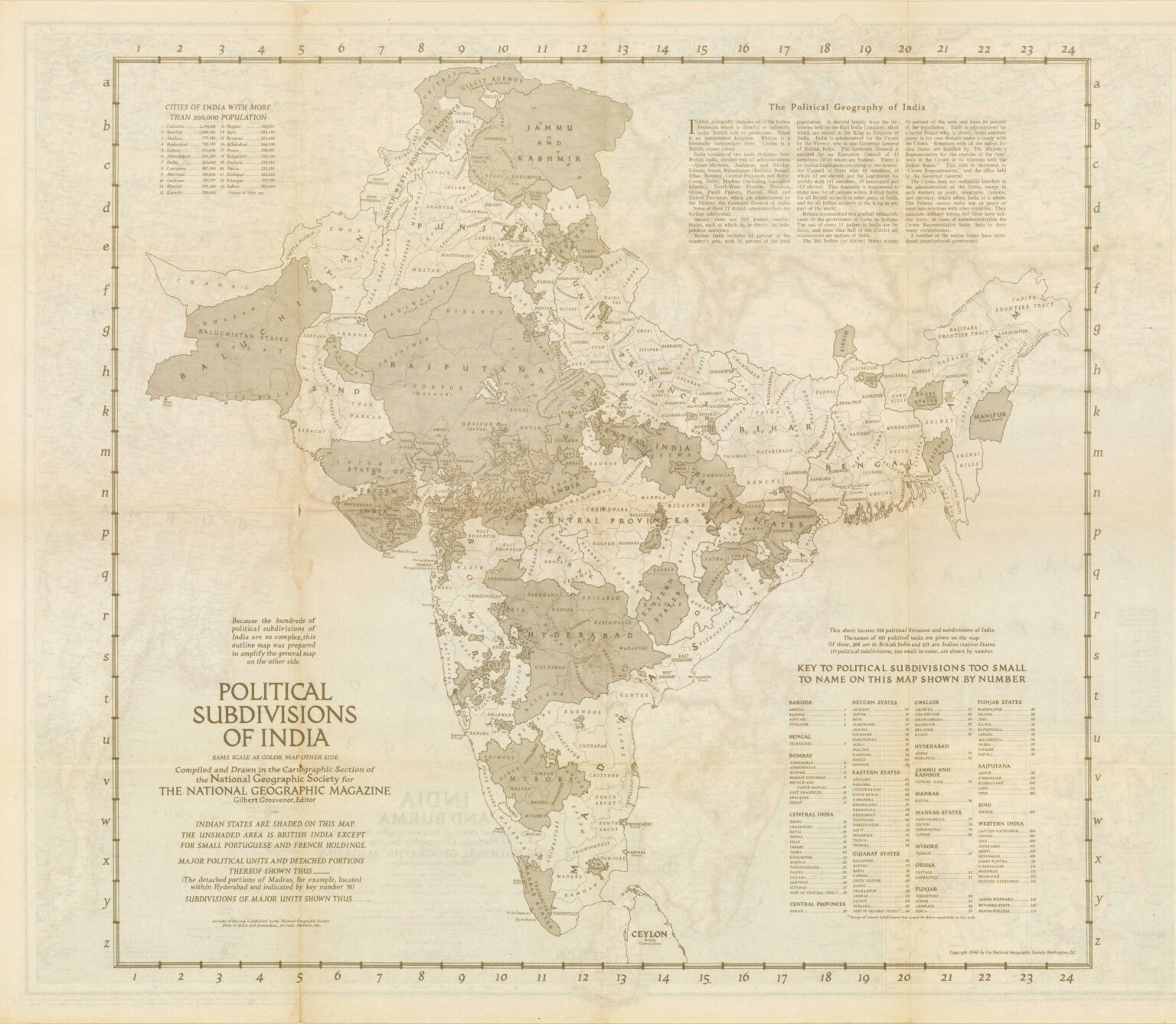
For the Congress leadership, the possibility of a fragmented subcontinent was a serious concern. The political and economic unity of the country could not be secured if individual states remained outside the emerging Union or sought independent arrangements. Yet the rulers had to be persuaded to accede; the process could not be treated simply as an administrative formality.
The States Department came into being on 5 July 1947, with Patel as the minister in charge and V. P. Menon as its secretary. On that day, Patel issued a statement inviting the rulers to accede to India on three subjects: defence, external affairs and communications. He assured them that the Government of India would respect their autonomy in other matters and argued that cooperation was necessary in areas where the interests of the states and the rest of the country were inseparable.
The distinction between accession and integration was important. Accession brought a state within the Indian Union for specified subjects. It did not, by itself, settle every question concerning its administration, boundaries or relationship with neighbouring territories. The longer process of integration would require further negotiations and, in some cases, political pressure.
Patel and Menon worked through negotiations with rulers whose positions varied considerably. Travancore initially explored the possibility of remaining independent. The ruler of Bhopal was also reluctant to join India. Jodhpur held discussions with representatives of Pakistan before eventually signing the Instrument of Accession to India. These episodes revealed how uncertain the political map remained in the months immediately before independence.
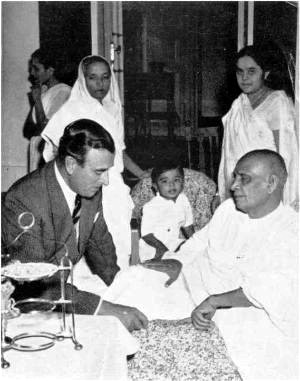
Mountbatten, as the last Viceroy and then the first Governor-General of independent India, also played a part in persuading the rulers to accede. The process was therefore not the work of one individual alone. It involved Patel’s political leadership, Menon’s negotiations, Mountbatten’s interventions and the wider authority of the new Indian government.
By the time India became independent, the great majority of princely states had acceded to India. But the work of bringing them into a coherent political and administrative Union was far from complete. That task would continue in the months and years that followed.
Partition, Refugees and the Meaning of Freedom
The boundary drawn in August 1947 did not merely divide a country; it set millions of people in motion. Independence arrived amid the sight of families abandoning homes they had lived in for generations, carrying their belongings in bundles, bullock carts and whatever transport they could find. As British India was partitioned into India and Pakistan, Hindus and Sikhs moved towards India from territories that became Pakistan, while Muslims travelled in the opposite direction. In The Other Side of Silence: Voices from the Partition of India, Urvashi Butalia (1998) offers a vivid account of this human upheaval through the memories of those who experienced it. Her work brings into view the fear, violence and uncertainty behind the journeys: homes abandoned, families separated and familiar neighbourhoods transformed almost overnight. For many, migration was not a voluntary choice but an escape from danger and an attempt to find safety in an unfamiliar place.
The new government faced an enormous humanitarian and administrative crisis. Refugees needed shelter, food, medical assistance and opportunities to rebuild their lives. Patel, as Home Minister, was deeply involved in questions of internal security and the restoration of order. Nehru, as Prime Minister, was equally concerned with the treatment of minorities and the moral character of the new state. Their responsibilities overlapped, but their approaches and priorities did not always coincide.
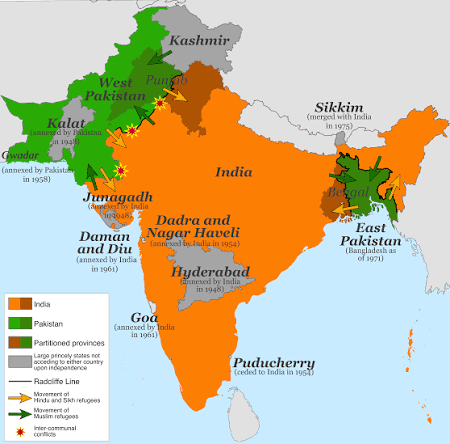
Gandhi, meanwhile, continued to insist that independence would lose its meaning if it became an excuse for religious hatred. On 15 August 1947, while celebrations were taking place in Delhi, he was in Calcutta, attempting to prevent further communal violence. He was less concerned with the ceremonial celebration of power than with the immediate task of protecting human life. His appeal, meetings and presence helped create an atmosphere in which people from different communities were encouraged to restore peace. Yet the violence of Partition was too widespread and deeply rooted to be resolved through moral appeal alone. The new government had to establish institutions capable of maintaining law and order while protecting the rights of citizens irrespective of religion.
This was one of the central challenges of the first months of independence. India had been created as a political Union, but its democratic character would depend on whether people belonging to different communities could live within it as equal citizens.
Kashmir and the Question of Authority
The princely state of Jammu and Kashmir presented a particularly difficult problem. Its ruler, Maharaja Hari Singh, had not decided to accede to either India or Pakistan at the time of independence. The state had a Muslim-majority population, while its ruler was Hindu. Its geographical position, political circumstances and connections with both new Dominions made its future a matter of considerable importance.
Jawaharlal Nehru had a personal connection with Kashmir through his Kashmiri ancestry and family origins. His political and emotional interest in the state was therefore especially strong. He was also concerned with the role of Sheikh Abdullah and the National Conference, whose movement had challenged the Maharaja’s authority and sought political rights for the people of the state.
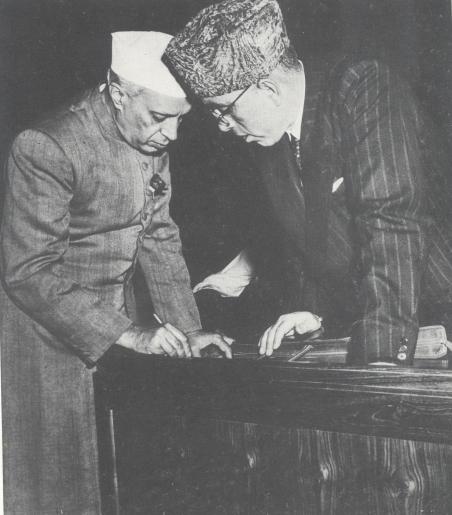
In October 1947, armed tribesmen entered Kashmir from the direction of Pakistan. The Maharaja’s government appealed to India for military assistance. On 26 October 1947, the Defence Committee of the Cabinet considered the situation in Kashmir and decided to send Indian troops to Srinagar by air the following morning. Its note recorded that accession would be accepted provisionally, with the final question to be settled according to the people’s wishes once law and order had been restored. The Instrument of Accession is dated 26 October; Mountbatten’s letter accepting it and the airlift of Indian troops to Srinagar are both dated 27 October. While the broad sequence is established by these documents, historians have discussed the precise timing of the signing, transmission and acceptance. The Defence Committee note should therefore be distinguished from the Instrument itself.
Kashmir also exposed differences in the approaches of Nehru and Patel. Nehru was particularly concerned with Sheikh Abdullah and Kashmir’s political future, while Patel was attentive to administrative authority and the responsibilities of the Home Ministry. Their differences were not simply personal; they reflected questions about ministerial jurisdiction and how decisions concerning a sensitive border state should be taken.
A separate disagreement concerned Ajmer. In his letter to Patel of 23 December 1947, Nehru explained the national significance he attached to the situation there and his reasons for intending to visit. He considered Ajmer, after Delhi, among the most important places in terms of the implications for government policy. He had cancelled the visit following the death of his nephew. The exchange reflected differing views on political intervention and administrative responsibility, but it should not be confused with their separate correspondence on Kashmir.
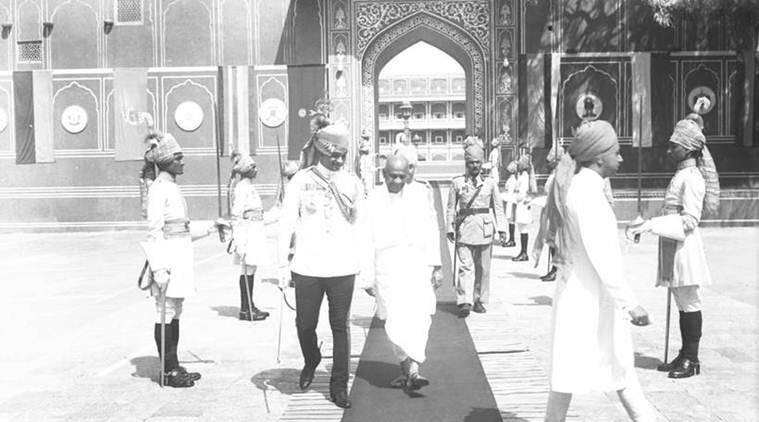
In Patel’s view, interventions outside established ministerial channels risked weakening the authority of the departments responsible for administration and security. Nehru, however, believed that certain situations demanded political attention at the highest level, even if this meant stepping beyond routine departmental procedures. Their differences reflected two distinct concerns within the new government: the need to preserve administrative authority and the need for direct political intervention in matters of national importance. Despite these disagreements, both continued to work within the same government.
Gandhi’s Final Intervention
After helping restore peace in Calcutta in September 1947, Gandhi returned to Delhi, where communal tensions had once again become a serious concern. By January 1948, Muslims who had remained in the capital continued to face insecurity, while Hindu and Sikh refugees were struggling with the trauma of displacement and loss. Gandhi believed that Delhi could not become a place of safety for one community at the expense of another.
On 13 January 1948, Gandhi began a fast to press for the restoration of communal peace and the protection of Muslims who wished to remain in the city. He called for an end to intimidation, the restoration of confidence and conditions in which those who had been displaced could return to their homes where possible.
The fast also brought renewed attention to the controversy over the payment of ₹55 crore to Pakistan. Under the financial arrangements made at Partition, Pakistan was entitled to ₹75 crore from the cash balances of undivided India. Of this, ₹20 crore had already been paid; the remaining ₹55 crore had been withheld by the Government of India amid deteriorating relations and the conflict in Kashmir.
In the record of the Cabinet meeting held on 14 January 1948, Jawaharlal Nehru noted that he and Vallabhbhai Patel had met Gandhi, who believed that the outstanding amount should be paid in accordance with the financial agreement. Nehru recorded Gandhi’s view that withholding the payment had become another source of bitterness between the two countries.
On 15 January 1948, Nehru informed Indian representatives abroad that the Government had decided to release the ₹55 crore in view of Gandhi’s fast and the need to reduce ill-will between India and Pakistan. In his communication, Nehru also clarified that the decision did not alter India’s position on Kashmir. The decision was politically contentious, but Gandhi’s argument rested on a straightforward principle: an agreed financial obligation should not be withheld because relations between the two countries had deteriorated.
The payment, however, was only one part of the controversy surrounding the fast; it was not Gandhi’s sole or formal demand. His central concern remained the restoration of communal peace and the safety and rights of Delhi’s Muslims. On 18 January, representatives of different communities and organisations gave written assurances on seven conditions, pledging themselves to work for peace and communal harmony. In his telegram of that day, Nehru recorded the assurances given by the representatives. Gandhi ended his fast after receiving these assurances.
The fast ended on 18 January, but Gandhi’s concerns about the future of India went beyond the immediate restoration of communal peace. He was also deeply troubled by the growing differences between Nehru and Patel. Their disagreements had become a subject of discussion beyond the Cabinet, and rumours of a possible rupture between the two leaders were circulating. Gandhi believed that the new government could ill afford such a division. Nehru and Patel brought different abilities and political approaches to the task of nation-building, and he wanted them to continue working together.
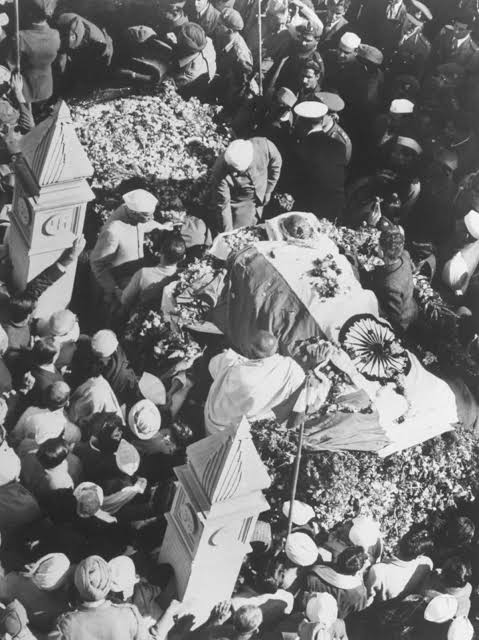
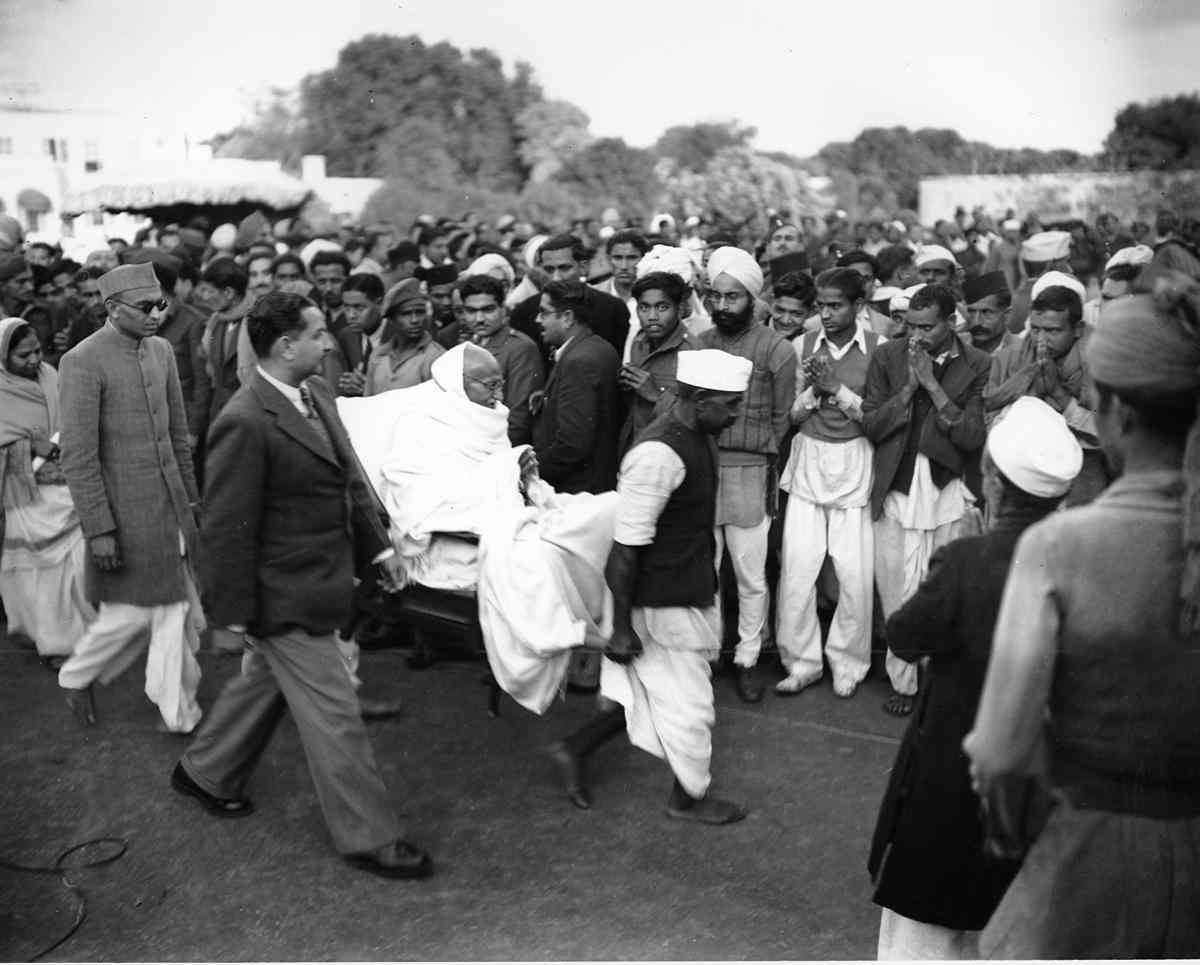
On 30 January 1948, Patel met Gandhi at Birla House in New Delhi and had a long and serious discussion. The details of their conversation, however, should be taken from the contemporary recollections and records rather than treated as a verbatim transcript. The Government of India’s Gandhi Smriti daily record states that they discussed matters that afternoon and that Gandhi was reminded that it was time for prayer. Therefore Gandhi then walked towards the prayer ground, supported by Manu and Abha Gandhi. Patel had left after their conversation, while Nehru was expected to meet Gandhi later that evening. That meeting, however, never took place. In her book The End of an Epoch, Manubehen Gandhi recounts: “Nathuram Vinayak Godse approached him in khakhi clothes … joined his palms as if in a reverent obeisance … and fired three shots at point-blank range.” Gandhi died at approximately 5.17 p.m.
Seeing Gandhi’s lifeless body, Nehru, as Manu Gandhi records, “hid his face in Sardar’s lap and sobbed like a child”, while Patel “showed the iron courage and gave solace to one and all”. Patel then made a radio announcement informing the country of the tragedy. Nehru was to convey the message too, but was so overcome with grief that he broke down during the broadcast that evening while announcing Gandhi’s death to the country. The assassination brought an abrupt end to the life of the man who had held together, through moral authority and personal relationships, many of the competing strands of the national movement.
Nehru and Patel were now left to govern without the person whose intervention had often helped them resolve their differences. India had been independent for less than six months. Its borders were unsettled, its institutions were young, and the wounds of Partition remained open. The death of Gandhi made the responsibilities of Nehru and Patel even more demanding. Their relationship would now have to find its own basis, without the mediator who had guided both men for decades.
To read previous article from the series, click here.
Make sure to check back tomorrow for the final part of article in this series.







Freedom is not achieved merely by winning independence; it must be defended and strengthened with every generation. India’s turbulent birth reminds us of the immense sacrifices, struggles and difficult choices that shaped the nation. The real tribute to those who fought for freedom is to protect democracy, constitutional values, secularism and the rights of every citizen. India’s freedom journey remains unfinished as long as equality, justice and dignity are not guaranteed to all.