

State Violence and the Making of the Neurotic Comrade

Part 6: The Oedipal Marxism
This is Part Six of The Oedipal Marxism, Solomon Mubash’s series on the crisis of Indian Marxism. Mubash examines how the CPI(M), once a victim of laws like the UAPA, came to wield them against its own radical youth, and how welfare housing under Life Mission, however necessary, has produced a “neuroticized cadre-comrade”: a subaltern who trades sovereign land for a concrete cage and calls it liberation.
The Double Standard of State Violence: The Father-State Represses
The Oedipal trap, as we have discussed, is not merely a matter of electoral strategy or economic policy. It is a transformation of the party’s very relationship to violence. The revolutionary war-machine, which once directed its force against the bourgeois state, becomes, through its own capture by the state apparatus, a machine that administers state violence. This is not a betrayal of principle; it is the structural necessity of bureaucratic substitution. A party that has substituted itself for the class, and the leader for the party, will necessarily substitute its own administrative logic for revolutionary ethics. The result is a double standard on state violence that is not hypocritical in the psychological sense but productive in the Deleuzian sense: it produces the Father-State as a desiring-machine of repression. The State desires its own preservation. It operates as a machine that desires to turn every erratic, horizontal, and dangerous social energy into a static, vertical hierarchy.
Consider the case of the Unlawful Activities (Prevention) Act (UAPA) in Kerala under the Pinarayi Vijayan government. The CPI(M) had, for decades, opposed the UAPA as a “black law” designed to criminalise dissent. The party had been its victim. Yet, once in power, the Kerala government used the UAPA against radical youth, most notably against two young activists, Alan Shuaib and Thaha Fasal, arrested in 2019 for possession of Maoist literature. The law did not change. The party’s stated opposition did not change. What changed was the party’s position within the state apparatus. The same law that had been an instrument of repression from above became, when wielded by the Father-State, an instrument of administrative management. When young cadres or grassroots activists trace independent lines of flight, engaging directly with radical subaltern struggles, anti-caste mobilisations, or ecological resistance outside the party’s strict command structure, they disrupt the Party-state’s calculated equilibrium.

From a Deleuzian perspective, this is not a contradiction. It is a reterritorialisation. The UAPA is a deterritorialised law, a code of repression that can be captured by any state apparatus, regardless of its nominal ideology. Under Congress, it represses. Under the BJP, it represses. Under the CPI(M), it represses. A law is not a fixed object with a fixed meaning. It is a code, a set of rules that can be captured and applied by different state apparatuses for different purposes. The meaning of the law is not in the text; it is in the territory of its application, who wields it, against whom, and for what purpose. The party’s earlier opposition to the law was a war-machine position: the revolutionary outside the state refusing the state’s coding. Once the party became the state, it had no choice but to recode itself, adopt the tools of the state, and become the Father who wields the law rather than the child who suffers it. The double standard is not a failure of memory or ethics. It is the structural logic of the Oedipal trap.
The same logic governs the police encounters of suspected Maoists under the Vijayan government. The Thunderbolt force, created under a previous Left government, had not taken a single life until 2016. Under Vijayan, it became a death machine. Between 2016 and 2022, over a dozen suspected Maoists were killed in police encounters- operations that followed a predictable script: an exchange of fire, no police casualties, magisterial inquiries that exonerated the police. The CPI, the coalition partner, repeatedly expressed discomfort, warning that “Kerala should not become a state that permanently detains citizens.”
Here again, the Deleuzian lens is indispensable. The encounter is not an aberration; it is the state apparatus in its pure form. Deleuze and Guattari contrast the war-machine (fluid, nomadic, outside the state) with the state apparatus (sedentary, territorial, hierarchical). The war machine kills in the name of revolution, in the open, as a declaration of war. The state apparatus kills in the name of the law, in secret, as part of an administrative procedure. The encounter is the state apparatus’s preferred mode of killing: it is legal enough to be deniable, violent enough to be effective, and ritualised enough to be repeated. The CPI(M) in opposition had condemned encounters in other states. It had demanded inquiries. It had cited human rights norms. In power, it administered encounters with a bureaucratic silence. The party that had once been the victim of the encounter had become its administrator.
The CPI’s dissent within the coalition is instructive. It was a horizontal voice-a rhizomatic warning from within the state apparatus-that the Father-State had become indistinguishable from its enemies. But the Oedipal structure has no mechanism for hearing such dissent. The Father does not listen to the child. The Secretariat does not listen to the devotee-comrade. The Chief Minister’s Office does not listen to the coalition partner. The dissent was absorbed and neutralised, as all dissent is, by the bureaucratic apparatus that mistakes itself for the movement.
What does this double standard produce? It produces the fragile credibility of the Left. When the BJP uses the UAPA against student activists, the CPI(M) cannot protest without being reminded of Alan and Thaha. When the government stages encounters in Chattisgarh, the Kerala Left cannot demand inquiries without being reminded of Nilambur and Agali. The party has lost the one thing that distinguished it from the Right: the moral authority to speak against state repression. This is not a public relations problem. It is an ontological problem. A Left that cannot distinguish itself from the Right on the question of state violence has no reason to exist.
From the Deleuzian perspective, this is the logical endpoint of the Oedipal trap. The revolutionary war-machine that becomes the state apparatus must, by its own structural logic, become a machine of repression. It does not choose to be repressive; it is forced to be repressive by the very form of the state. The party that claimed to kill the Father becomes the Father. And the Father does not recognise his own children. He arrests them. He encounters them. He kills them. And he calls it administration.
The double standard on UAPA and encounters is not a deviation from the CPI(M)’s revolutionary heritage. It is the confirmation that the party has completed its Oedipal Circle. The child has become the Father. The war machine has become the state apparatus. The desiring machine of revolution has been recaptured and reterritorialised onto the bureaucratic apparatus of repression. The question that remains is whether another desiring-machine is possible: a war-machine that does not become the state, a revolution that does not devour its children, a Left that can wield power without becoming the Father.
Life Mission and the Neuroticized Cadre-Comrade
Today, under the progressive guise of Life Mission, this exact structural castration is celebrated as a major administrative achievement. We must be clear: the material relief this project brings to thousands of homeless families is real, vital, and deserving of absolute respect. For a Dalit or displaced working-class family, a secure house provides an undeniable threshold of immediate human dignity and safety.
Yet, the profound tragedy of the Life Mission apparatus lies precisely in this benevolent packaging. The technocratic state performs a violent psychic sleight of hand: it uses the immediate necessity of biological survival to extinguish the long-term desire for structural liberation. It tells the subaltern: ‘Stop demanding a sovereign share of the state’s vast land wealth. Take this tiny, concrete residential box, stay inside your grid, and be grateful.’ By packing landless families into these microscopic 3-cent plots, the state successfully uncouples the subaltern from a radical demand for asset redistribution, turning a sovereign political agent into a dependent, anxious client of the Party-Father and rendering them neurotic.
Here, the neurosis is not a mental condition, but a political condition. A radical youth or an insurgent subaltern operates on the free flow of political desire. They want to dismantle caste hierarchies, reclaim sovereignty over land, disrupt caste-corporate networks, and rewrite the rules of caste and gendered space and power. They do not internalise guilt; they externalise rebellion. But the rebellious spirits were to be castrated for the sake of capital and institutionalised left. The political neurotic is born when the Paternalistic Party-State intercepts this wild energy and forces it into a psychological cage.

In psychoanalysis, Freud reduced all of human life to a tiny domestic unit: Daddy (the Law), Mommy (the Nurturer), and Me (the Dependent Child). Deleuze and Guattari argue that the institutionalised Left scales this exact triangle up to govern the entire society: The Party-Vanguard positions itself as the absolute, wise Father who alone understands the historical course and communist ideology. The State’s Welfare Schemes (such as KIIFB infrastructure, Social Security Pension, Life Mission, and welfare kits) act as a Mother’s nurturing, protective womb. The Insurgent is stripped of their autonomy and reduced to a dependent Child who must obey the parents to survive.
The moment the activist accepts this triangle, the moment they believe that liberation can only come from obeying the Party-Father and consuming the State-Mother’s welfare packages, the political neurotic is born. Before this capture, the revolutionary potential was uncoded, free-flowing, and seeking spontaneous horizontal connections. But the Party-Father and the bureaucratic capitalist state cannot tolerate uncoded, spontaneous energy. When the subaltern masses launch independent struggles (such as autonomous land occupations), the Party-Father and the capitalist state condemn them as “undisciplined,” “unlawful,” “premature,” or “reactionary.”
To stay inside the “family,” the activist cadre is forced to turn their rage inward. They develop an internal policeman, which psychoanalysis calls a Superego. Instead of auditing the leadership of the party and the state, the cadre begins to obsessively audit their own mind. In an authentic Marxist-Leninist structure, the absolute subordination of the individual to the collective is termed Democratic Centralism. However, in a mutated, paternalistic Party-State, this is weaponised into an unquestioning “Cadre Discipline.”
If the technocratic machinery of KIIFB represents the financialised capture of Kerala’s macro-developmental desire, the Life Mission housing scheme represents its corresponding psychic and spatial enclosure at the microscopic level. It is within this architectural grid that we witness the birth of the Neuroticized Cadre-Comrade, the ultimate product of the modern paternalistic Party-State.
To decode Life Mission through a Deleuzian lens is to realise that the state has successfully modernised and sanitised the ancient spatial grammar of Brahmanical Patriarchy. Historically, the feudal Lord maintained hegemony by keeping the untouchable subaltern body landless and contained in peripheral settlements, safely alienating them from the wealth-generating flows of fertile soil. Today, under the progressive guise of Life Mission, this exact structural castration is updated into an administrative efficiency and a welfare model. By packing landless Dalit and backward-caste families into tight, non-cultivable 3-cent plots or vertical concrete flat-complexes, the technocratic state performs a violent psychic sleight of hand. It violently uncouples the subaltern from a radical demand for sovereign land, resources, and wealth and forces them into the passive, sterile consumption of a residential dream. The subaltern is given a cleaner, concrete cage, and in return, they must surrender their ancestral claim to the land itself. The rebellious spirit is thus transformed into a docile body.
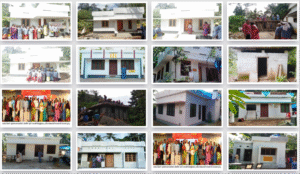
It is precisely at this juncture of spatial confinement that the party worker mutates from an insurgent agent of social change into an anxious, Oedipalized neurotic. The institutional Left functions here as Freud’s psychoanalytic couch, scaling up the domestic family triangle to encompass the entire political landscape. The bureaucratic, professionalised vanguard leadership occupies the seat of the absolute Party-Father (the Karanavar who dictates the historical law); the debt-funded Life Mission infrastructure and welfare kits act as the conditional, nurturing State-Mother; and the party cadre is systematically reduced to a dependent, powerless Child.
The tragedy of the contemporary Cadre-Comrade lies in the severe, paralysing neurosis generated by this structure. The comrade is caught in a permanent psychological double-bind: they must continuously air the explosive, outer-directed slogans of class warfare and anti-capitalist insurgency, while spending their actual daily labour acting as a compliant, docile body. This irreconcilable gap between revolutionary language and technocratic pacification requires massive psychological energy to maintain. The radical energy that should be channelled outward to disturb the caste-capital alliance is turned violently inward, creating an organisational Superego, an internal cop.
Through continuous loops of mandated “Self-Criticism,” the raw, spontaneous urge of the subaltern is systematically pathologised as a ‘Petit-Bourgeois Deviation’ or an ‘Anti-communist act.’ Democratic centralism is thus stripped of its revolutionary utility and transformed into a psychological straitjacket. The Cadre-Comrade becomes their own Warden, policing their own libido to ensure it never overflows the pre-set boundary of the party bureaucracy. They view spontaneous, un-coded subaltern uprisings (such as organic land occupations) not as revolutionary opportunities, but as dangerous, illegitimate disruptions to the party structure.
The war machine of organic social change is thus successfully dismantled from within. Through Life Mission and various welfare kits, the Party-State achieves its ultimate capitalist victory: it traps the revolutionary imagination inside a 3-cent residential grid, turning the wild, liberating force of the subaltern into a docile, anxious army of grateful clients who value organisational discipline over systemic rupture.
The transformation of an insurgent mass or populace into a docile client pool is the crowning achievement of the modern technocratic Party-State. It accomplishes this through a sophisticated dual mechanism: material dislocation through welfare schemes and libidinal recoding through Marxist catechism.
Read the Opening article here
Part 7: The Rhizomatic Alternative — Beyond the Oedipal Trap, follows




Power becomes dangerous when a movement begins to reproduce the very machinery of repression it once fought against. Solomon Mubash’s “State Violence and the Making of the Neurotic Comrade” exposes this contradiction with unsettling clarity. When dissent is disciplined, radical energy is domesticated, and state violence is justified in the name of administration, the Left risks losing its most fundamental moral distinction. A powerful and necessary critique of what happens when revolutionary politics becomes institutional power.
What spirited writing -What profound and biting observations. Listening to Solomon Mubash would help the CPM initiate some course correction or as they call it rectification . Will they do it